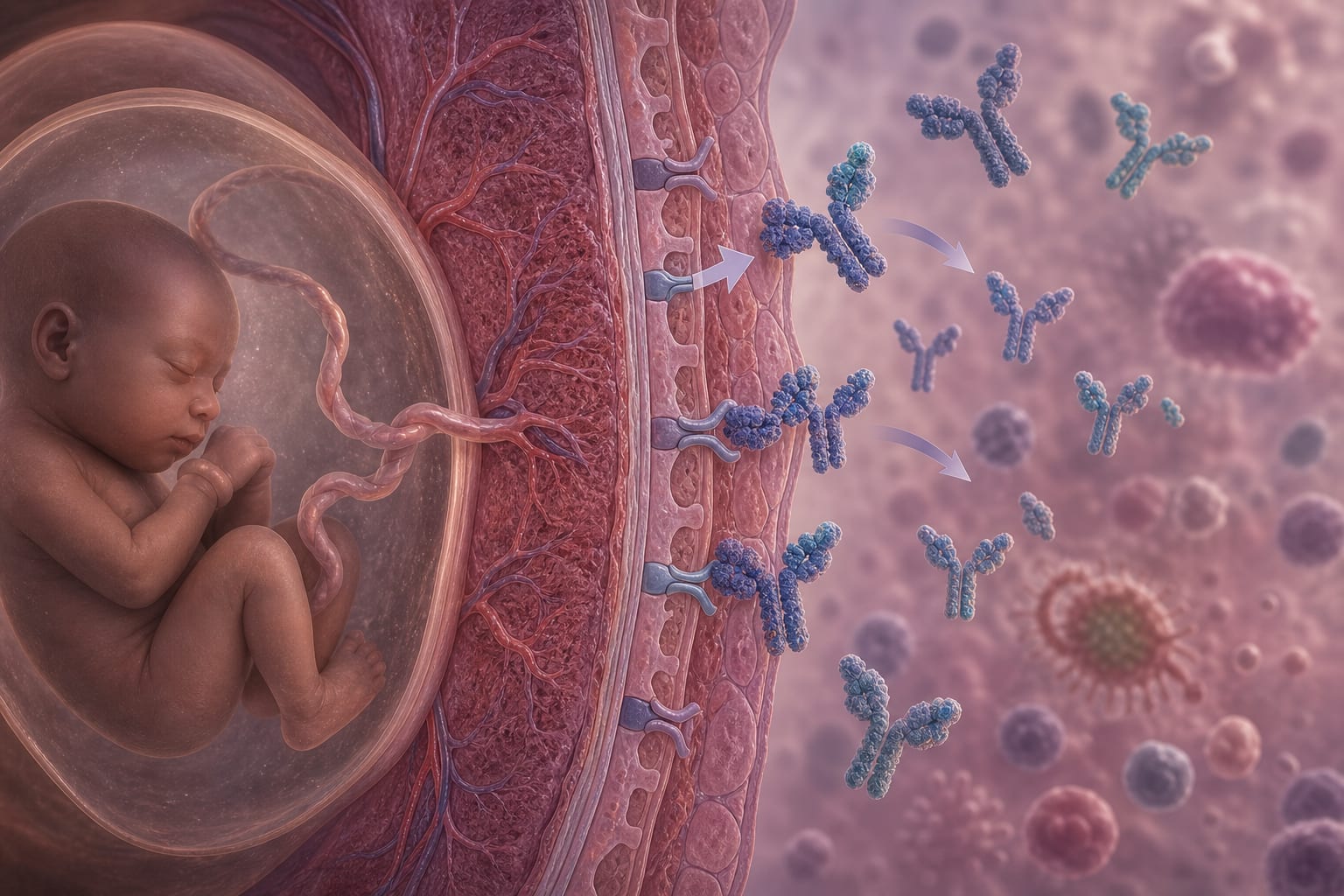
To assess transplacental transfer of malaria antibodies, factors associated with reduced transfer, and identify knowledge gaps for future research.
Approach:
Key Findings:
Pooled prevalence of peripheral malaria in mothers was 31.27% and placental malaria was 30.65%.
Pooled prevalence of malaria in newborns was 9.53%.
IgG1 and IgG3 were the predominant subclasses that transferred efficiently.
IgG against circumsporozoite protein transferred more effectively than against merozoite surface protein 3.
Factors associated with reduced antibody transfer included HIV infection, placental malaria, hypergammaglobulinemia, low birth weight, and primigravida.
Interpretation:
Maternal transfer of antibodies against malaria is dependent on IgG subclass and antigen type.
Limitations:
Limited to published articles, which may not capture all relevant data.
Potential biases in the included studies could affect the results.
Conclusion:
Vaccination strategies that enhance transplacental transfer in pregnant women may improve protection for newborns against severe malaria.
The partner in the next room, the hormone in the blister pack, the cat on the couch, the minute-long chair stand. Several new studies suggest the factor shaping outcomes may be the one clinicians aren’t routinely measuring.