To summarize advances in characterizing the ovarian cancer tumor immune microenvironment (TME) using single-cell RNA sequencing (scRNA-seq) and to evaluate their translational potential for immunotherapy, emphasizing the clinical significance of these findings.
Approach:
Key Findings:
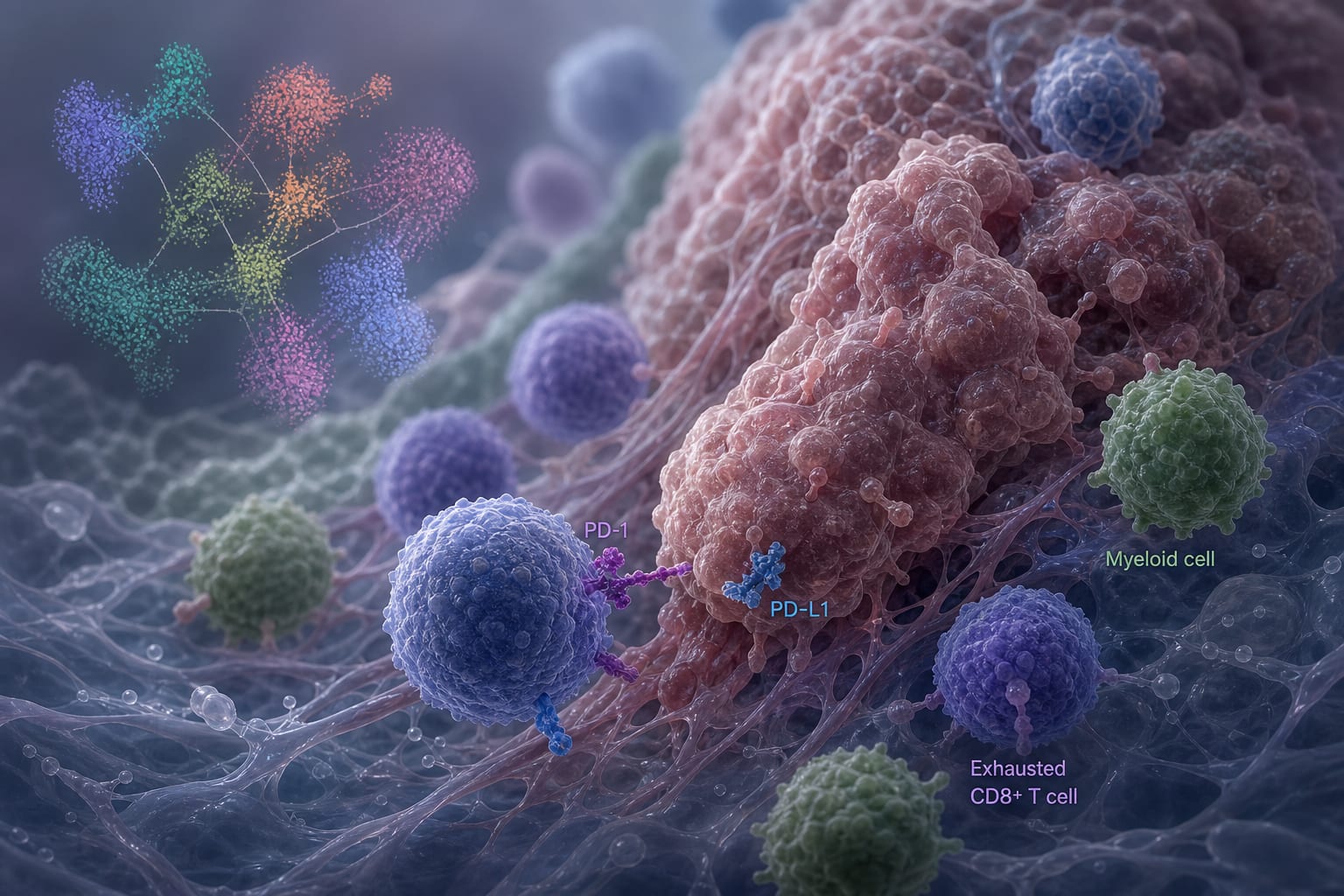
ICIs show limited efficacy in ovarian cancer due to CD8+ T cell exhaustion in a heterogeneous TME, necessitating alternative therapeutic approaches.
Single-cell RNA sequencing reveals terminally exhausted T cells evolve from GZMK+ progenitor populations, indicating potential targets for intervention.
Ascitic fluid acts as an immunomodulatory reservoir influencing intratumoral immune dynamics, suggesting a need for targeted therapies.
Myeloid–lymphoid crosstalk sustains localized immunosuppression and drives therapeutic resistance, underscoring the complexity of the TME.
Interpretation:
High-resolution molecular insights from scRNA-seq can predict ICI responsiveness and guide the design of novel combinatorial regimens and adoptive cellular therapies, paving the way for more effective treatments.
Limitations:
The study does not address the clinical applicability of findings in diverse patient populations, which is crucial for real-world implementation.
Potential biases in single-cell sequencing data interpretation may exist, such as sampling bias or technical variability, which should be acknowledged.
Conclusion:
Single-cell technologies provide a robust framework for understanding and overcoming immunosuppressive barriers in ovarian cancer, paving the way for precision immunotherapy and highlighting the urgency of addressing these challenges in clinical practice.