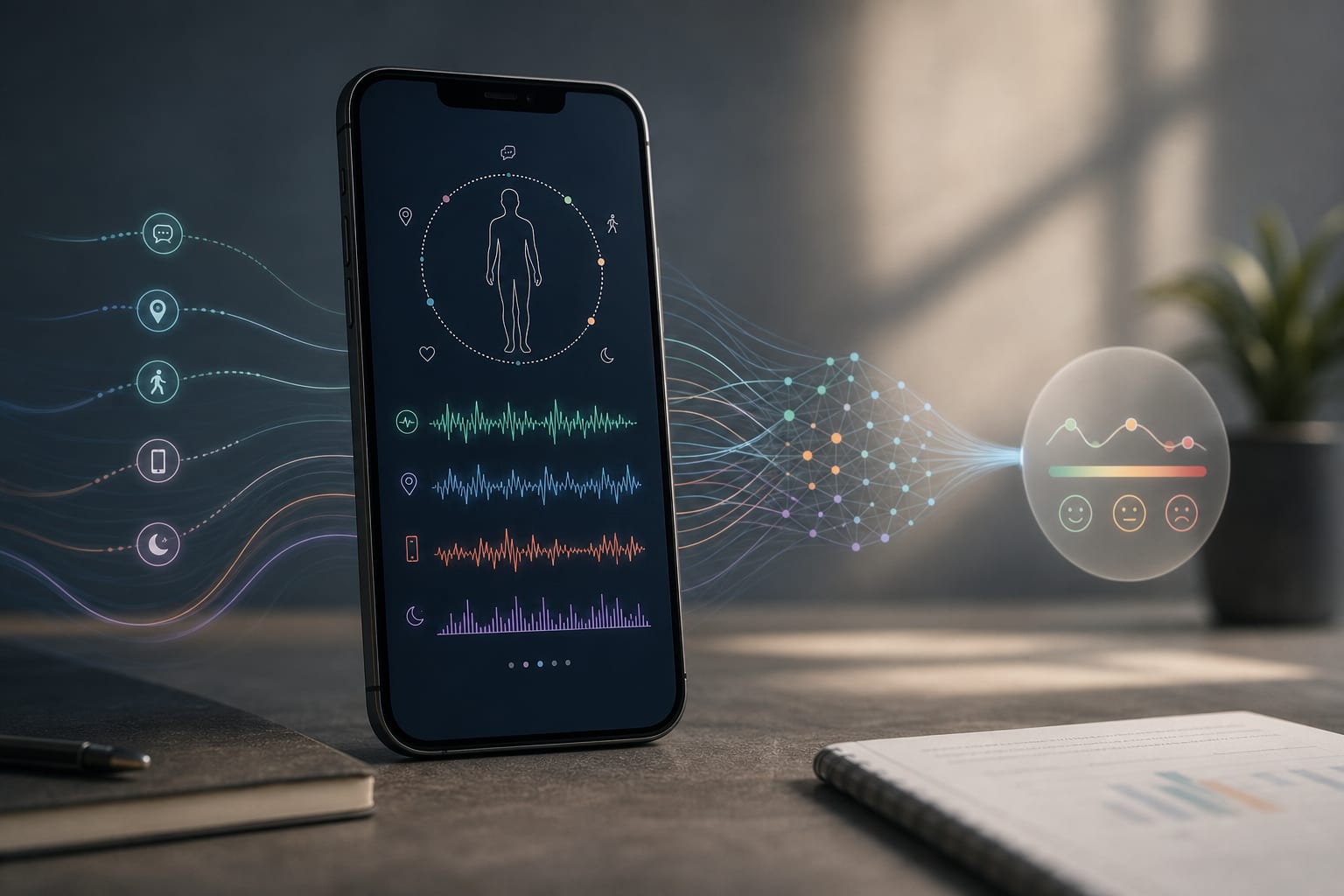
To model smartphone sensor-based behavioral markers to predict affect and stress over a one-year period in emerging adults, addressing significant gaps in existing research and comparing different modeling approaches.
Key Findings:
Model 1 Group General identified behaviors predicting daily affect/stress across individuals but lacked generalizability, highlighting the need for more robust models.
Models 2 and 3 outperformed Model 1, with Model 2 offering the best balance of accuracy and stability, suggesting a promising direction for future research.
Participant ID was a significant contributor to Model 2's predictive power, indicating stable individual differences that could inform personalized interventions.
Model 3 revealed person-specific behavior patterns predicting daily affect, but had limited reliability, indicating a need for further refinement.
Interpretation:
The study highlights the complementary strengths and weaknesses of different machine learning models for predicting affect and stress from behavioral features, contributing valuable insights to the field.
Limitations:
The sample size was small (n = 24), which may limit generalizability; future studies should aim for larger, more diverse samples.
Model reliability for person-specific predictions was limited, suggesting the need for improved methodologies in future research.
Conclusion:
Future research should rigorously compare personalized and hybrid modeling strategies for predicting affective and stress outcomes, emphasizing the practical applications of these findings in mental health interventions.
In a target-trial emulation of more than 600,000 veterans, GLP-1 RA initiators saw fewer new substance use disorders—and patients with existing SUDs had fewer overdoses, hospitalizations, and deaths.