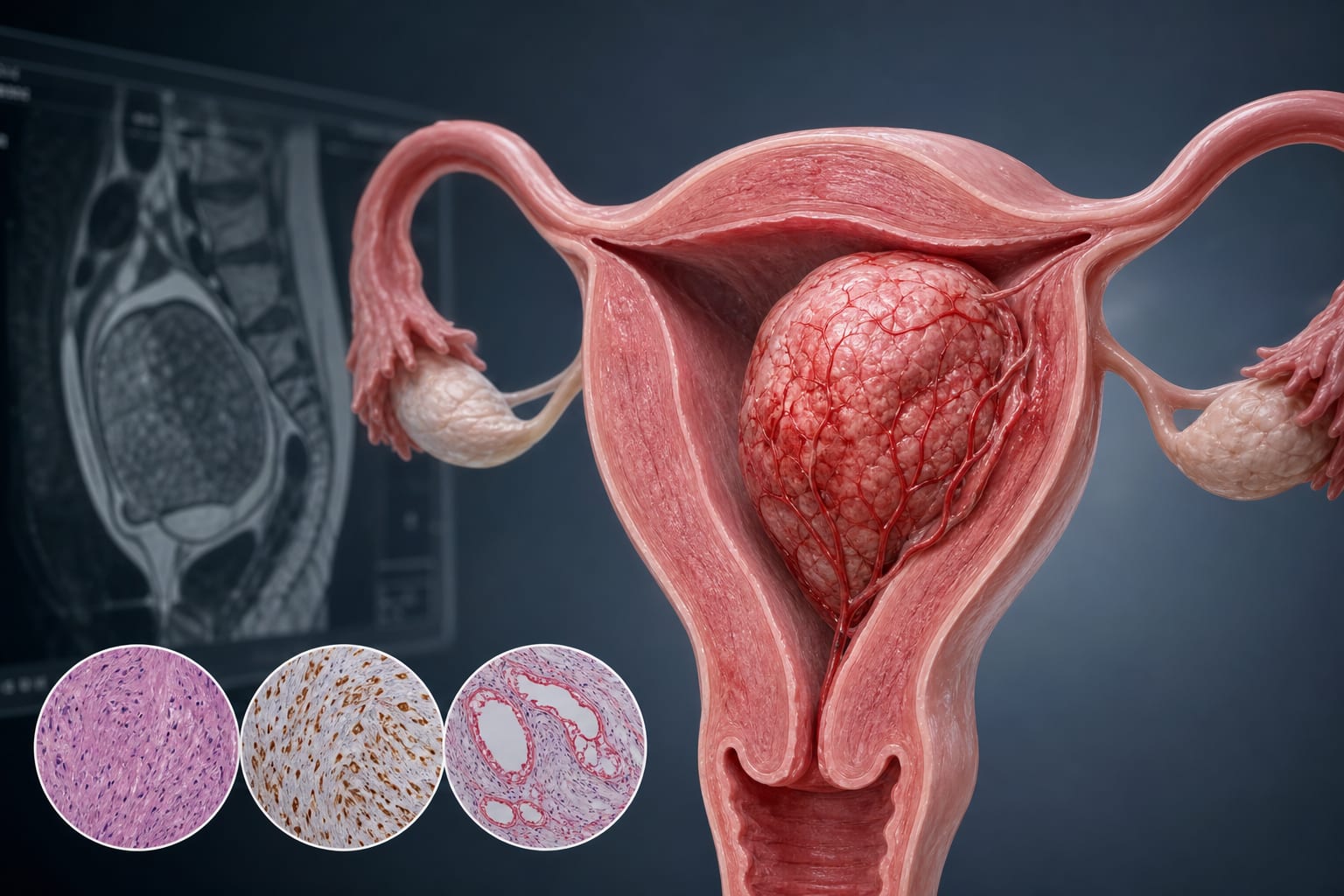
Clinical and pathological characteristics, diagnosis, and surgical treatment of uterine angioleiomyoma: a retrospective cohort study - Summary - MDSpire
Advertisement
Clinical and pathological characteristics, diagnosis, and surgical treatment of uterine angioleiomyoma: a retrospective cohort study
To describe the clinical and pathological characteristics of uterine angioleiomyoma (ALM), elucidate diagnostic and surgical strategies (including specific types of surgical interventions), and evaluate the safety and efficacy of surgical treatment.
Key Findings:
Only one case was preoperatively suspected as ALM on ultrasound; the remaining cases were diagnosed postoperatively.
Median intraoperative blood loss was 15 mL for hysteroscopy, 300 mL for open surgery, and 17 mL for laparoscopy.
Pathological analysis identified 14 common type, 3 degenerative type, and 3 cellular type cases.
Among 19 patients who completed follow-up, 1 case of the cellular type recurred, and 2 patients achieved spontaneous pregnancy, indicating a need for careful monitoring.
Interpretation:
The preoperative diagnosis of uterine ALM remains challenging, necessitating a standardized diagnostic workflow that includes transvaginal ultrasound screening, MRI evaluation, intraoperative assessment, and pathological confirmation.
Limitations:
Small sample size of 20 patients limits generalizability.
Retrospective design may introduce bias, potentially affecting the reliability of the findings.
Conclusion:
Surgical treatment should be individualized based on lesion characteristics and patient needs, with attention to potential intraoperative bleeding and the importance of complete resection to reduce recurrence.