Sex differences in iron stores and associations of body iron with cardiovascular risk factors in the middle-aged general population - Summary - MDSpire
Advertisement
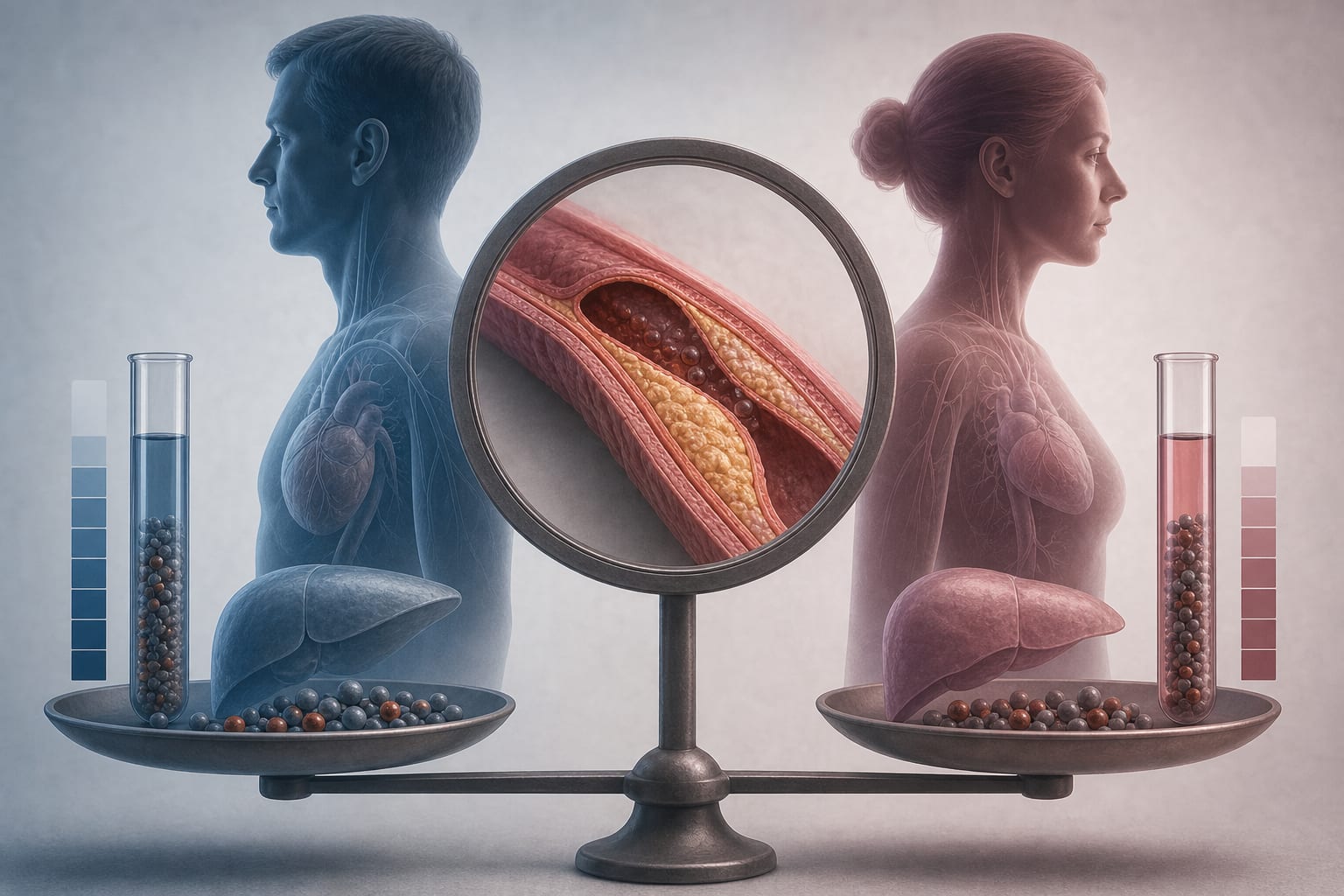
Sex differences in iron stores and associations of body iron with cardiovascular risk factors in the middle-aged general population
To investigate sex-specific differences in ferritin or total body iron (TBI) and their associations with cardiovascular risk factors and metabolic syndrome in a middle-aged population.
Key Findings:
Men had higher iron stores than both premenopausal and postmenopausal women.
Men exhibited a more adverse cardiovascular risk profile with higher BMI, prevalence of hypertension, hyperlipidemia, diabetes, and prior myocardial infarction.
Hyperferritinemia prevalence was 21.6% in men versus 12.0% in women (p < 0.01).
Metabolic syndrome prevalence was 34.5% in men versus 24.6% in women (p < 0.01).
BMI, alcohol consumption, LDL cholesterol, and triglycerides were associated with ferritin levels in both sexes.
In women, age or hypertension was significantly associated with ferritin levels.
Interpretation:
The study highlights significant sex-specific differences in body iron stores and cardiovascular disease risk factors, suggesting that iron markers, along with age and hypertension in women, should be considered in cardiovascular risk assessments.
Limitations:
The study is limited to a specific age group (50-64 years) and may not be generalizable to other populations.
The cross-sectional design limits causal inferences regarding the relationships between iron levels and cardiovascular risk factors.
Conclusion:
Understanding the relationship between body iron markers and cardiovascular risk can aid in developing personalized diagnostic and management strategies for cardiovascular health.