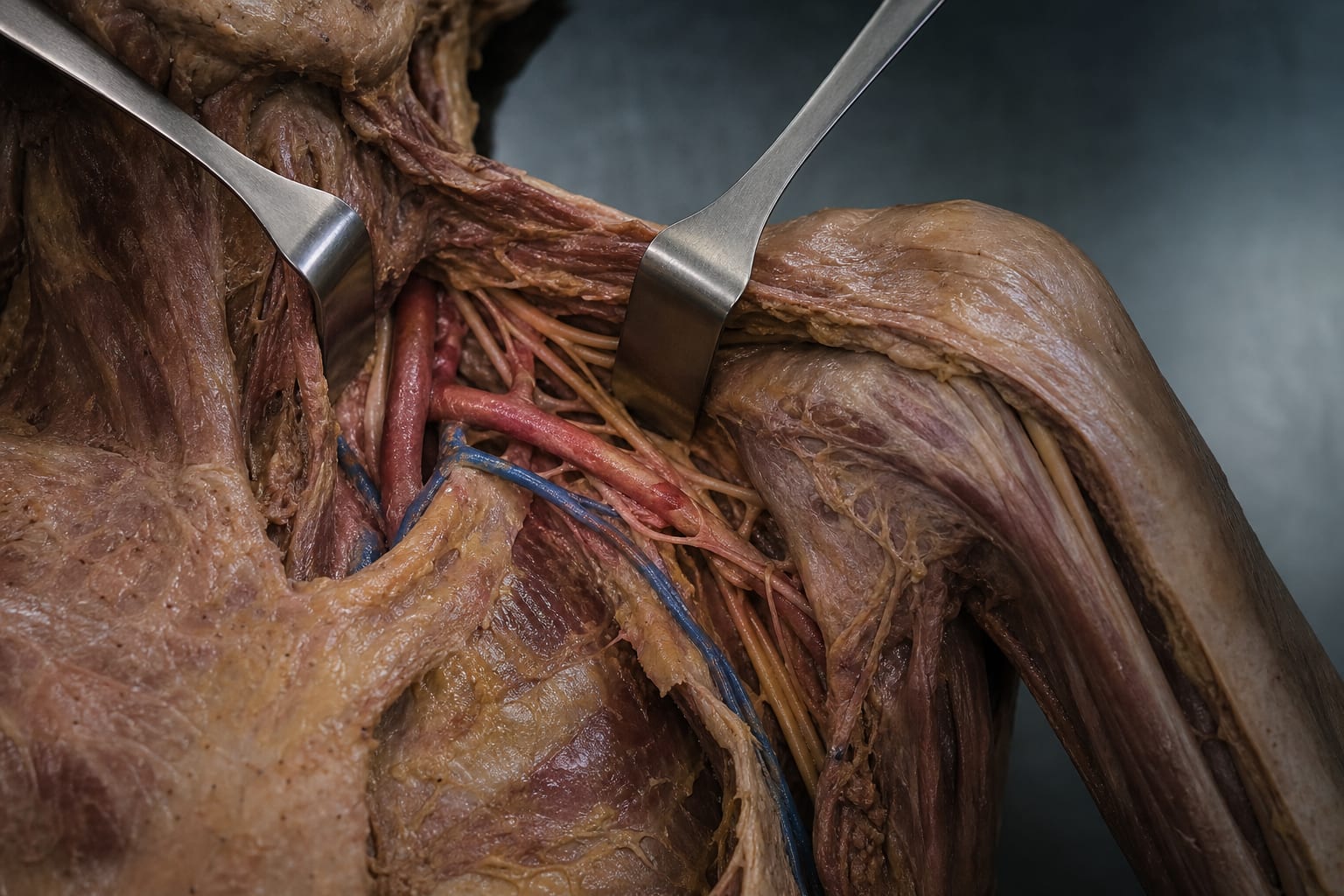
To evaluate procedural safety and the learning curve associated with emergency infraclavicular exposure of the subclavian vessels performed by non-thoracic surgeons in a cadaveric training model, highlighting its significance in improving surgical training.
Key Findings:
A total of 100 emergency approaches were executed on 50 cadaveric specimens, with participants including 84 residents, 11 specialists, and 5 attendings. The mean age of participants was 31.5 years. The study assessed the accuracy of vessel identification and procedural performance, correlating these with clinical seniority to provide insights into training effectiveness.
Interpretation:
The study aimed to improve training for non-thoracic surgeons in managing subclavian vessel injuries through a structured cadaveric workshop, with implications for enhancing surgical education.
Limitations:
The study was limited to a single cadaveric training model, and results may not fully translate to live surgical scenarios; future research should explore diverse training methods.
Conclusion:
The findings suggest that cadaveric workshops can enhance the skills of non-thoracic surgeons in emergency vascular procedures, underscoring their importance in surgical education.