New insight into RNA biomarkers in neuropathic pain: a clinician–neuroscientist roadmap to translational testing and treatment monitoring a clinical review - Summary - MDSpire
Advertisement
New insight into RNA biomarkers in neuropathic pain: a clinician–neuroscientist roadmap to translational testing and treatment monitoring a clinical review
To review RNA biomarker classes and propose a clinically deployable testing system for the diagnosis, stratification, and treatment monitoring of neuropathic pain, noting the absence of FDA-approved RNA-based biomarkers for pain.
Approach:
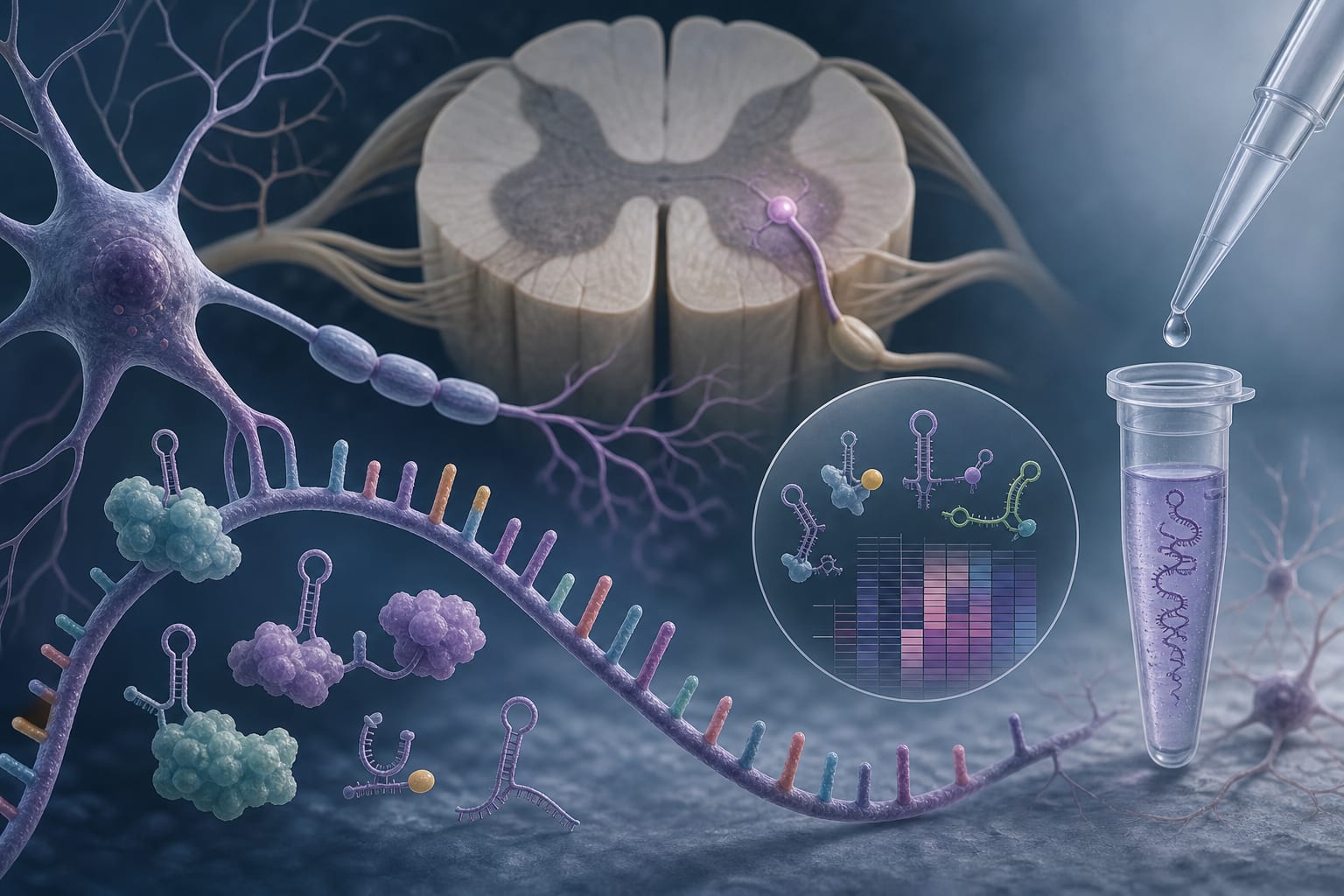
RNA Biomarker Classes: The review focuses on mRNA, miRNA, lncRNA, RNA editing, and RNA modifications as potential biomarkers for neuropathic pain.
Transcriptomic Evidence: Evidence from immune-cell transcriptomic meta-analysis and gene expression patterns in dorsal root ganglion and central nervous system is synthesized.
Clinical and Translational Evidence: Clinical studies supporting miRNA biomarkers and lncRNA regulatory nodes are discussed.
Epitranscriptomic Modifications: The role of m6A modifications in regulating pain-related mRNA is examined.
Emerging RNA Workflow Technology: A new RNA workflow technology pathway leveraging rapid low-input RNA assays is explained.
Key Findings:
RNA-based biomarkers may provide a biologically sound and objective approach to understanding and managing neuropathic pain, but current evidence is theoretical and lacks validation.
Current pain assessment tools are subjective and contribute to variability in treatment response.
No FDA-approved RNA-based biomarkers for pain exist, and current evidence remains at the theoretical model stage.
Interpretation:
Validation through clinical trials is necessary.
Limitations:
Current evidence is theoretical and lacks validation through in vivo or clinical trials.
Subjectivity in existing pain assessment tools complicates diagnosis and treatment efficacy evaluation.
Conclusion:
Further research is needed for clinical application of RNA biomarkers.