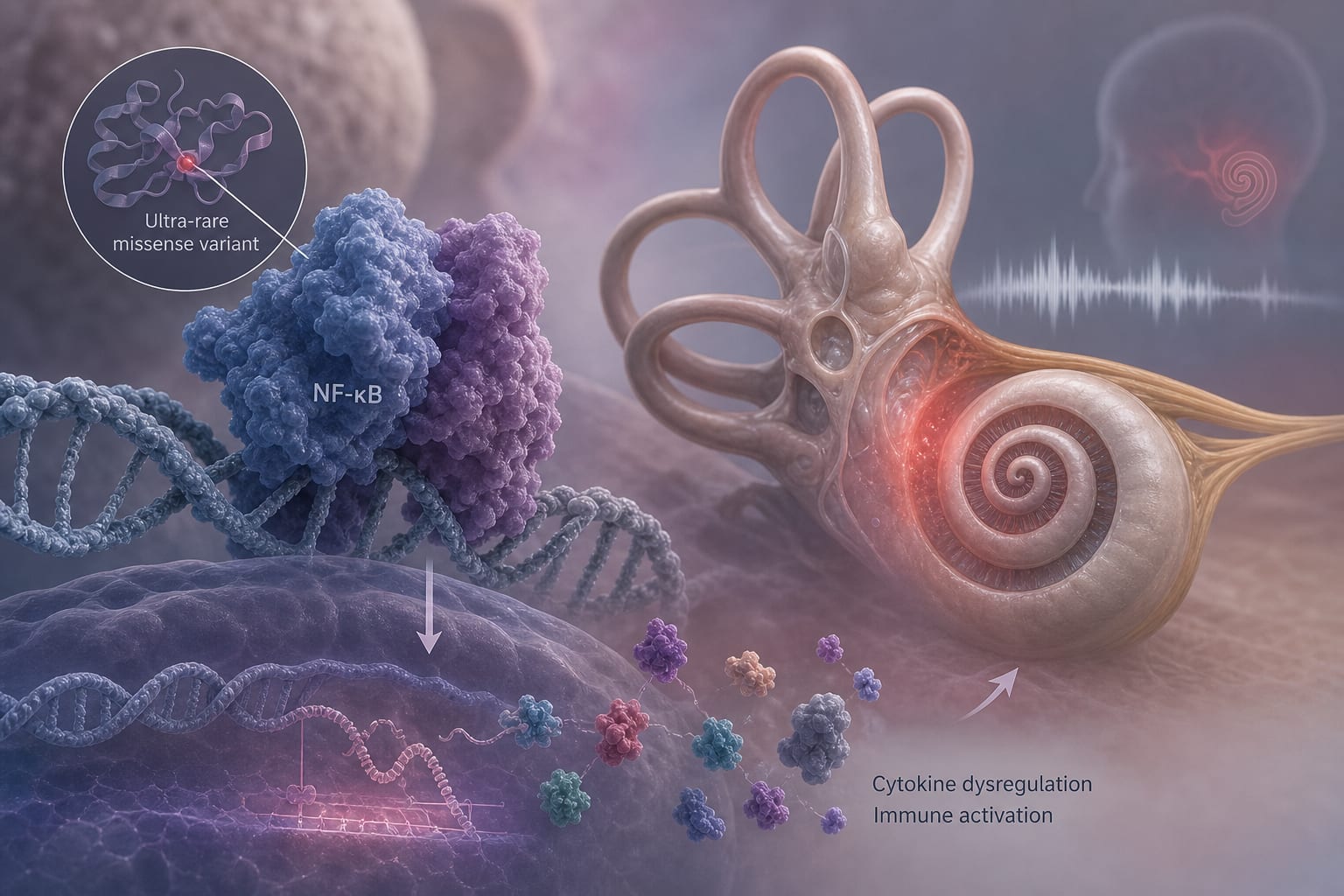
To examine ultrarare variants in NF-κB pathway genes and their potential role in the immune phenotypes associated with Menière's disease (MD), highlighting the significance of these immune responses.
Key Findings:
Identified ultrarare heterozygous variants in TLR9, TNFRSF1B, and FAS in MD patients, suggesting a potential link to immune dysregulation.
Splicing predictions indicated potential formation of cryptic donor/acceptor sites for TLR9 and TNFRSF1B variants, which may affect protein function.
Protein modeling showed destabilizing effects on TLR9, TNFRSF1B, and FAS proteins, indicating a possible mechanism for altered immune responses.
Altered interfacial contacts in TLR9-TLR9 dimer and FAS-FASGL models may reduce binding efficacy, potentially impacting immune signaling.
Interpretation:
The findings suggest that unique immune phenotypes in MD may be influenced by systemic inflammation and rare genetic variants in NF-κB pathway genes, potentially contributing to autoinflammatory processes, which could inform future therapeutic strategies.
Limitations:
The study focuses on a limited number of ultrarare variants and may not capture the full genetic landscape of MD, potentially overlooking other significant variants.
Further validation in larger cohorts is needed to confirm the findings and assess their generalizability.
Conclusion:
Ultrarare variants in NF-κB pathway genes may play a significant role in the immune dysregulation observed in Menière's disease, indicating a potential link to autoinflammatory conditions, warranting further research to validate these findings.