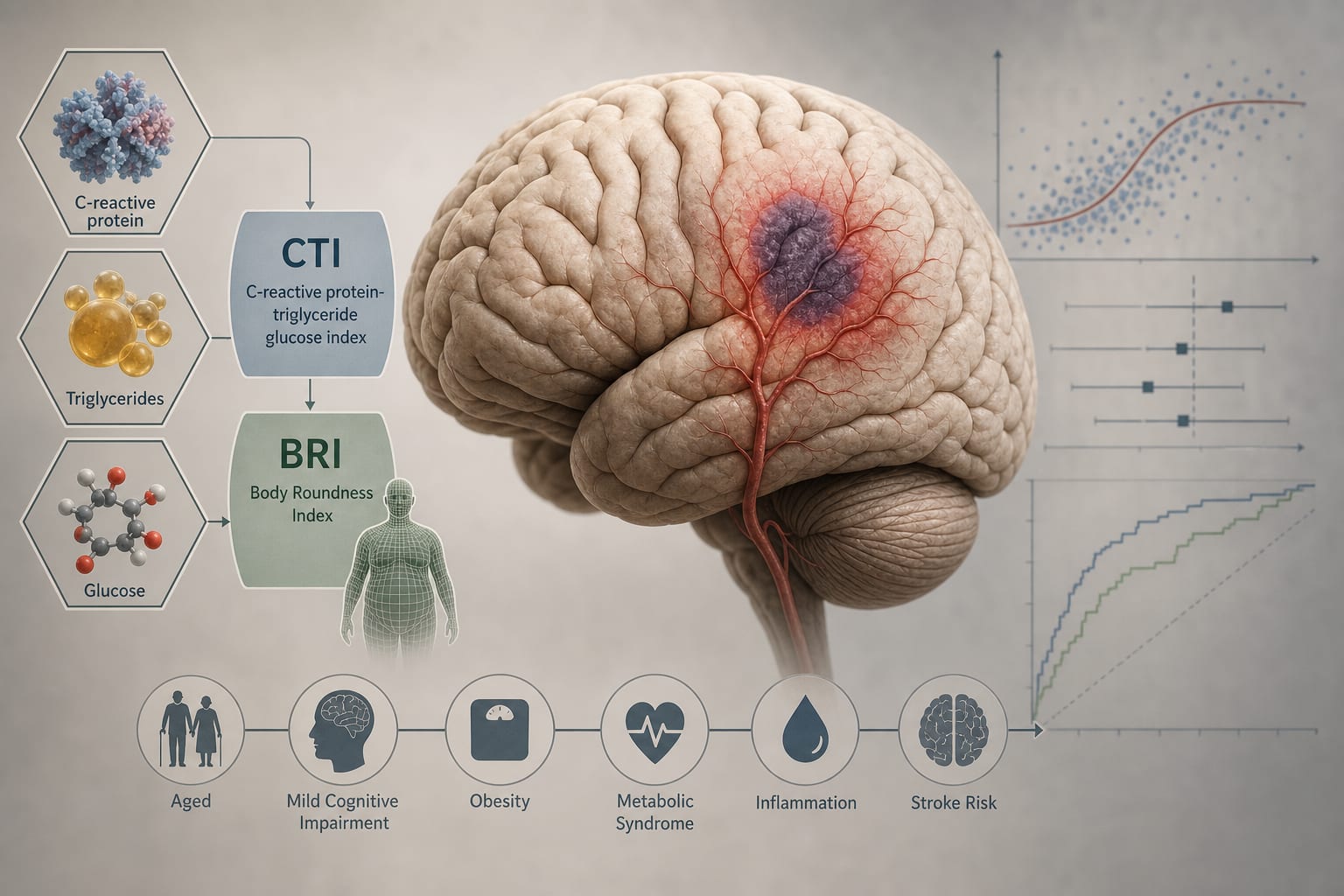
To evaluate the predictive value of the C-reactive protein-triglyceride glucose index (CTI) and the Body Roundness Index (BRI) for new-onset stroke in patients with mild cognitive impairment (MCI).
Approach:
Method: D
Method: a
Method: t
Method: a
Method: w
Method: e
Method: r
Method: e
Method: o
Method: b
Method: t
Method: a
Method: i
Method: n
Method: e
Method: d
Method: f
Method: r
Method: o
Method: m
Method: t
Method: h
Method: e
Method: C
Method: h
Method: i
Method: n
Method: a
Method: H
Method: e
Method: a
Method: l
Method: t
Method: h
Method: a
Method: n
Method: d
Method: R
Method: e
Method: t
Method: i
Method: r
Method: e
Method: m
Method: e
Method: n
Method: t
Method: L
Method: o
Method: n
Method: g
Method: i
Method: t
Method: u
Method: d
Method: i
Method: n
Method: a
Method: l
Method: S
Method: t
Method: u
Method: d
Method: y
Method: (
Method: C
Method: H
Method: A
Method: R
Method: L
Method: S
Method: )
Method: i
Method: n
Method: v
Method: o
Method: l
Method: v
Method: i
Method: n
Method: g
Method: 9
Method: 0
Method: 7
Method: e
Method: l
Method: i
Method: g
Method: i
Method: b
Method: l
Method: e
Method: p
Method: a
Method: r
Method: t
Method: i
Method: c
Method: i
Method: p
Method: a
Method: n
Method: t
Method: s
Method: .
Method: M
Method: u
Method: l
Method: t
Method: i
Method: v
Method: a
Method: r
Method: i
Method: a
Method: b
Method: l
Method: e
Method: l
Method: o
Method: g
Method: i
Method: s
Method: t
Method: i
Method: c
Method: r
Method: e
Method: g
Method: r
Method: e
Method: s
Method: s
Method: i
Method: o
Method: n
Method: m
Method: o
Method: d
Method: e
Method: l
Method: s
Method: a
Method: s
Method: s
Method: e
Method: s
Method: s
Method: e
Method: d
Method: t
Method: h
Method: e
Method: a
Method: s
Method: s
Method: o
Method: c
Method: i
Method: a
Method: t
Method: i
Method: o
Method: n
Method: s
Method: o
Method: f
Method: C
Method: T
Method: I
Method: a
Method: n
Method: d
Method: B
Method: R
Method: I
Method: w
Method: i
Method: t
Method: h
Method: s
Method: t
Method: r
Method: o
Method: k
Method: e
Method: r
Method: i
Method: s
Method: k
Method: .
Method: E
Method: x
Method: p
Method: l
Method: o
Method: r
Method: a
Method: t
Method: o
Method: r
Method: y
Method: s
Method: t
Method: r
Method: a
Method: t
Method: i
Method: f
Method: i
Method: e
Method: d
Method: a
Method: n
Method: a
Method: l
Method: y
Method: s
Method: e
Method: s
Method: w
Method: e
Method: r
Method: e
Method: p
Method: e
Method: r
Method: f
Method: o
Method: r
Method: m
Method: e
Method: d
Method: u
Method: s
Method: i
Method: n
Method: g
Method: p
Method: i
Method: e
Method: c
Method: e
Method: w
Method: i
Method: s
Method: e
Method: l
Method: i
Method: n
Method: e
Method: a
Method: r
Method: r
Method: e
Method: g
Method: r
Method: e
Method: s
Method: s
Method: i
Method: o
Method: n
Method: a
Method: n
Method: d
Method: r
Method: e
Method: c
Method: e
Method: i
Method: v
Method: e
Method: r
Method: o
Method: p
Method: e
Method: r
Method: a
Method: t
Method: i
Method: n
Method: g
Method: c
Method: h
Method: a
Method: r
Method: a
Method: c
Method: t
Method: e
Method: r
Method: i
Method: s
Method: t
Method: i
Method: c
Method: (
Method: R
Method: O
Method: C
Method: )
Method: c
Method: u
Method: r
Method: v
Method: e
Method: s
Method: b
Method: a
Method: s
Method: e
Method: d
Method: o
Method: n
Method: k
Method: e
Method: y
Method: b
Method: e
Method: h
Method: a
Method: v
Method: i
Method: o
Method: r
Method: a
Method: l
Method: a
Method: n
Method: d
Method: d
Method: e
Method: m
Method: o
Method: g
Method: r
Method: a
Method: p
Method: h
Method: i
Method: c
Method: c
Method: h
Method: a
Method: r
Method: a
Method: c
Method: t
Method: e
Method: r
Method: i
Method: s
Method: t
Method: i
Method: c
Method: s
Method: ,
Method: w
Method: i
Method: t
Method: h
Method: o
Method: p
Method: t
Method: i
Method: m
Method: a
Method: l
Method: c
Method: u
Method: t
Method: o
Method: f
Method: f
Method: v
Method: a
Method: l
Method: u
Method: e
Method: s
Method: c
Method: a
Method: l
Method: c
Method: u
Method: l
Method: a
Method: t
Method: e
Method: d
Method: f
Method: o
Method: r
Method: e
Method: a
Method: c
Method: h
Method: s
Method: t
Method: r
Method: a
Method: t
Method: u
Method: m
Method: .
Key Findings:
81 participants (8.93%) experienced a stroke during the follow-up period.
Each one-unit increase in CTI was associated with a 34% higher risk of stroke (OR: 1.34, 95% CI: 1.04–1.72, p < 0.05), demonstrating a significant increasing trend (P for trend < 0.05).
BRI showed no significant correlation with stroke occurrence (OR: 1.12, 95% CI: 0.97–1.30, p > 0.05).
Among MCI patients who smoked, each unit increase in CTI below 9.91 was significantly associated with elevated stroke risk (OR: 1.81, 95% CI: 1.09–3.01, p < 0.05).
CTI predictive performance showed no significant heterogeneity across populations (AUCs ranged from 0.55 to 0.61).
Optimal CTI cutoff values ranged from 8.20 to 9.28 across subgroups.
Interpretation:
CTI predicts stroke risk better than BRI among middle-aged and elderly Chinese patients with MCI.
Conclusion:
CTI is a significant predictor of stroke risk in MCI patients, highlighting its potential utility in clinical strategies for stroke prevention.