The high-risk phenotype for gastrointestinal vulnerability in sepsis and 28-day mortality: an integrative study based on clinical association and cross-level biological support - Summary - MDSpire
Advertisement
The high-risk phenotype for gastrointestinal vulnerability in sepsis and 28-day mortality: an integrative study based on clinical association and cross-level biological support
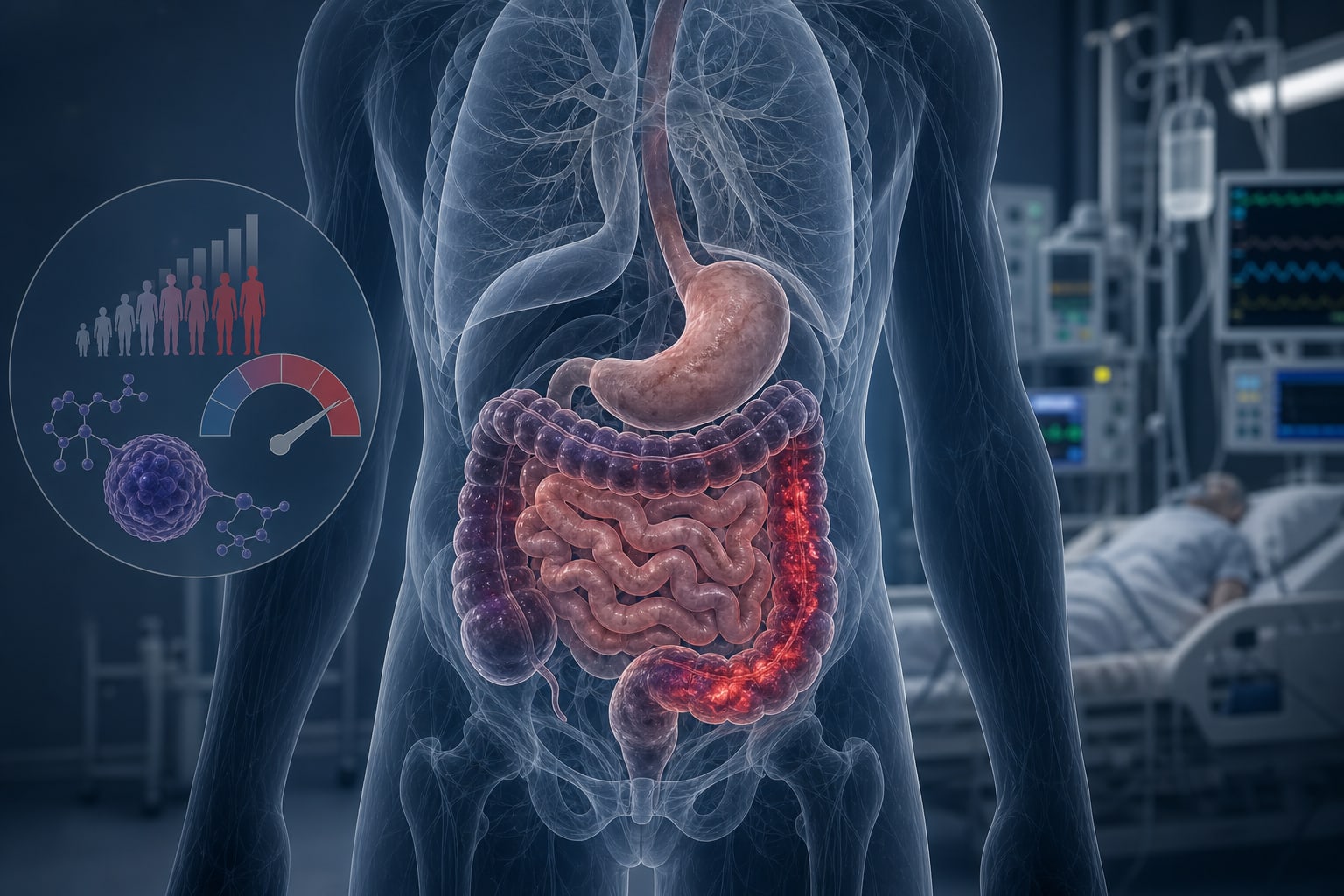
To define and evaluate the gastrointestinal vulnerability phenotype (GIVP) high-risk in sepsis, focusing on its prognostic relevance and biological plausibility.
Approach:
Study Design: Retrospective integrative study using ICU admission events from MIMIC-IV to construct GIVP high-risk based on three binary domains: early hemodynamic support or hypoperfusion, absence of early enteral nutrition initiation, and early iatrogenic exposure burden.
Key Findings:
GIVP high-risk was associated with increased 28-day mortality (OR = 1.216, 95% CI 1.143–1.295, P < 0.001).
Incremental prediction analysis showed minimal discrimination improvement in the full cohort.
External validation indicated that a reduced GIVP proxy was associated with hospital mortality (OR = 1.217, 95% CI 1.183–1.252, P < 0.001).
Cross-level analyses showed concordance with inflammatory and tissue remodeling patterns.
Interpretation:
GIVP high-risk retains a prognostic association with 28-day mortality in sepsis, with its incremental value being context-dependent and more pronounced in higher-severity cases.
Limitations:
The association may not imply causation.
Incremental prediction improvements were small and did not reach statistical significance in the full cohort.
The external validation did not replicate the full MIMIC-IV phenotype exactly.
Conclusion:
GIVP high-risk serves as a scalable phenotype for research on gastrointestinal vulnerability in sepsis, providing insights into its prognostic relevance and biological underpinnings.