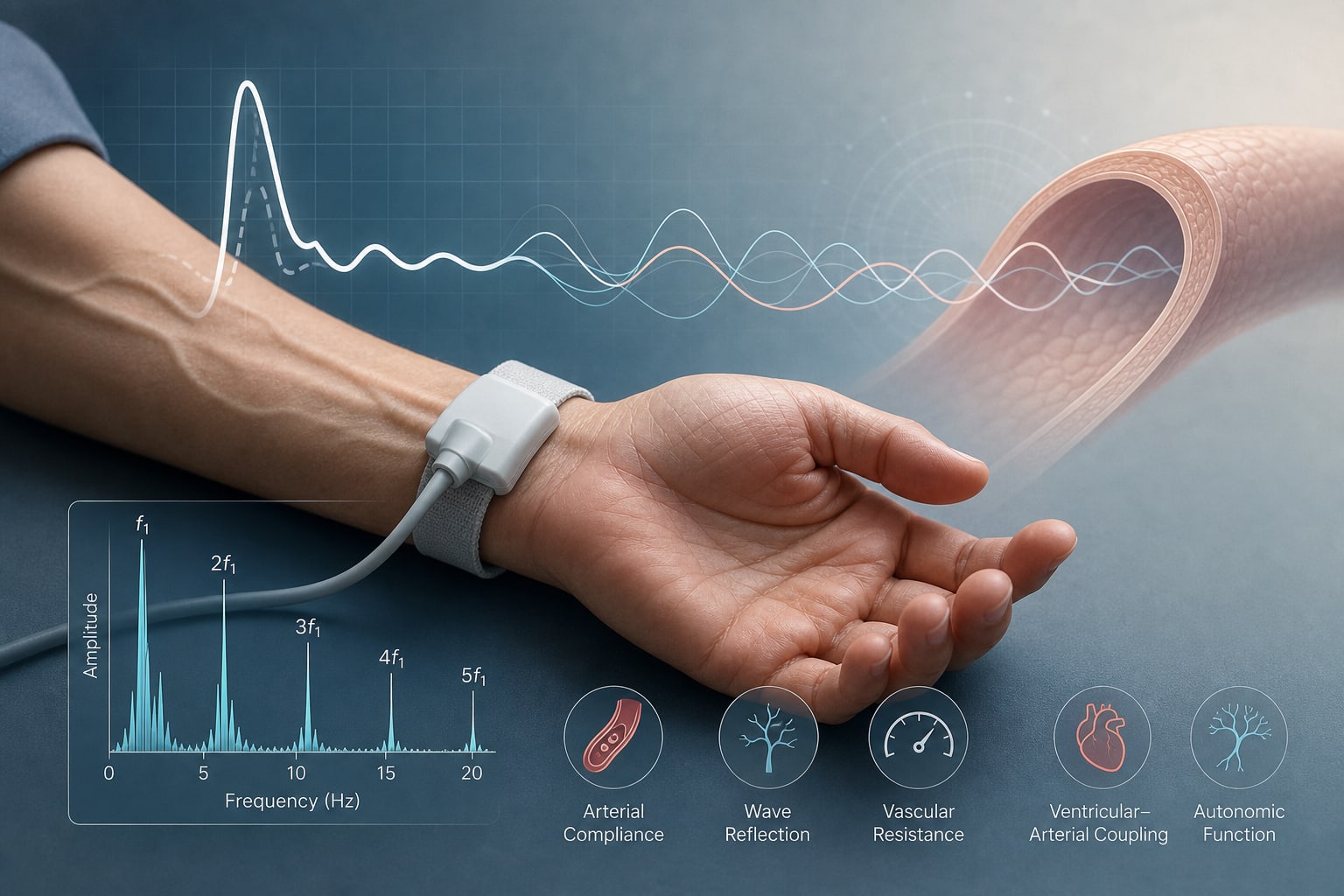
To summarize the theoretical foundations, signal-processing framework, methodological developments, and clinical applications of radial pulse harmonic analysis for non-invasive assessment of cardiovascular and metabolic physiology.
Approach:
Methodology Overview: The review discusses the decomposition of radial pressure pulse waveforms into harmonic components to provide insights into arterial compliance, wave reflection, vascular resistance, and ventricular–arterial coupling.
Clinical Applications: Emphasis is placed on the assessment of hypertension, diabetes mellitus, coronary artery disease, vascular aging, and autonomic dysfunction.
Technological Integration: The review highlights the integration of emerging computational cardiovascular technologies with harmonic analysis.
Key Findings:
Harmonic parameters are associated with arterial stiffness, endothelial dysfunction, autonomic dysregulation, vascular remodeling, and age-related hemodynamic alterations.
Advancements in sensor technology and signal-processing algorithms have improved the reproducibility and translational potential of harmonic analysis.
Emerging approaches such as Reservoir-Excess Pressure Analysis and wearable sensing technologies may enhance the clinical utility of pulse waveform analysis.
Interpretation:
Harmonic analysis offers a quantitative framework for non-invasive cardiovascular assessment and may complement existing cardiovascular biomarkers.
Limitations:
Further methodological standardization is required.
Mechanistic validation and large-scale prospective studies are needed before broader clinical implementation.
Conclusion:
Radial pulse harmonic analysis represents a promising approach for evaluating vascular function and systemic hemodynamics in cardiometabolic health.