Donor–recipient HLA molecular mismatch and T follicular helper-related genetic variants are associated with dnDSA development after kidney transplantation - Summary - MDSpire
Advertisement
Donor–recipient HLA molecular mismatch and T follicular helper-related genetic variants are associated with dnDSA development after kidney transplantation
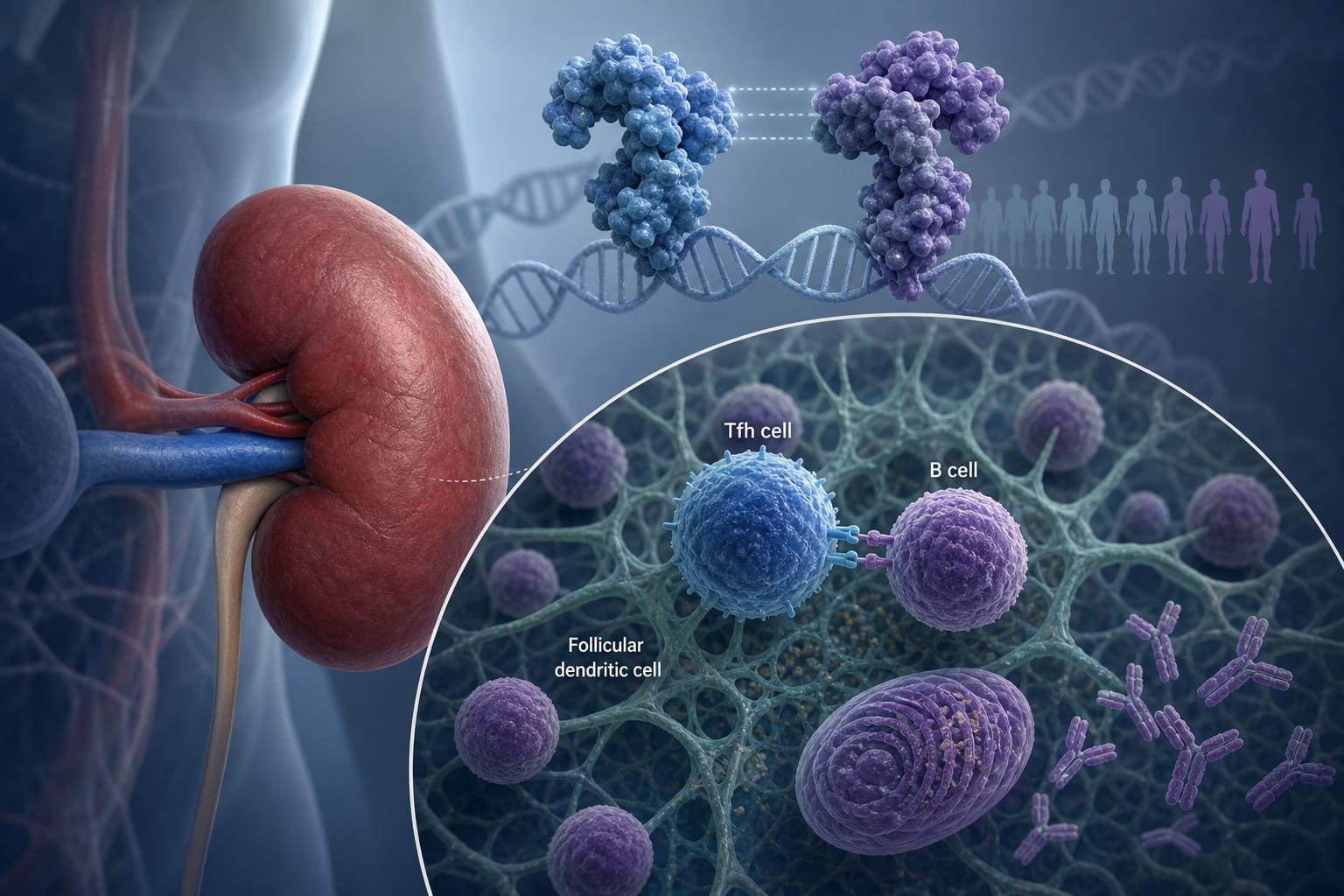
To investigate the association between HLA molecular mismatch and recipient T follicular helper (Tfh) cell-related genetic variations with the development of de novo donor-specific antibodies (dnDSAs) after kidney transplantation.
Approach:
Study Design: Retrospective single-center cohort study analyzing 210 kidney transplant recipients from 2011 to 2024.
HLA Mismatch Analysis: Quantified donor–recipient HLA molecular mismatch using eplet mismatch analysis, PIRCHE-T2, and HLA-EMMA.
Genotyping: Recipient single-nucleotide polymorphisms in Tfh-related genes (CXCR5 rs3922 and CTLA4 rs231775) were genotyped.
Primary Endpoint: Class II dnDSA development defined as newly detected donor-specific antibodies with a normalized mean fluorescence intensity >1,000 and persistence confirmed at least six months later.
Statistical Analysis: Associations between candidate variables and class II dnDSA development were assessed using Firth penalized logistic regression.
Key Findings:
20 recipients (9.5%) developed class II dnDSAs during follow-up.
Higher class II molecular mismatch loads were significantly associated with dnDSA development, with HLA-EMMA showing the strongest association.
High HLA-EMMA class II load and Tfh cell-related immunogenetic variation were independently associated with class II dnDSA development.
Recipients with both high HLA-EMMA class II load and Tfh-related polymorphisms showed the highest cumulative incidence of dnDSA development.
Interpretation:
Both donor-derived structural antigenicity and recipient Tfh-related immunogenetic variation are associated with the development of class II dnDSAs after kidney transplantation.
Limitations:
The study is retrospective and conducted at a single center.
The identified thresholds and integrated risk stratification approach require validation in independent cohorts.
Conclusion:
The integration of HLA molecular mismatch and Tfh-related genetic variations may enhance understanding of dnDSA development.