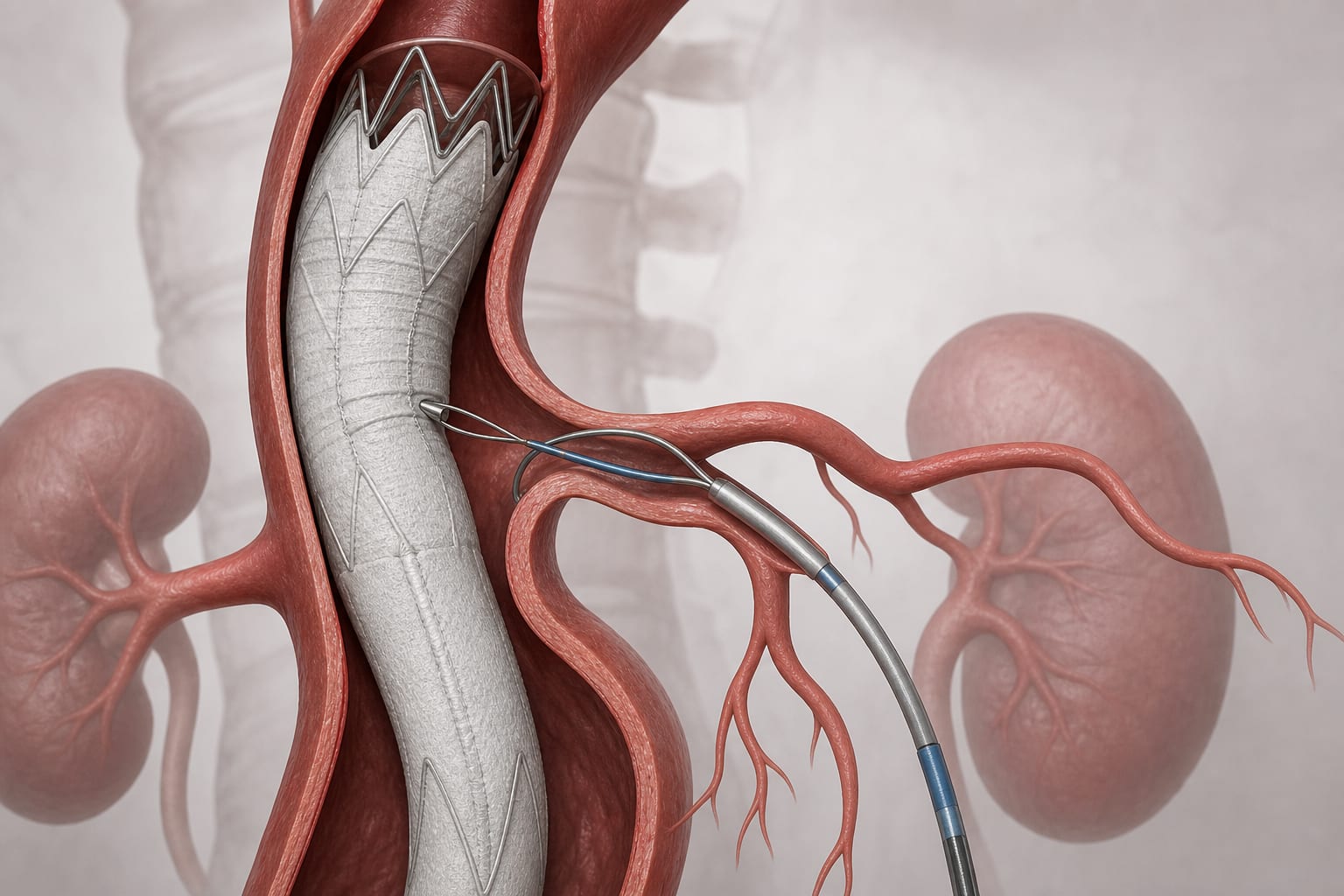
To describe a modified Snare-Ride technique for stable target vessel sheath positioning and safe stent delivery during FB-EVAR in challenging anatomical scenarios.
Approach:
Technique Description: A modified Snare-Ride technique was employed to achieve through-and-through access and stabilize the delivery sheath at the target vessel origin, minimizing the risk of intimal injury and vessel dissection.
Key Findings:
The modified Snare-Ride technique reduces the risk of intimal injury and vessel dissection compared to the classic technique.
This technique serves as a practical bailout option when standard target vessel catheterization fails.
Interpretation:
The modified Snare-Ride technique is effective in managing difficult anatomical challenges during FB-EVAR procedures.
Limitations:
The study does not provide extensive data on long-term outcomes or complications associated with the modified technique.
The case report is based on a single patient experience, limiting generalizability.
Conclusion:
The modified Snare-Ride technique offers a viable solution for achieving successful catheterization in complex cases of FB-EVAR.
As ASE convenes its 37th Scientific Sessions near Denver, the meeting will spotlight echocardiographic AI and big data, contrast-enhanced ultrasound, evolving guidelines, the Feigenbaum Lecture, and the future of the sonographer workforce.