Conexiant’s news site is now MDSpire News. Learn more
Advertisement
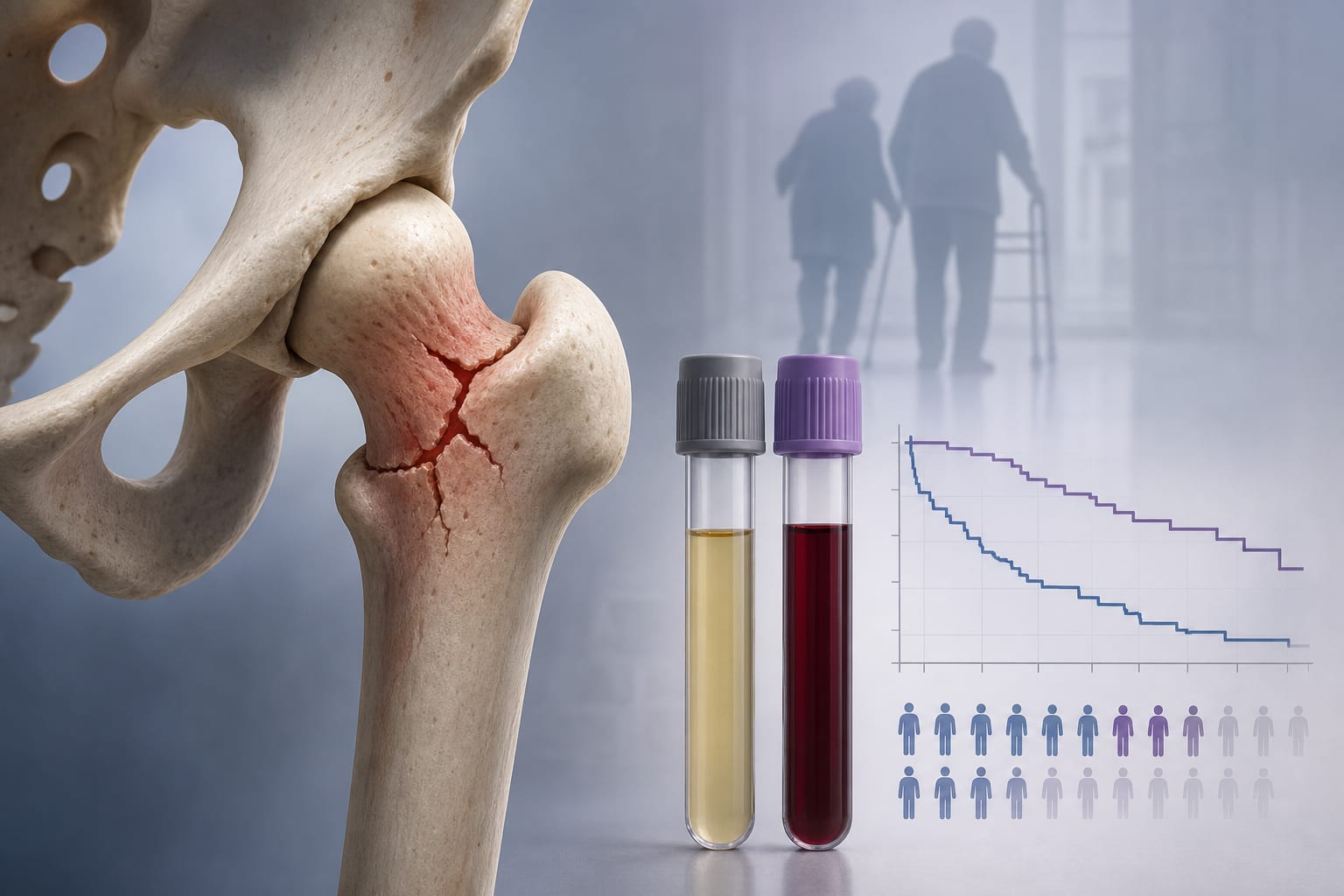
Association of Blood Urea Nitrogen to Albumin Ratio with One-Year Mortality Following Hip Fracture Surgery in Elderly Patients: A Retrospective Cohort Analysis
To evaluate the association between blood urea nitrogen to albumin ratio (BAR) and the risk of 1-year all-cause mortality after hip fracture (HF) surgery in elderly patients.
Approach:
Study Design: A single center, retrospective cohort study including patients aged 60 years or older who underwent surgery for HF between May 2016 and December 2021.
Data Collection: Clinical data and laboratory test results were obtained from electronic medical records, and survival status was confirmed through follow-up.
Statistical Analysis: Logistic regression analysis was used to evaluate associations between BAR and 1-year mortality, with further analyses including RCS, AUC, sensitivity, and subgroup analyses.
Key Findings:
A total of 521 patients were included, of whom 77 died within 1 year after hip fracture, corresponding to a mortality rate of 14.8%.
In univariate analysis, several indicators including BAR were associated with mortality risk.
After adjustments, only BAR remained significantly associated with mortality (OR = 1.13, 95% CI: 1.05–1.22, P < 0.01).
The AUC for BAR was 0.67, indicating moderate predictive performance.
Interpretation:
Higher BAR early after admission is associated with increased risk of 1-year mortality in older patients with hip fracture.
Limitations:
The study is retrospective and conducted at a single center, which may limit generalizability.
The predictive performance of BAR was moderate and requires further validation in multicenter prospective studies.
Conclusion:
BAR may serve as a simple and low-cost auxiliary indicator for risk stratification in older patients after hip fracture surgery.