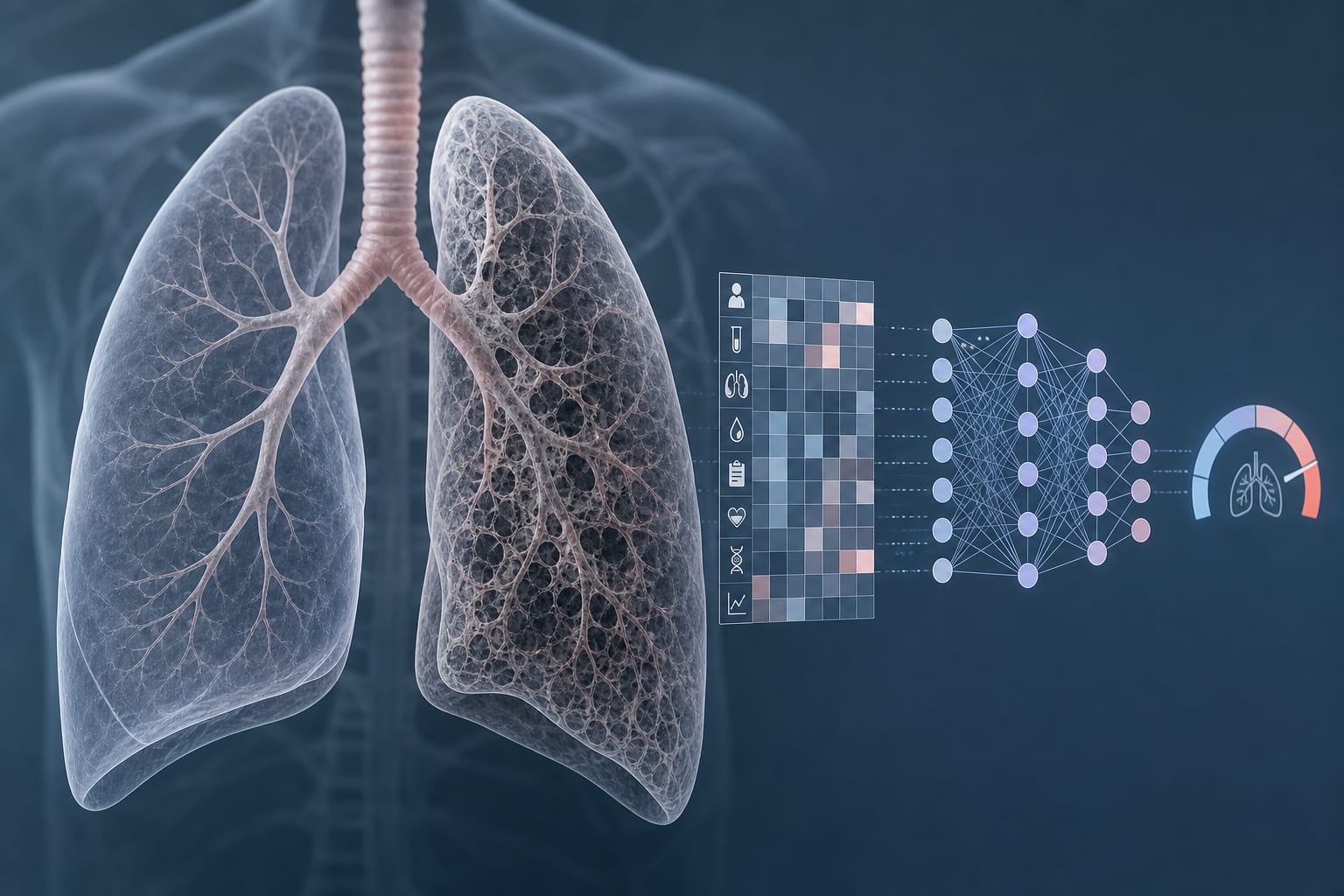
To develop and validate a classification and diagnostic model for rheumatoid arthritis-associated interstitial lung disease (RA-ILD) using routine clinical and laboratory parameters.
Key Findings:
24.39% of RA patients were diagnosed with RA-ILD.
Seven features were identified for model construction: age, smoking history, LYMPH, LDH, RF, CA125, and CA199.
The CatBoost model achieved the highest AUC of 0.784 and the lowest Brier score of 0.158.
The decision tree model showed strong classification efficacy with the highest recall (0.653) and F1-score (0.603).
Interpretation:
The CatBoost and decision tree models demonstrated comparable performance for RA-ILD classification, indicating their potential utility in clinical practice for risk stratification.
Limitations:
The study was conducted at a single center, limiting generalizability.
Further external validation is needed to confirm model efficacy.
Conclusion:
The developed machine learning models, particularly CatBoost and decision tree, hold promise for aiding in the early identification of RA-ILD, potentially improving patient outcomes.