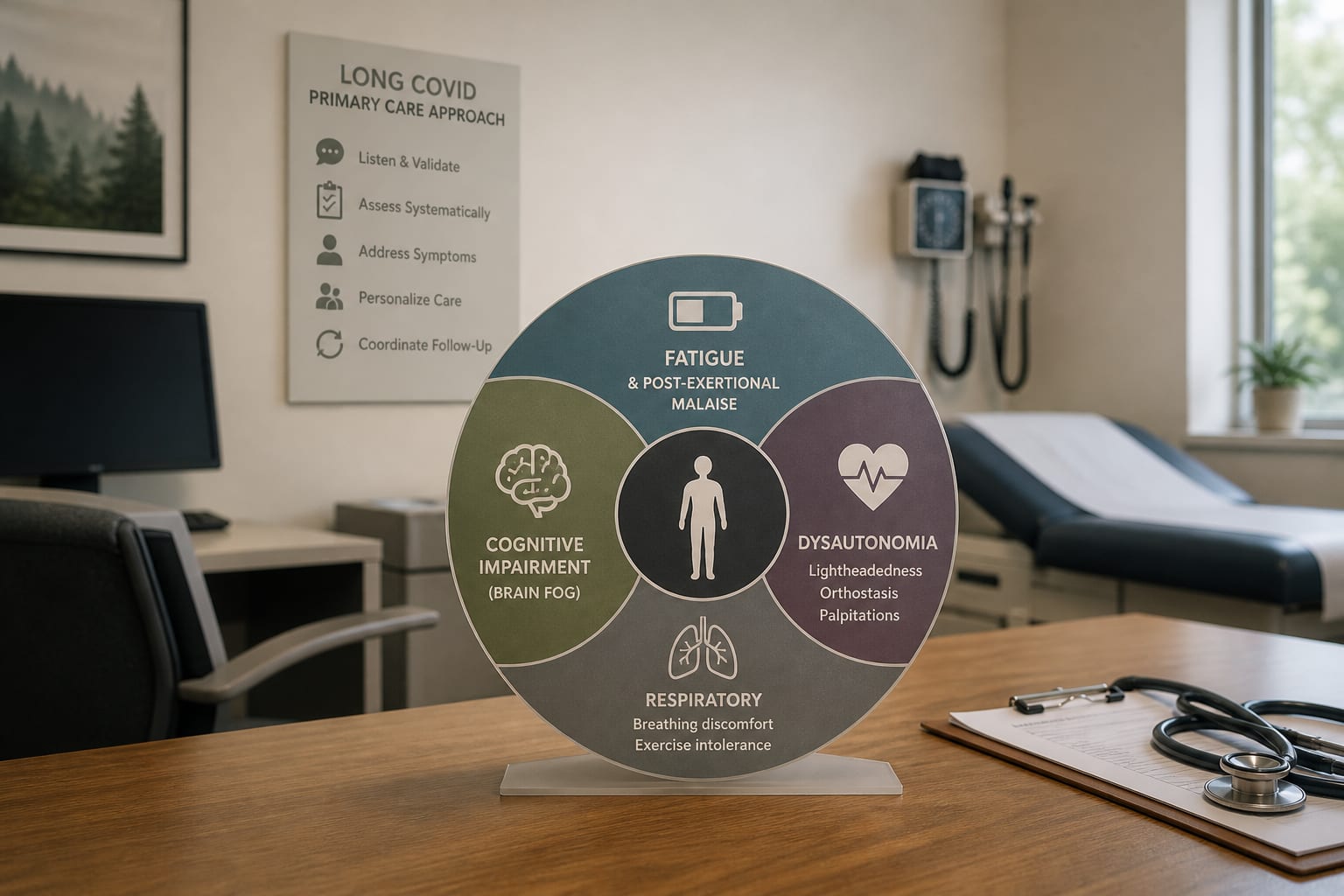
Present a pragmatic primary-care framework for recognizing and evaluating Long COVID, counseling patients, initiating symptom-based management, and considering specialty referral.
Approach:
Review type: Narrative review presenting a pragmatic framework centered on primary care.
Clinical framing: Describes common symptom clusters and illustrative cases involving fatigue and post-exertional malaise, dysautonomia, and cognitive impairment.
Mechanism framework: Introduces a clinical framework that groups Long COVID manifestations into three categories; the supplied excerpt describes enduring effects of acute end-organ tissue injury and begins, but does not complete, its account of the second category.
Key Findings:
The review cites estimates that approximately 6% of US adults and 0.5% of children and adolescents experience new or persistently worsened symptoms that began soon after acute SARS-CoV-2 infection.
Frequently reported symptoms include fatigue, post-exertional malaise, cognitive impairment, and lightheadedness or orthostasis. Gastrointestinal symptoms, sleep disturbance, pain, and breathing discomfort may also occur.
In clinical settings, Long COVID may be conceptualized as new or worsened symptoms following confirmed or suspected acute SARS-CoV-2 infection that continue beyond three months.
The review notes that validated diagnostic biomarkers and curative treatment for Long COVID are lacking.
Interpretation:
The review presents Long COVID as a condition with varied symptoms and describes how recognizing common symptom clusters may facilitate identification of Long COVID and associated conditions, including ME/CFS and POTS.
Limitations:
The supplied context is truncated during the discussion of the proposed pathophysiological categories.