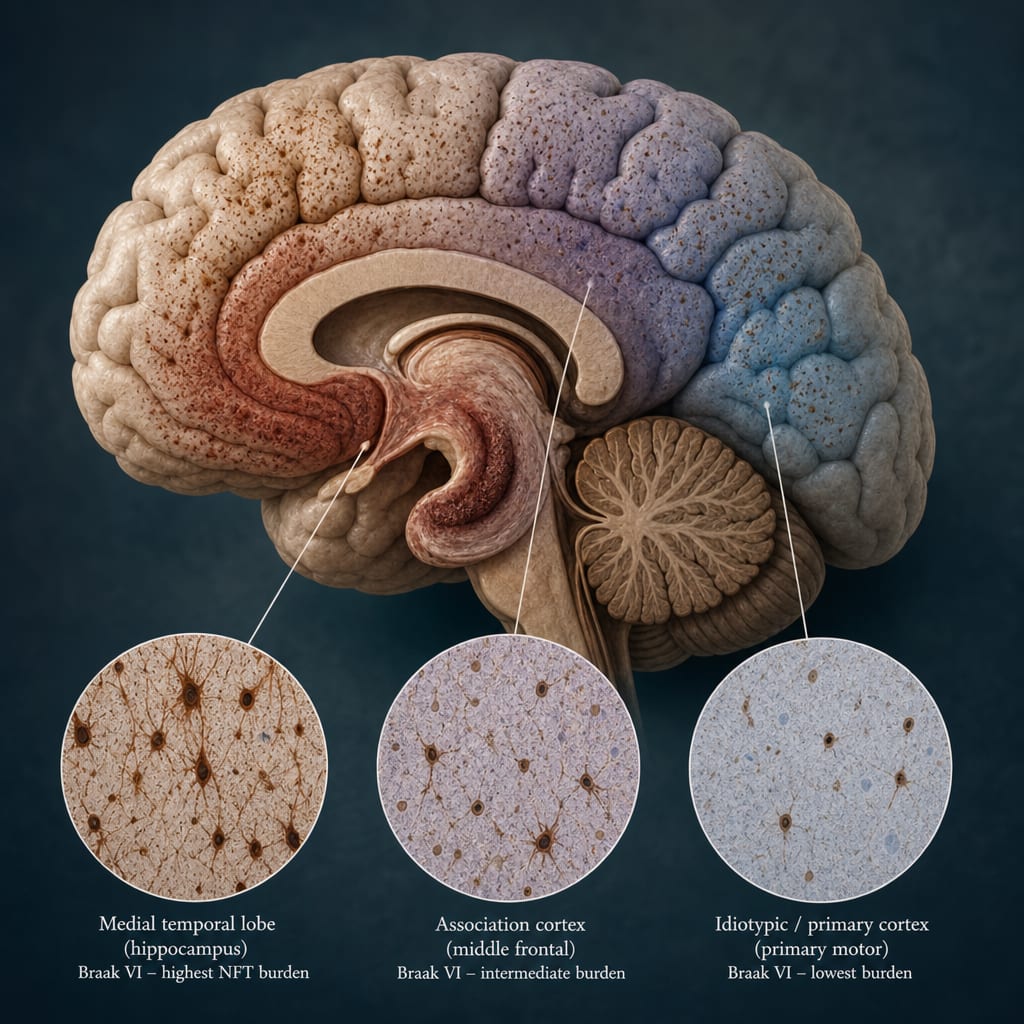
To explore the relationship between white matter changes and Alzheimer's disease (AD) pathology, particularly focusing on the role of tau deposition in influencing white matter integrity.
Key Findings:
Cortical tau deposition is associated with lower baseline volume of connected white matter regions and accelerated white matter volume loss over time.
Lower white matter volume does not predict faster tau accumulation in adjacent cortical regions, indicating a one-way relationship.
Faster tau accumulation correlates with faster degeneration of connected white matter regions, suggesting a potential causal link.
Interpretation:
The findings suggest that white matter changes are a downstream consequence of AD pathology, with tau aggregation potentially leading to white matter degeneration, highlighting the need for further investigation into this relationship.
Limitations:
The study's directionality may reflect measurement sensitivity rather than true causality, which could misinterpret the relationship.
MRI-derived volume loss may miss early white matter alterations, limiting the understanding of initial changes.
The analysis used an atlas from healthy participants, potentially overlooking individual differences that could affect results.
Only macroscopic changes were examined, ignoring the potential impact of microscopic white matter pathology on the findings.
Conclusion:
The study supports the idea that tau-mediated white matter damage may precede clinical symptoms in AD, emphasizing the need for further research into the mechanisms linking tau pathology and white matter integrity.