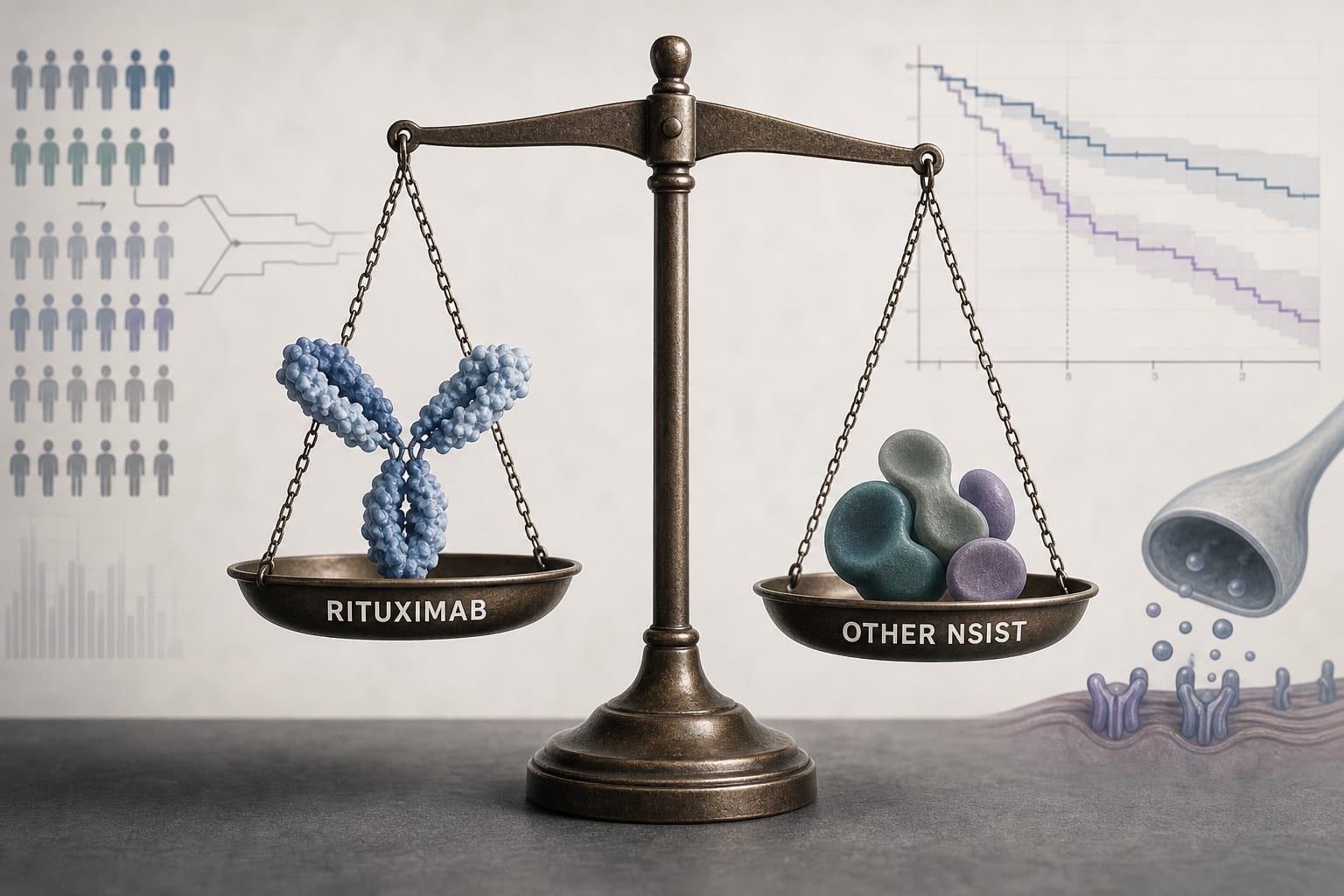
To evaluate the effectiveness of rituximab compared to a second non-steroidal immunosuppressive therapy (NSIST) in achieving a composite clinical outcome in acetylcholine-receptor-antibody (AChR-Ab) positive myasthenia gravis patients using causal inference methods to adjust for confounding.
Approach:
Study Design: Retrospective cohort study of AChR-Ab positive MG patients treated with rituximab or a second NSIST.
Outcome Measurement: Primary outcome was time to achieving a composite clinical endpoint representing a patient acceptable symptom state (PASS).
Statistical Methods: Inverse probability of treatment weighting (IPTW) was used to balance baseline covariates, and Cox proportional hazards models estimated treatment effects.
Key Findings:
169 patients were included in the time-to-event analysis.
After IPTW adjustment, baseline characteristics between treatment groups were balanced.
No statistical difference in hazard ratio between rituximab and a second NSIST in achieving the composite clinical outcome (HR = 1.27, 95% CI 0.66–2.45, p = 0.48), which was defined as a Myasthenia Gravis Composite (MGC) score ≤ 3, daily corticosteroid dose ≤ 5 mg prednisolone equivalent, and no rescue therapy use in the preceding month.
Interpretation:
In this IPTW-adjusted analysis, there was no improvement in time-to-improvement with rituximab compared to a second NSIST in AChR-Ab-positive MG.
Limitations:
The study is based on real-world data, which may introduce variability in treatment administration and patient characteristics.
The analysis is retrospective, which may limit causal inferences.
Conclusion:
Rituximab did not demonstrate superior effectiveness compared to a second NSIST in this cohort of AChR-Ab positive myasthenia gravis patients.
by Yong Lin Wang, Chao Zhu, Mahima Kapoor, Gary Cutter, Carolina Barnett-Tapia, Helmut Butzkueven, Wenwen Zhang, Gabor Lovas, Csilla Rozsa, Jeannine Heckmann, Stefan Blum, Laurie McLaughlin, Katherine Buzzard, Yi Chao Foong, Elisabeth Chroni, Dimitra Veltsista, Belinda Cruse, Mina Botrous, Stephen Reddel, Mastura Monif, Anneke van der Walt