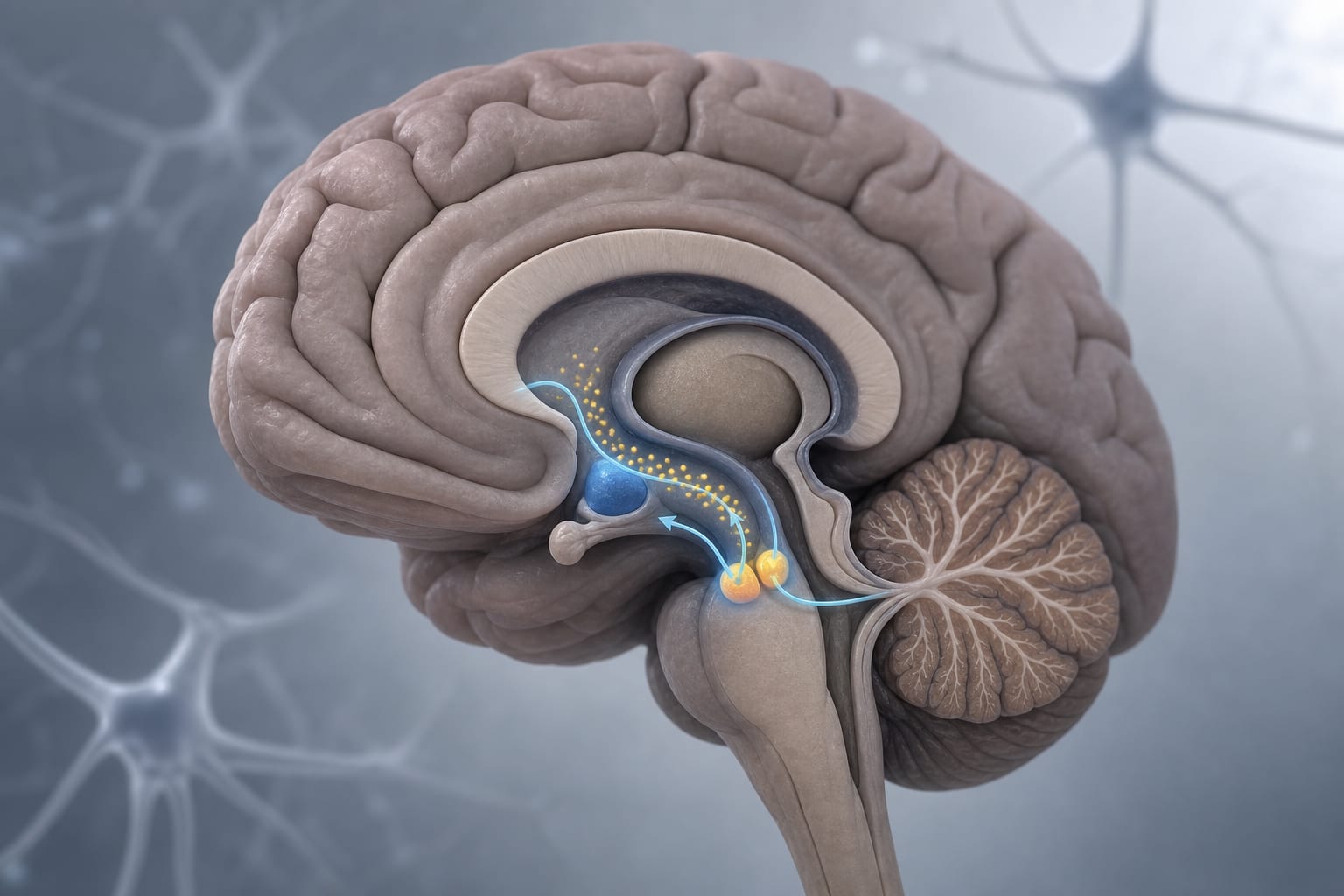
To investigate the role of central cholinergic dysfunction in the development and progression of visual hallucinations in Parkinson's disease, highlighting its significance in improving patient outcomes.
Key Findings:
Visual hallucinations are prevalent in Parkinson's disease and linked to cognitive decline and increased mortality.
Cholinergic dysfunction may significantly contribute to the emergence of visual hallucinations.
Anticholinergics can induce visual hallucinations, while cholinesterase inhibitors may reduce psychotic symptoms.
Interpretation:
Cholinergic dysfunction serves as a potential unifying substrate for the complex mechanisms underlying visual hallucinations in Parkinson's disease.
Limitations:
Current treatments for visual hallucinations in PD are limited, and specific areas for further research include the exploration of cholinergic system interactions with other neurotransmitter systems.
Further research is needed to fully elucidate the cholinergic system's role in visual hallucinations, particularly in diverse patient populations.
Conclusion:
A deeper understanding of cholinergic neurobiology could lead to improved management of visual hallucinations and psychotic symptoms in Parkinson's disease, ultimately enhancing patient quality of life.