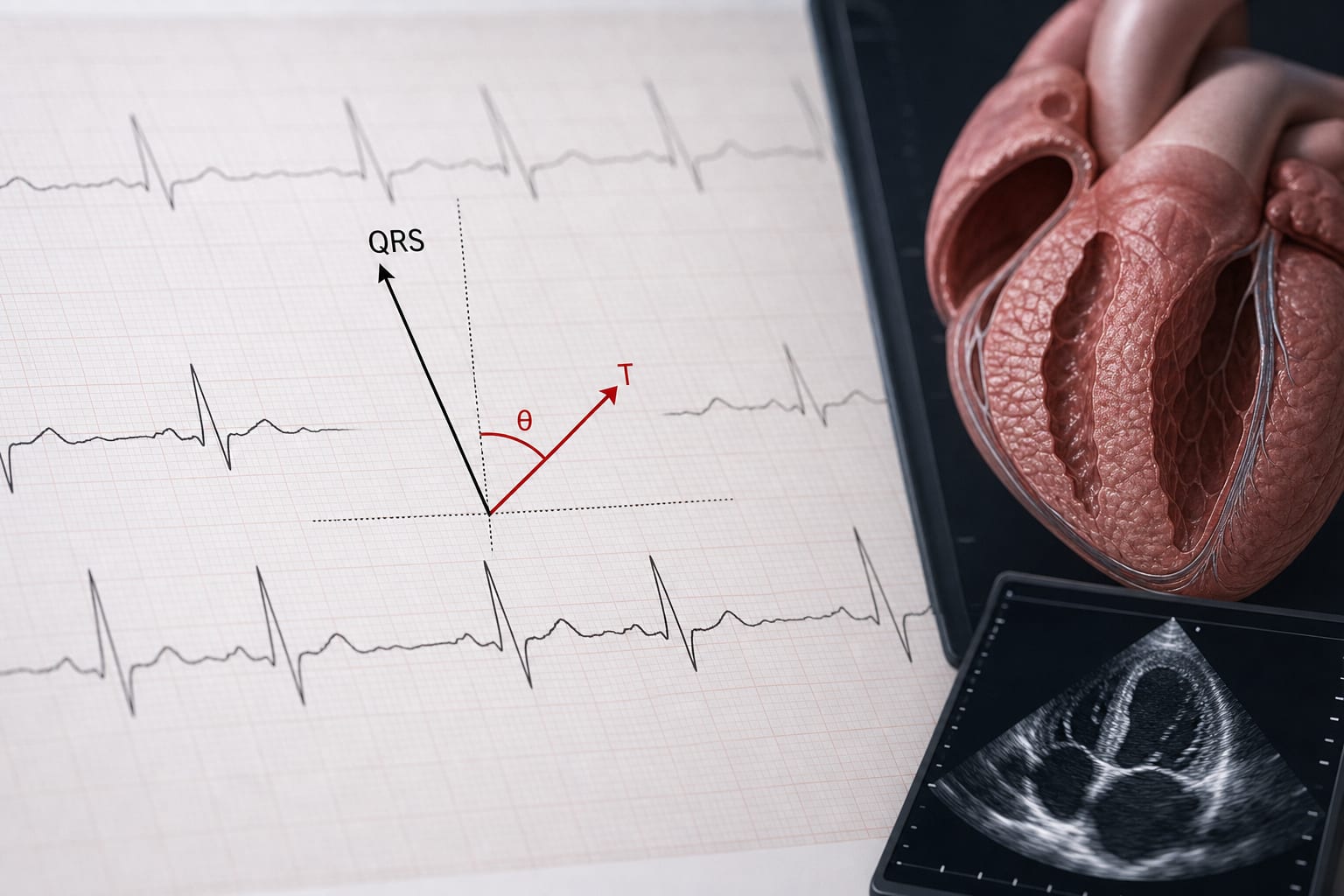
To evaluate the utility of the frontal QRS–T angle in detecting hypertrophic cardiomyopathy (HCM) among a large cohort of community-screened participants aged 3 to 30 years, specifically including both ages.
Key Findings:
Frontal QRS–T angle can be calculated from standard 12-lead ECG without specialized equipment, highlighting its accessibility.
A frontal QRS–T angle greater than 90° has been proposed as a threshold for identifying HCM, suggesting a potential clinical guideline.
The study focused on younger, asymptomatic, or athletic populations, where the diagnostic value of the frontal QRS–T angle was previously uncertain, indicating a gap in current screening practices.
Interpretation:
The study aims to determine if the frontal QRS–T angle can serve as a reliable, non-invasive, and cost-effective screening tool for early identification of HCM.
Limitations:
The study is retrospective and may be subject to selection bias, which could influence the generalizability of the findings.
The diagnostic performance of the frontal QRS–T angle in diverse populations remains to be fully established, necessitating further research.
Conclusion:
The frontal QRS–T angle may provide a useful screening metric for HCM in community settings, particularly among younger individuals, potentially transforming early detection strategies.