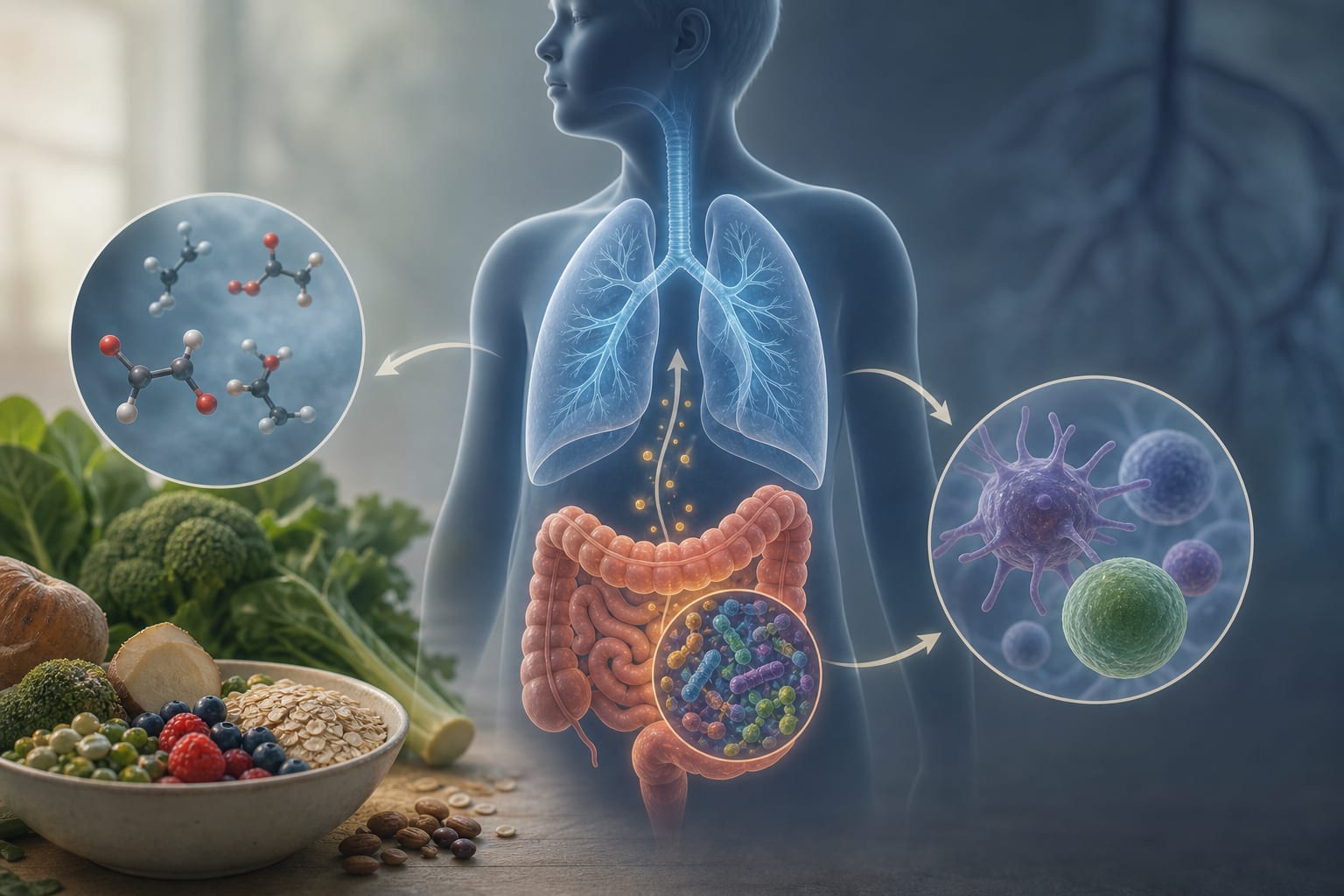
To systematically examine how high-fiber diets modulate the gut–lung axis through microbiota-derived metabolites and to elucidate the mechanisms linking diet, gut microbiota, and asthma pathogenesis.
Approach:
Review of Literature: The review integrates current evidence on microbial composition, metabolite production, and immune regulation, focusing on both SCFAs and non-SCFA metabolites.
Key Findings:
High-fiber diets significantly reshape gut microbial composition and enhance the production of SCFAs.
SCFAs promote regulatory T-cell expansion, restore Th1/Th2 balance, and alleviate airway inflammation in asthma.
Different types of dietary fiber, such as inulin and pectin, have distinct effects on microbial responses and metabolite production.
Interpretation:
While clinical observations suggest that high-fiber intake can improve asthma symptoms and lung function, its long-term efficacy and generalizability across diverse populations require further investigation.
Limitations:
Existing studies primarily focus on SCFAs, leaving other microbiota-derived metabolites underexplored.
The precise mechanistic pathways linking dietary fiber to systemic immune modulation in asthma remain incompletely understood.
Conclusion:
Further research is needed to explore the potential of microbiota-targeted dietary interventions for asthma prevention and management.