To summarize current advances in spatial profiling technologies and their significant impact on understanding liver physiology and pathology.
Key Findings:
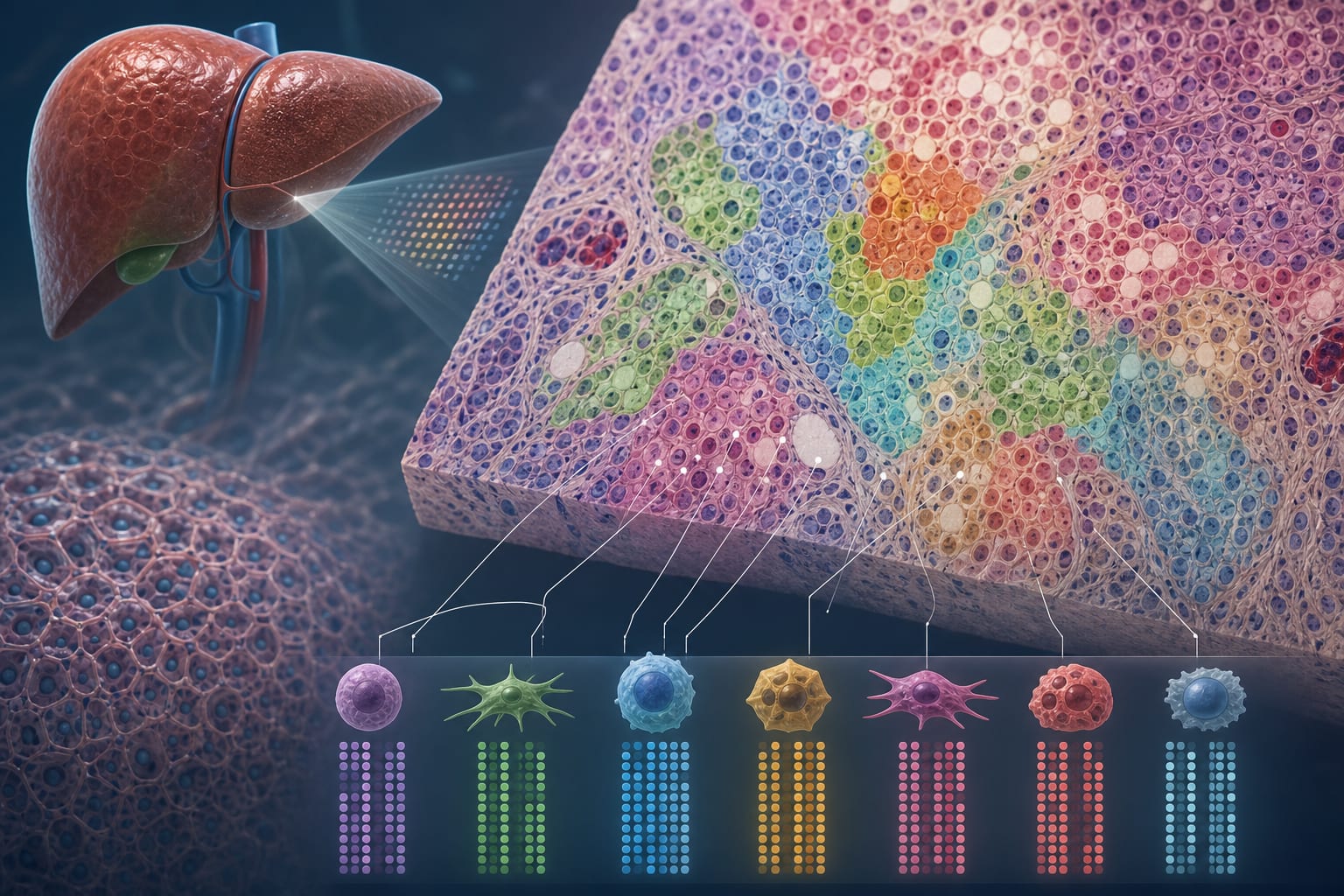
Spatial omics technologies enhance understanding of liver microarchitecture and its alterations in disease, leading to potential new diagnostic markers.
Integration of single-cell RNA sequencing with spatial methods reveals zonal functional differences in hepatocytes, which could inform targeted therapies.
Spatial transcriptomics and proteomics have been recognized for their transformative impact on tissue organization understanding, paving the way for novel therapeutic strategies.
Interpretation:
The study emphasizes the importance of spatial organization in liver function and disease, suggesting that spatial omics can lead to improved diagnostic and therapeutic strategies, particularly in personalized medicine.
Limitations:
Challenges in spatial resolution and gene coverage across different technologies, such as limitations in detecting low-abundance transcripts.
Potential technical limitations in integrating multi-omic data, which may hinder comprehensive analysis.
Conclusion:
Advancements in spatial omics hold significant promise for enhancing liver disease diagnosis and treatment through a better understanding of spatial cellular interactions, ultimately improving patient outcomes.
U.S. News & World Report has recognized Dana-Farber/Boston Children’s Cancer and Blood Disorders Center as the #1 pediatric cancer program in the nation in its 2026-2027 Best Children’s Hospitals report.