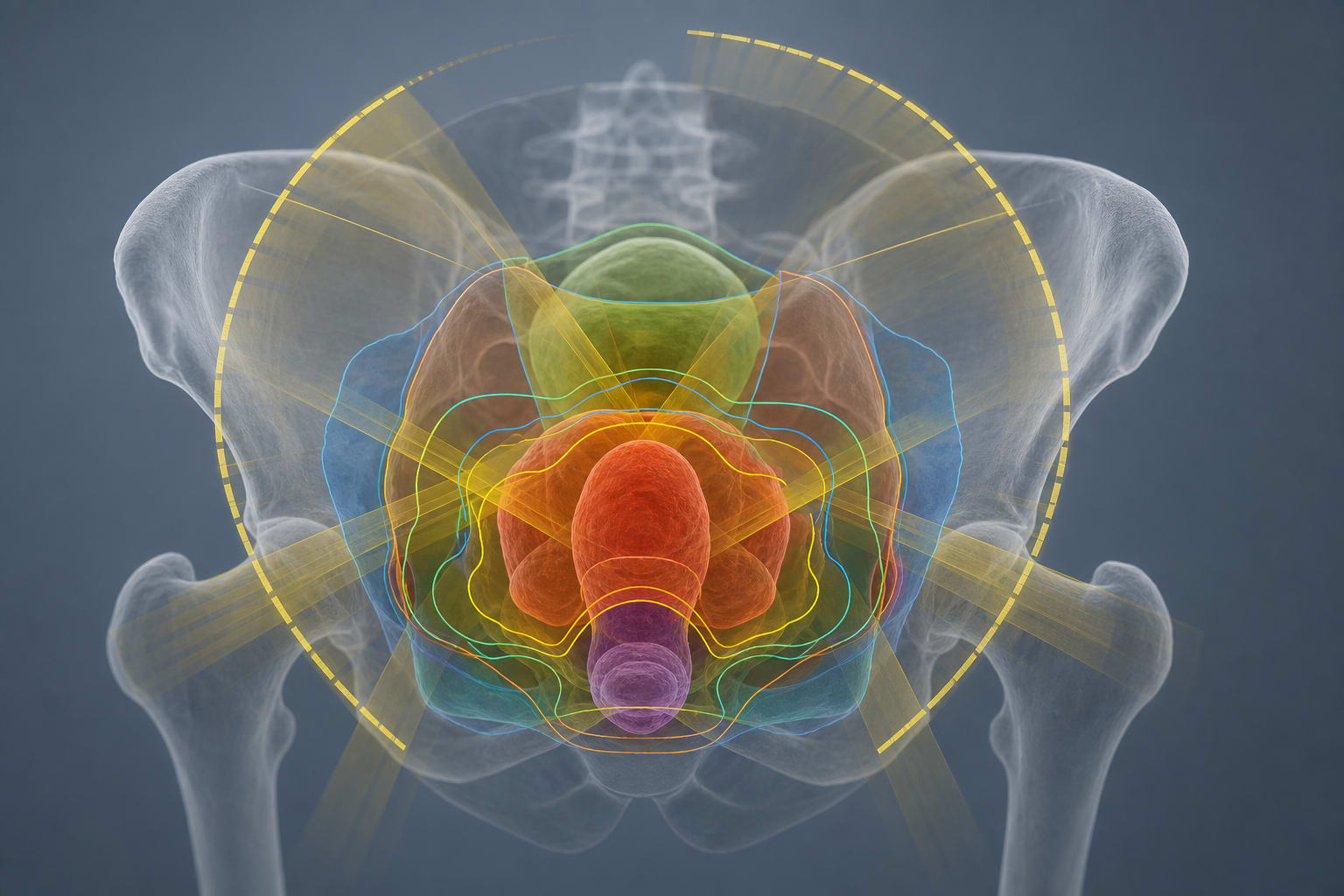
To describe the prevalence of decision regret and investigate its determinants, including health-related quality of life and decision-making processes, in patients treated with EBRT combined with HDR-BT boost for prostate cancer.
Key Findings:
Approximately 57% of cancer patients reported some degree of decision regret after radiotherapy, highlighting the need for improved patient support.
Mean decision regret score was 14, indicating mild regret, suggesting that many patients may benefit from enhanced decision-making resources.
Determinants of decision regret included health-related quality of life, shared decision-making, and treatment outcomes, which should be considered in future patient care strategies.
Interpretation:
Decision regret is prevalent among patients undergoing EBRT combined with HDR-BT boost, influenced by various factors including quality of life and decision-making processes.
Limitations:
Study limited to a single cancer center, potentially affecting generalizability; findings may not apply to broader populations.
Retrospective nature may introduce bias in self-reported outcomes, necessitating caution in interpreting results.
Conclusion:
Understanding decision regret in prostate cancer treatment is crucial for informing patient care and improving shared decision-making processes, ultimately enhancing patient satisfaction and outcomes.
by Lars Haack, David Krug, Severin Rodler, Philipp Nuhn, Christof van der Horst, Christian Schulz, Olaf Wittenstein, Claudia Schmalz, Oliver Blanck, Frank-André Siebert, Alexander Fabian
Recent research at Roswell Park Comprehensive Cancer Center led by Anurag Singh, MD, Director of Radiation Research, has shown that for patients with peripherally located lung cancer, one treatment of stereotactic body radiation therapy (SBRT) is equally effective as longer courses radiation therapy.