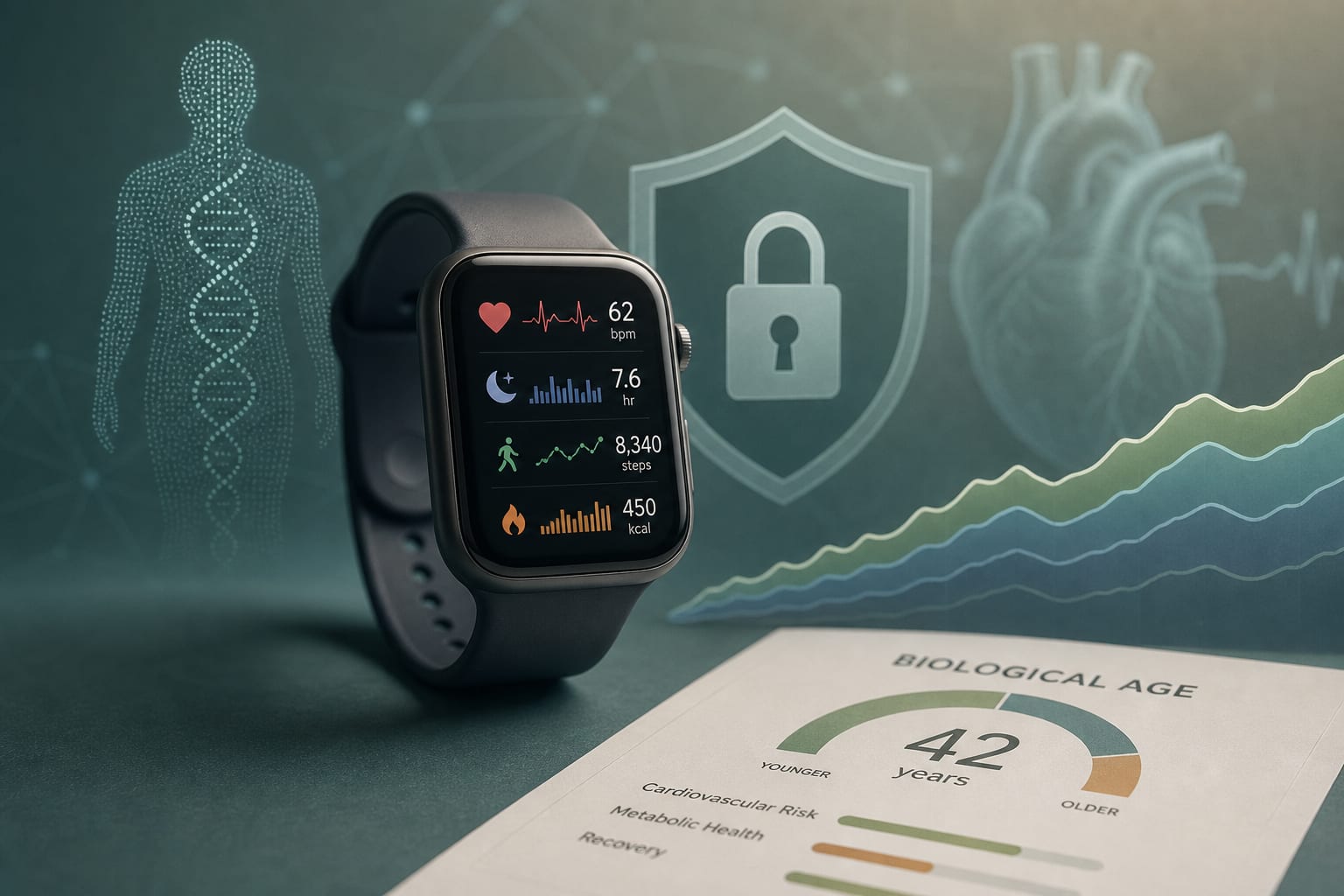
To clarify the distinction between scientific evidence and marketing claims regarding wearable biological aging indicators, emphasizing the implications for consumer understanding.
Approach:
Key Findings:
Wearable biological age scores are based on proxy data and do not provide a definitive measure of health.
Aging clocks can aid in prevention and behavior change but may misrepresent health without clinical context.
Loosened regulations on wearable devices may compromise health data privacy.
Consumer models risk oversimplifying complex biological data, potentially leading to user anxiety.
Interpretation:
Wearable devices provide insights into biological age through proxy data but lack the depth and validation of clinically validated aging clocks, necessitating careful interpretation.
Interpretation of wearable data requires clinical context to avoid anxiety or misrepresentation of health.
Conclusion:
While wearables can motivate healthier behaviors, they should not be viewed as definitive measures of biological age or health status, and clinical assessments remain essential.