A systems-oriented Ayurvedic approach in chronic plaque psoriasis with renal inflammatory indicators: a 2-year longitudinal case report - Summary - MDSpire
To evaluate the effectiveness of a staged Ayurvedic treatment protocol in managing chronic plaque psoriasis associated with renal inflammation and psychological stress.
Approach:
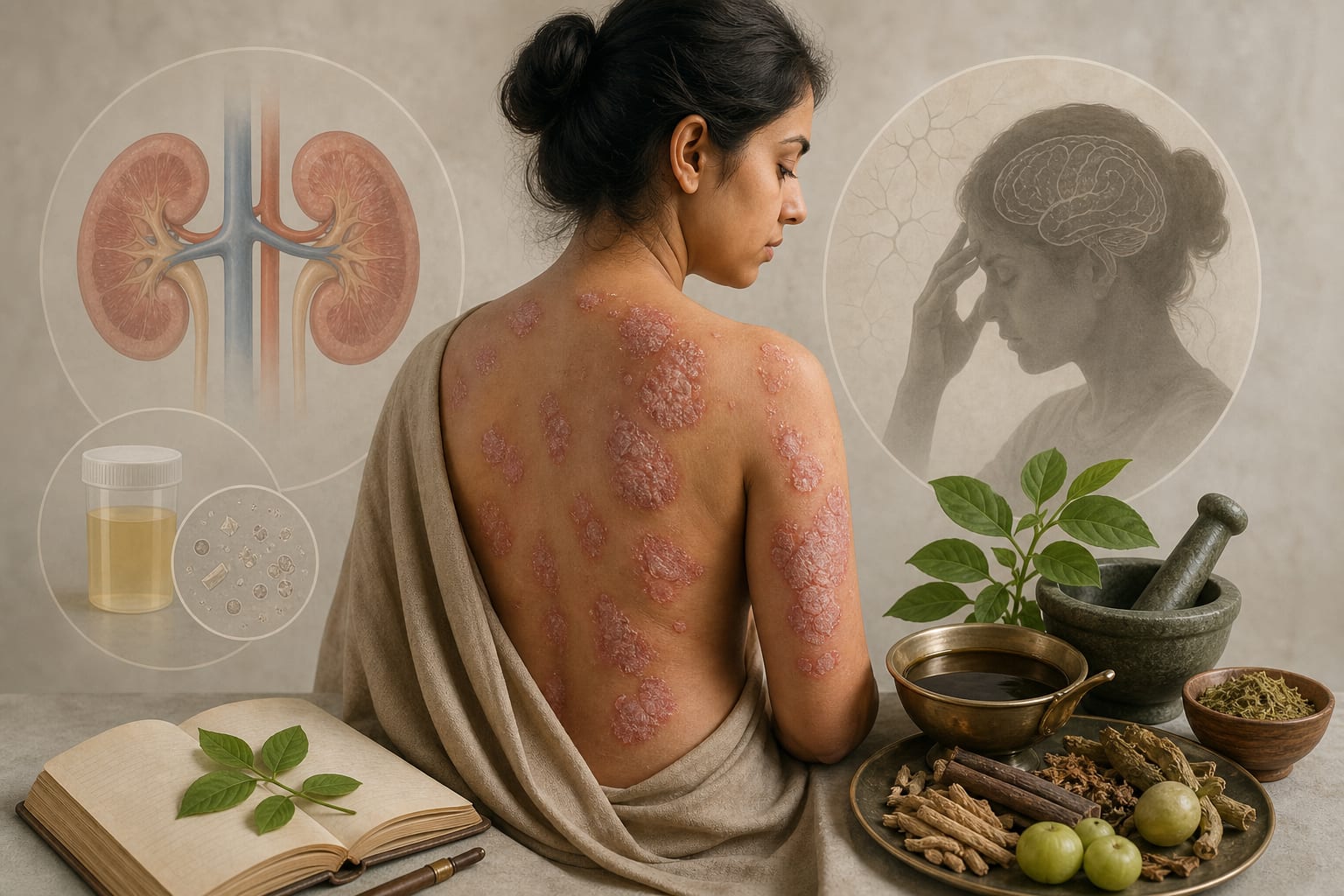
Case Presentation: A 22-year-old female with chronic plaque psoriasis and childhood nephrotic syndrome underwent a staged Ayurvedic treatment protocol over two years.
Treatment Protocol: The treatment included Deepana–Pachana, Snehapana, Abhyanga, Swedana, Vamana, Takradhara, and follow-up medications.
Key Findings:
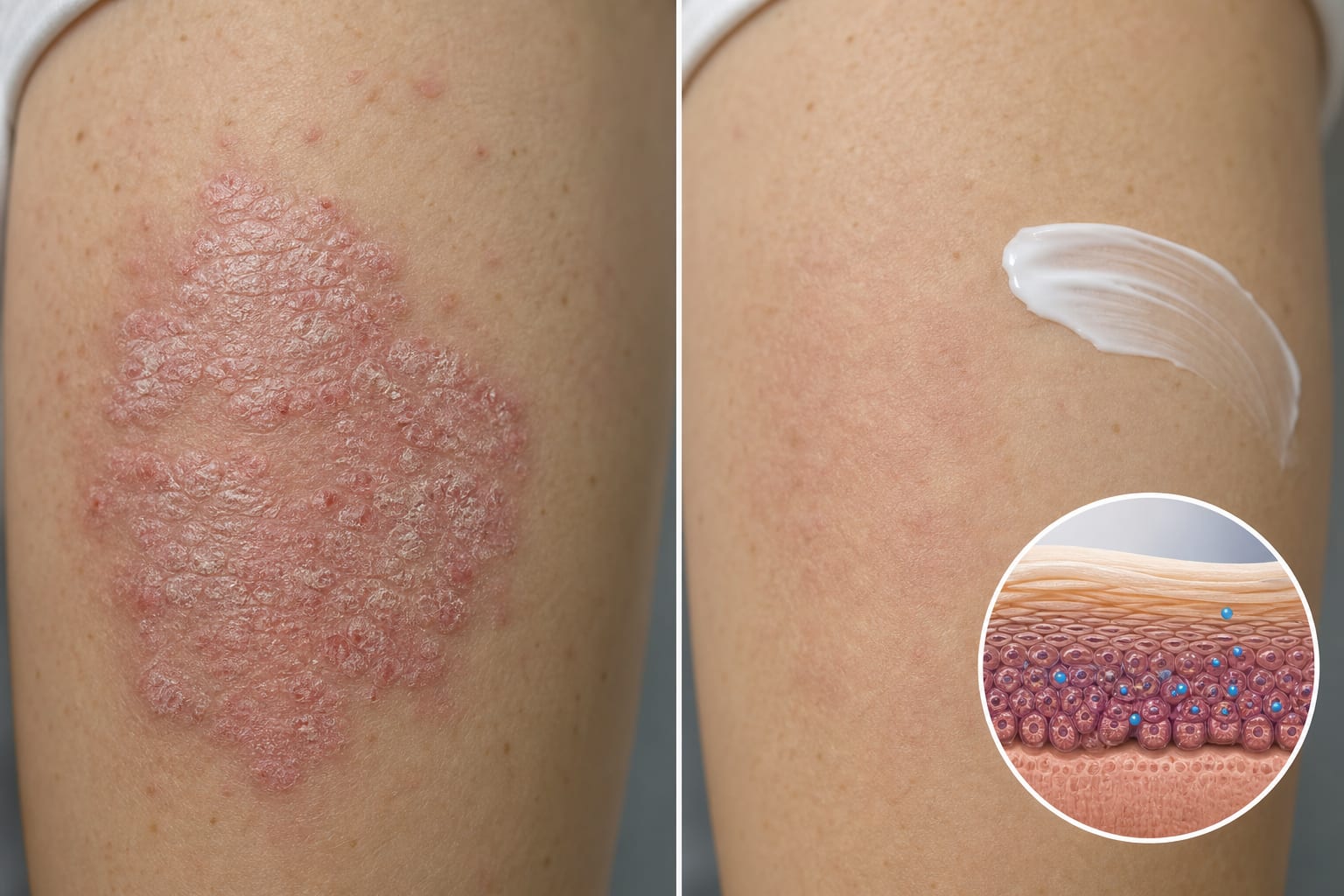
Initial PASI score of 52 reduced to 6 after the first treatment schedule.
Improvement in perceived stress scores from 37 to 17 after the second treatment schedule.
Marked reduction in urinary inflammatory parameters and maintenance of near-complete remission for approximately 2 years.
Interpretation:
The case suggests a potential role of Ayurvedic interventions in achieving sustained remission and reducing inflammatory severity in chronic plaque psoriasis.
Limitations:
The study is based on a single case report, limiting generalizability.
Lack of large-scale longitudinal studies to validate findings.
Absence of control groups or comparative studies.
Conclusion:
The case highlights the findings related to systemic inflammation, renal involvement, metabolic regulation, and psychological factors in psoriasis, warranting further integrative research.