Polysaccharides-gut microbiota interaction: mechanisms regulating the hepatocellular carcinoma immune microenvironment - Summary - MDSpire

Polysaccharides-gut microbiota interaction: mechanisms regulating the hepatocellular carcinoma immune microenvironment

  • By

  • Wei Peng

  • Kai Xiong

  • Yuyang Zheng

  • Jiahan Zheng

  • Yuanyuan Zhong

  • Jihao Yang

  • Yuchuan Jiang

  • June 8, 2026

  • 0 min

Share

Objective:

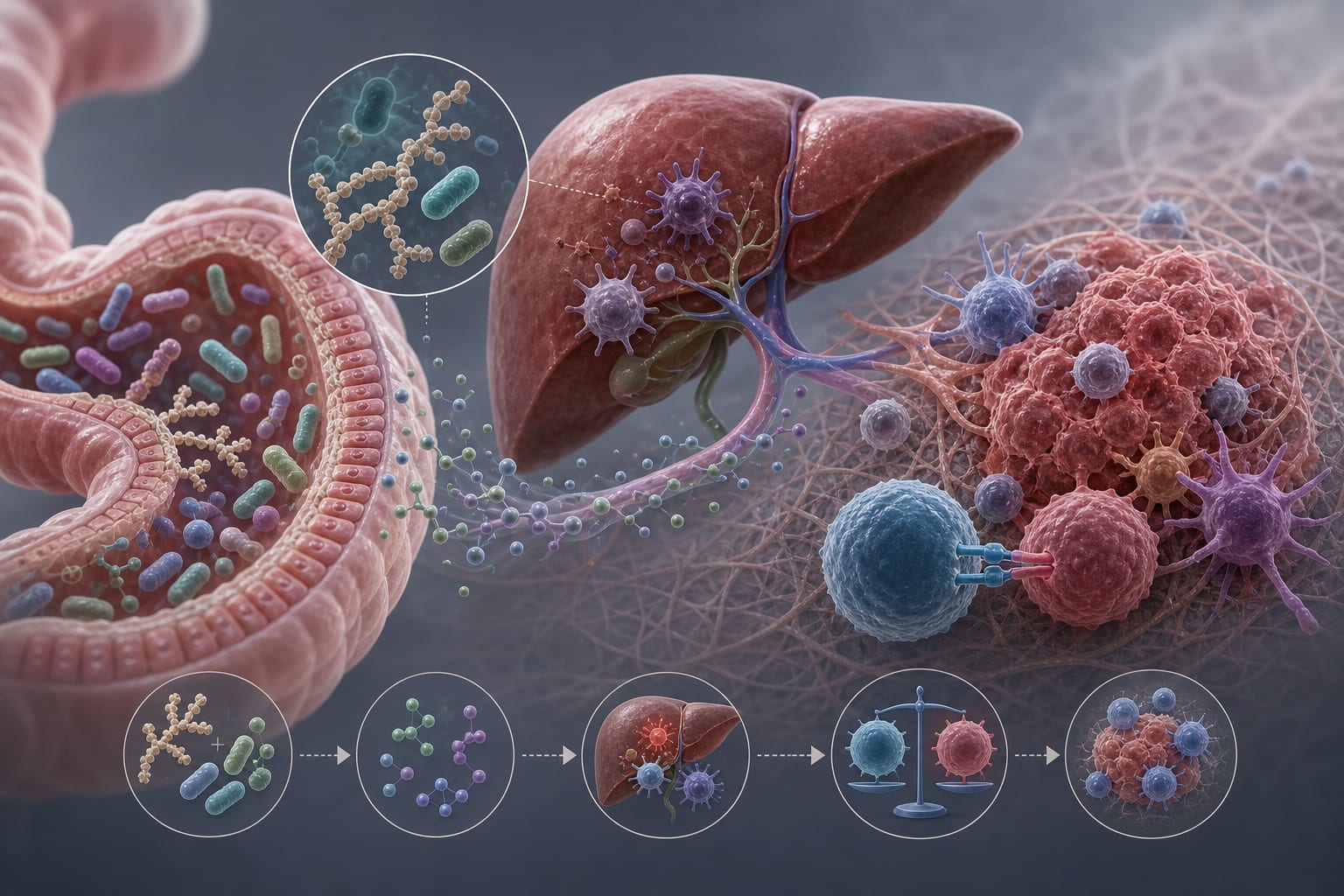
To summarize the mechanisms by which polysaccharide-gut microbiota interactions reshape the immunosuppressive tumor microenvironment in hepatocellular carcinoma (HCC).

Key Findings:
  • Gut microbiota dysbiosis promotes chronic hepatic inflammation and immunosuppression through metabolites such as lipopolysaccharide, short-chain fatty acids, and bile acids.
  • Polysaccharides can selectively promote beneficial gut bacteria and regulate immune responses via key signaling pathways.
  • Challenges include polysaccharide structural heterogeneity, unclear microbiota-immune causal relationships, and undefined safe dose windows.
Interpretation:

The review provides an overview of polysaccharide-based modulation of the HCC immune microenvironment.
Limitations:
  • Polysaccharide structural heterogeneity complicates therapeutic application.
  • Unclear causal relationships between microbiota and immune responses.
  • Undefined safe dose windows for polysaccharide interventions.
Conclusion:

The interactions between polysaccharides and gut microbiota are discussed in the context of HCC, highlighting challenges.

Original Source(s)

Related Content