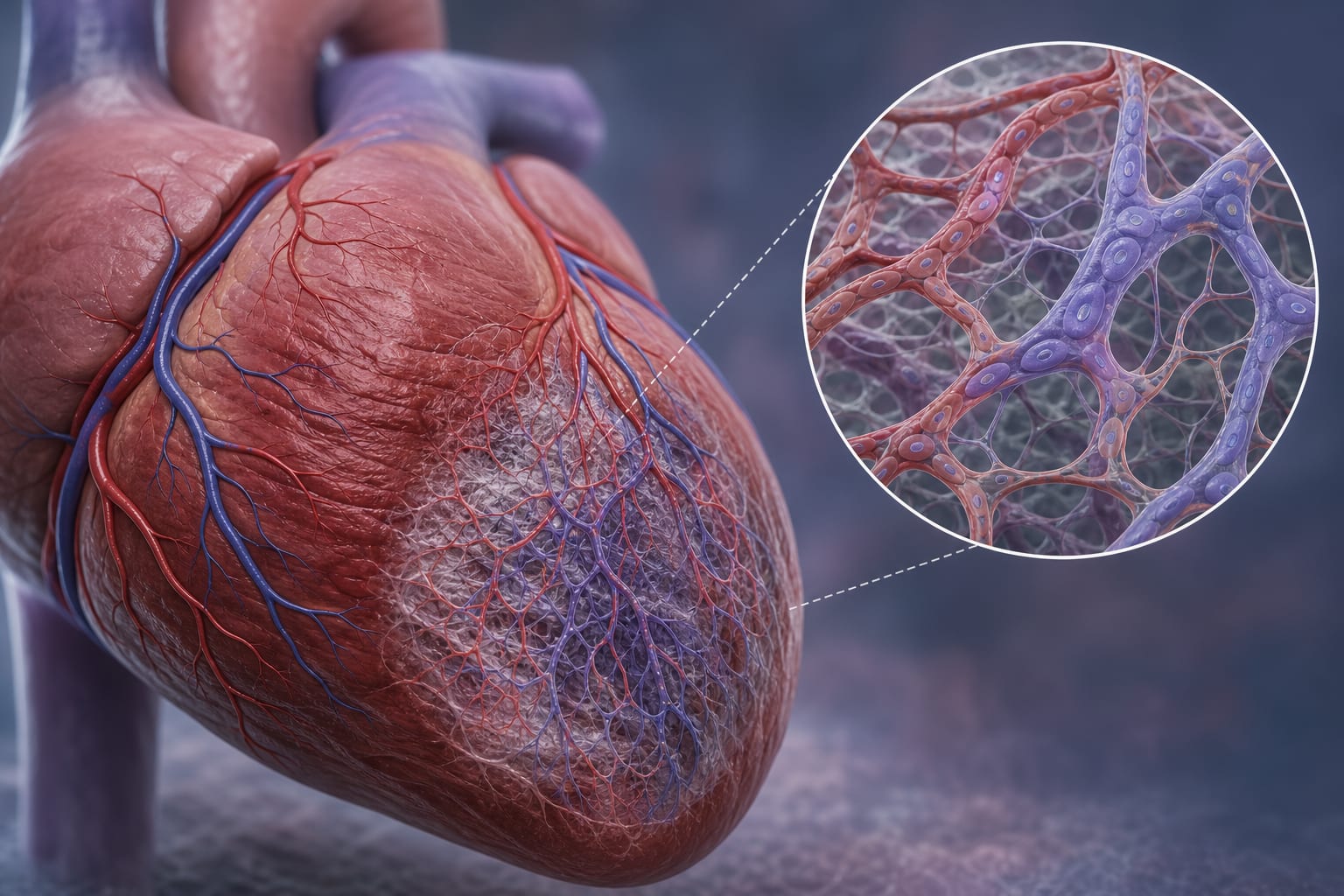
To explore the mechanisms behind diabetes-induced cardiomyopathy (DbCM) and its progression to heart failure with preserved ejection fraction (HFpEF), focusing on calcium handling.
Approach:
Key Findings:
Diabetes, particularly type 2 diabetes (T2D), is a significant risk factor for cardiovascular disease and heart failure.
Impairment of calcium-handling proteins like SERCA2a and RyR2 contributes to cardiac dysfunction in DbCM.
Current understanding of DbCM is limited, and no viable cures exist to reverse its progression.
Interpretation:
Insulin resistance in diabetes leads to cardiac impairment, with calcium mishandling being a critical factor in the development of DbCM and HFpEF.
Limitations:
The complexity of DbCM and its mechanisms is not fully understood.
Further studies are needed to clarify the impact of calcium-handling proteins on DbCM progression.
Conclusion:
The review highlights the need for targeted treatments at the molecular level to address both diabetes and heart failure.