Metabolic reprogramming networks in the gastric cancer tumor microenvironment: an integrated axis of nutrient competition, metabolic crosstalk, and immunosuppression - Summary - MDSpire
Advertisement
Metabolic reprogramming networks in the gastric cancer tumor microenvironment: an integrated axis of nutrient competition, metabolic crosstalk, and immunosuppression
To elucidate the dynamic interactions of nutrient competition, metabolic crosstalk, and immunosuppression within the tumor microenvironment (TME) of gastric cancer.
Approach:
Systematic Review: The review integrates diverse metabolic phenotypes and immunological outcomes in gastric cancer through a network perspective.
Key Findings:
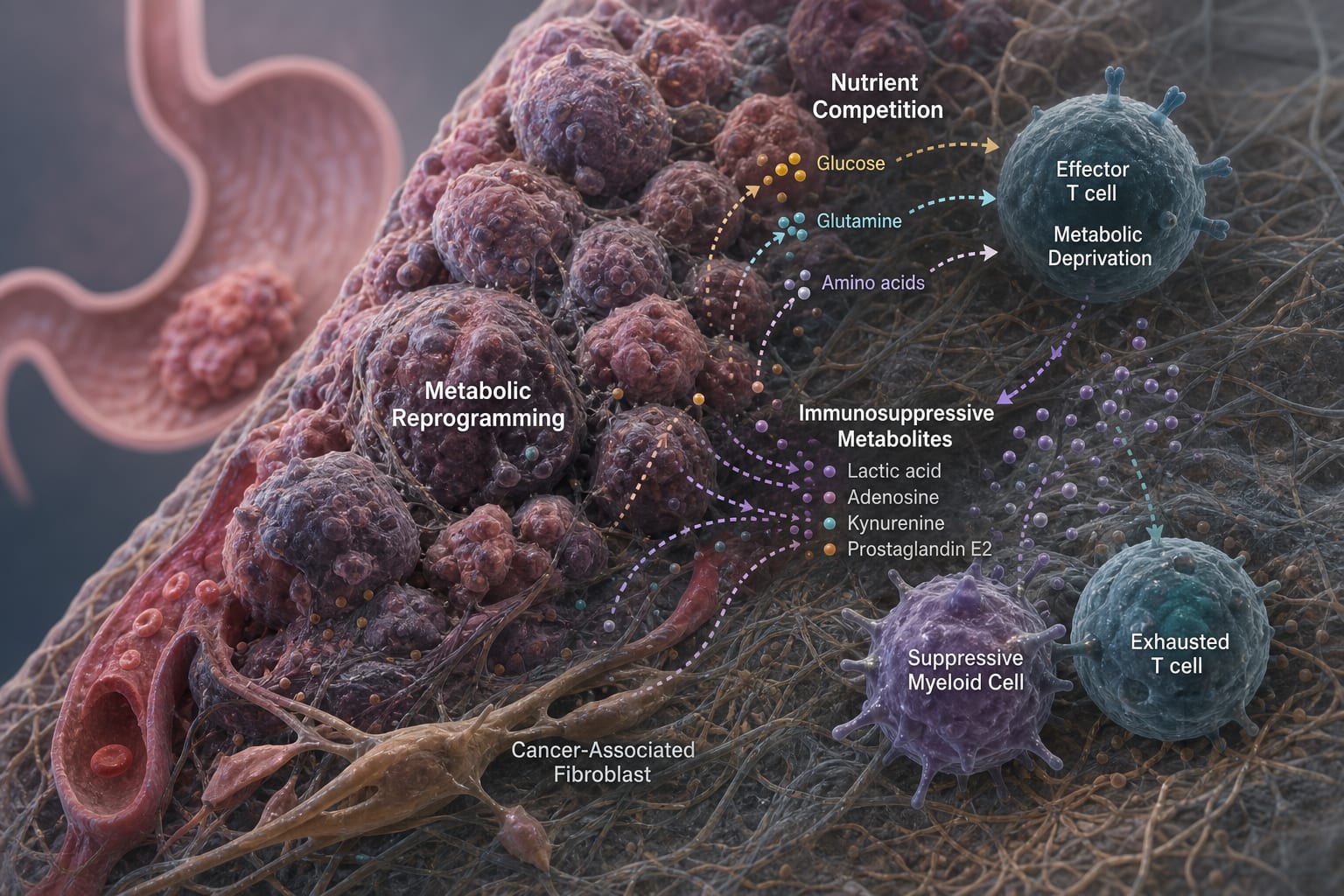
The TME of gastric cancer is characterized by hypoxia, acidosis, and nutrient deficiency, creating metabolic stress.
Cancer and immune cells compete for essential nutrients, leading to metabolic deprivation in effector T cells.
Accumulation of immunosuppressive metabolites (e.g., lactic acid, adenosine, kynurenine, and prostaglandin E2) actively suppresses immune function.
Metabolic crosstalk reshapes the immunosuppressive niche through receptor signaling and epigenetic modification.
This metabolic reprogramming facilitates immune evasion and resistance to immunotherapy.
Interpretation:
A comprehensive analysis of the metabolic interactions in the TME is essential for understanding the dynamics of gastric cancer.
Limitations:
The review does not provide experimental data to support the proposed metabolic interactions.
Further research is needed to validate the identified metabolic nodes and their therapeutic potential.
Conclusion:
The findings highlight the importance of understanding metabolic reprogramming in gastric cancer.