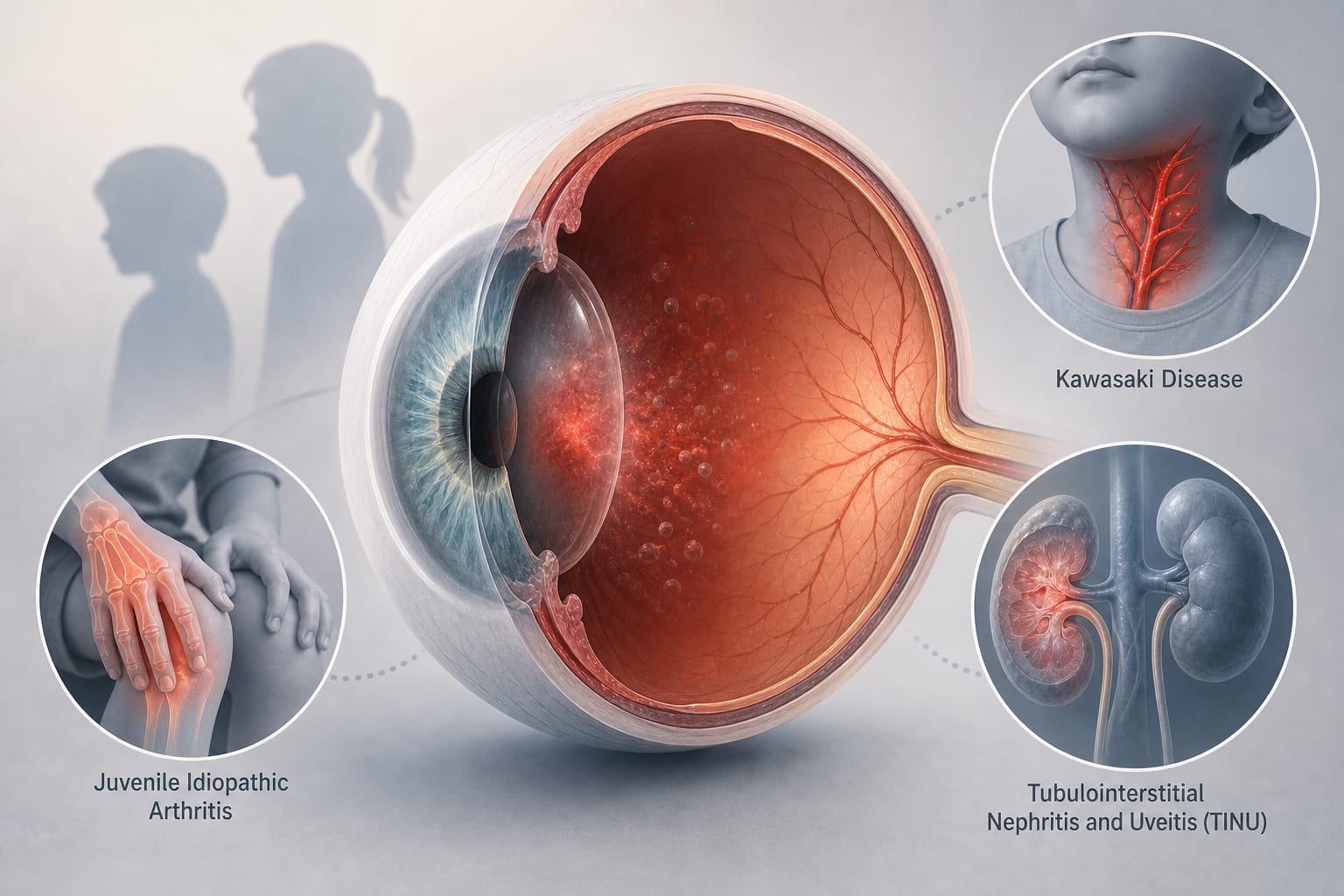
To assess the incidence and risk of immune-mediated inflammatory disease (IMID) development in pediatric noninfectious uveitis and the patterns of immunosuppressant use, particularly focusing on treatment initiation and adherence.
Key Findings:
Pediatric uveitis is associated with a higher prevalence of systemic diseases compared to adults, highlighting the need for vigilant monitoring.
Conditions like JIA, KD, and TINU are common in pediatric uveitis, necessitating tailored management strategies.
Chronic and recurrent uveitis can lead to significant long-term ocular complications, emphasizing the importance of early intervention.
Early systemic immunosuppressive therapy is recommended to reduce complications and improve long-term outcomes.
Interpretation:
The study highlights the importance of early diagnosis and management of IMIDs in pediatric uveitis to prevent systemic complications and improve patient outcomes, suggesting that timely intervention can significantly alter disease trajectories.
Limitations:
The study may not capture all cases due to reliance on claims data, which could miss undocumented cases.
Potential biases in coding and diagnosis may affect the findings, and confounding factors may not be fully accounted for.
Limited generalizability outside of the South Korean healthcare system may restrict the applicability of findings.
Conclusion:
A comprehensive understanding of the relationship between pediatric uveitis and IMIDs is crucial for timely intervention and improved patient care, with implications for clinical practice in monitoring and managing these patients.