To investigate neglected tropical diseases, specifically Lymphatic Filariasis caused by Wuchereria bancrofti, as part of the TAKeOFF project, and improve diagnosis and treatment in affected communities.
Approach:
Research Collaboration: The study is conducted by Prof. Inge Kroidl and collaborators from Tanzania, Ghana, Cameroon, and Bonn, Germany, under the TAKeOFF project, which collaborates with national health programs.
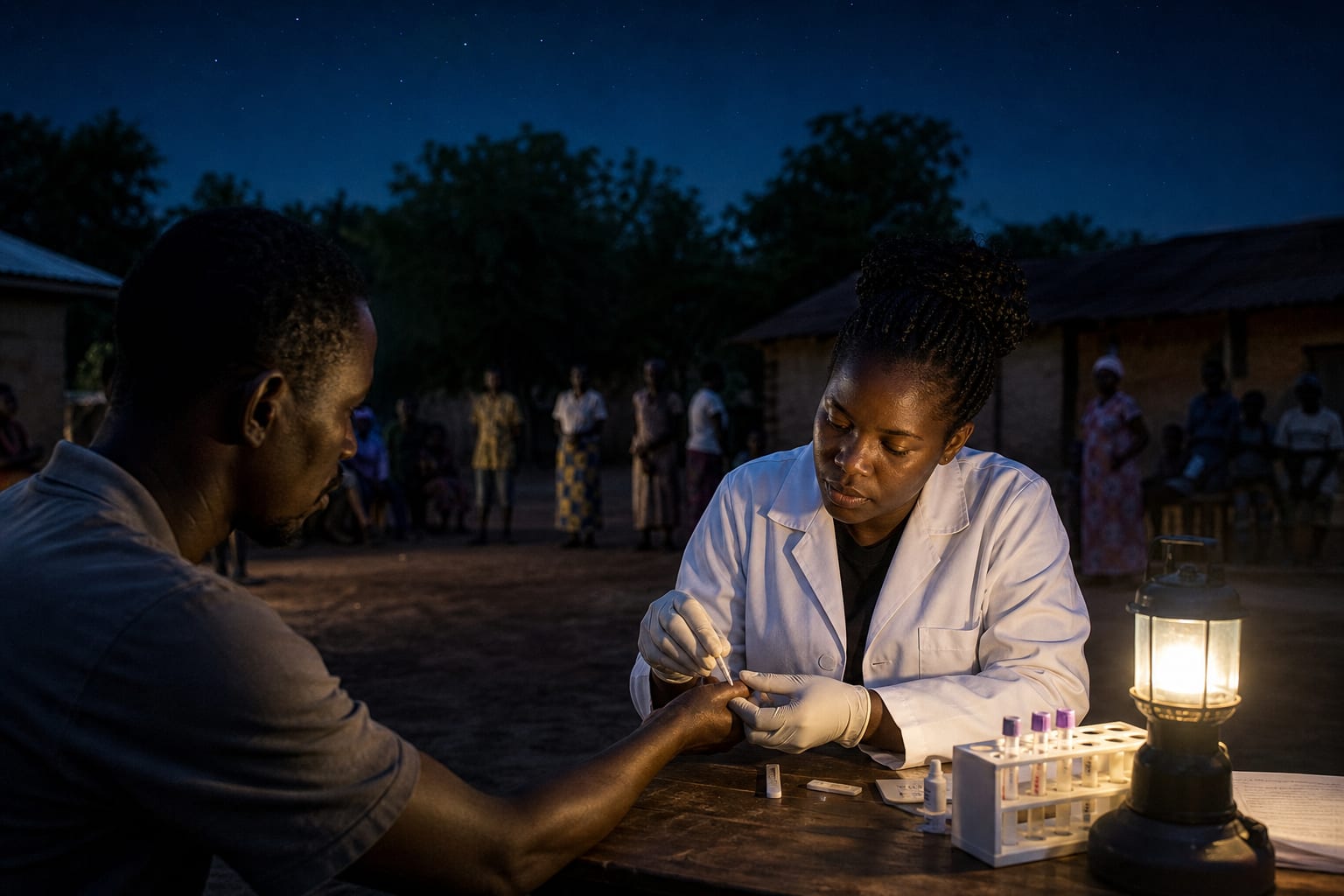
Field Research Methodology: Participants are recruited from 9 pm to 2 am at remote health facilities, where microfilariae concentrations peak, utilizing mobile-phone light during power outages for data collection.
Key Findings:
Microfilariae concentrations peak at night, necessitating nighttime recruitment.
Field research involves blood collection and the use of a battery-powered ultrasound to visualize adult worms.
Interpretation:
The study presents logistical challenges and innovative solutions in conducting research on filarial infections in remote areas.
Limitations:
Battery life of equipment limited continuous work throughout the night, impacting data collection.
Remote health facilities are often over two hours away from the main research facility, complicating logistics.
Conclusion:
The TAKeOFF project aims to enhance diagnosis and treatment of filarial infections while addressing stigma in affected communities through improved research methodologies.
Research highlights expanding diagnostic capabilities but persistent gaps in antiviral therapy and vaccine coverage for pediatric enterovirus infections.