Preoperative lower radiographic osteoarthritis severity in primary total knee arthroplasty increases revision risk by tenfold compared to severe osteoarthritis - Summary - MDSpire
To identify predictors for the need for revision surgery within 10 years following primary total knee arthroplasty (pTKA), focusing on the radiographic assessment of osteoarthritis (OA) severity using the Kellgren-Lawrence (KL) grading system.
Approach:
Study Design: Retrospective case-control study across two European hospitals, with ethical approval obtained from one center.
Patient Selection: Included patients who underwent revision TKA (rTKA) within 10 years following pTKA, excluding certain criteria such as isolated patellar revision and revisions due to infection.
Data Collection: Systematic extraction of patient data including age, BMI, sex, ASA classification, and indications for revision categorized into six types.
Key Findings:
The volume of revision TKA is increasing more rapidly than primary TKA, with significant implications for patient outcomes and healthcare resources.
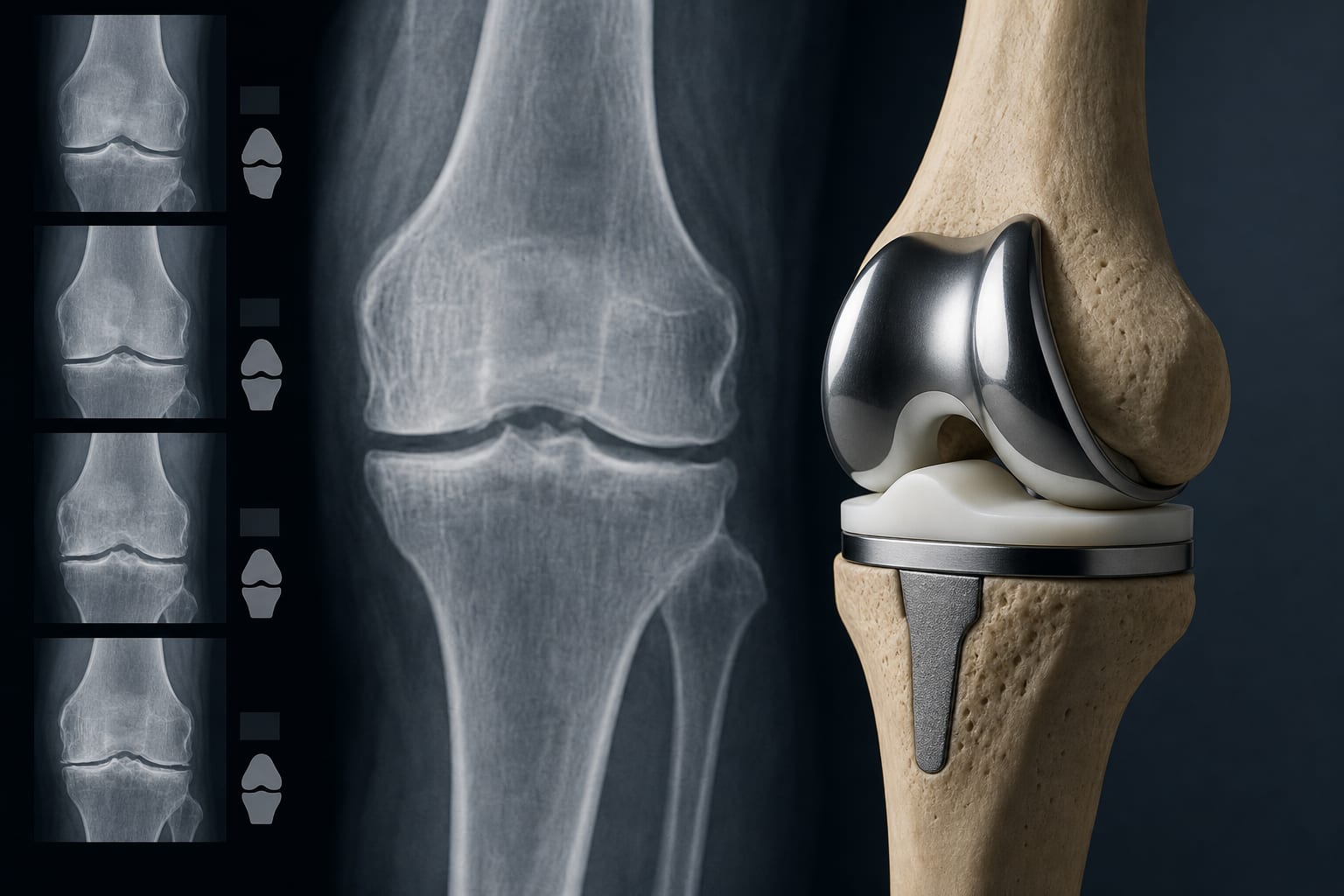
Preoperative severity of OA, as assessed by the KL grading system, is a critical determinant of post-TKA outcomes.
Patients with low-grade OA may experience worse clinical results and higher dissatisfaction rates post-TKA.
Interpretation:
The study aims to explore the relationship between preoperative radiographic severity of OA and the likelihood of requiring revision surgery after pTKA.
Limitations:
The study is retrospective and conducted in two specific hospitals, which may limit generalizability.
Exclusion criteria may have omitted relevant cases that could influence findings.
Conclusion:
Understanding the predictors for revision surgery can help improve patient care and inform healthcare policies.