Psychological distress and caregiver burden among informal caregivers of patients with earthquake-related and stroke-related dependency: a comparative study - Summary - MDSpire
Advertisement
Psychological distress and caregiver burden among informal caregivers of patients with earthquake-related and stroke-related dependency: a comparative study
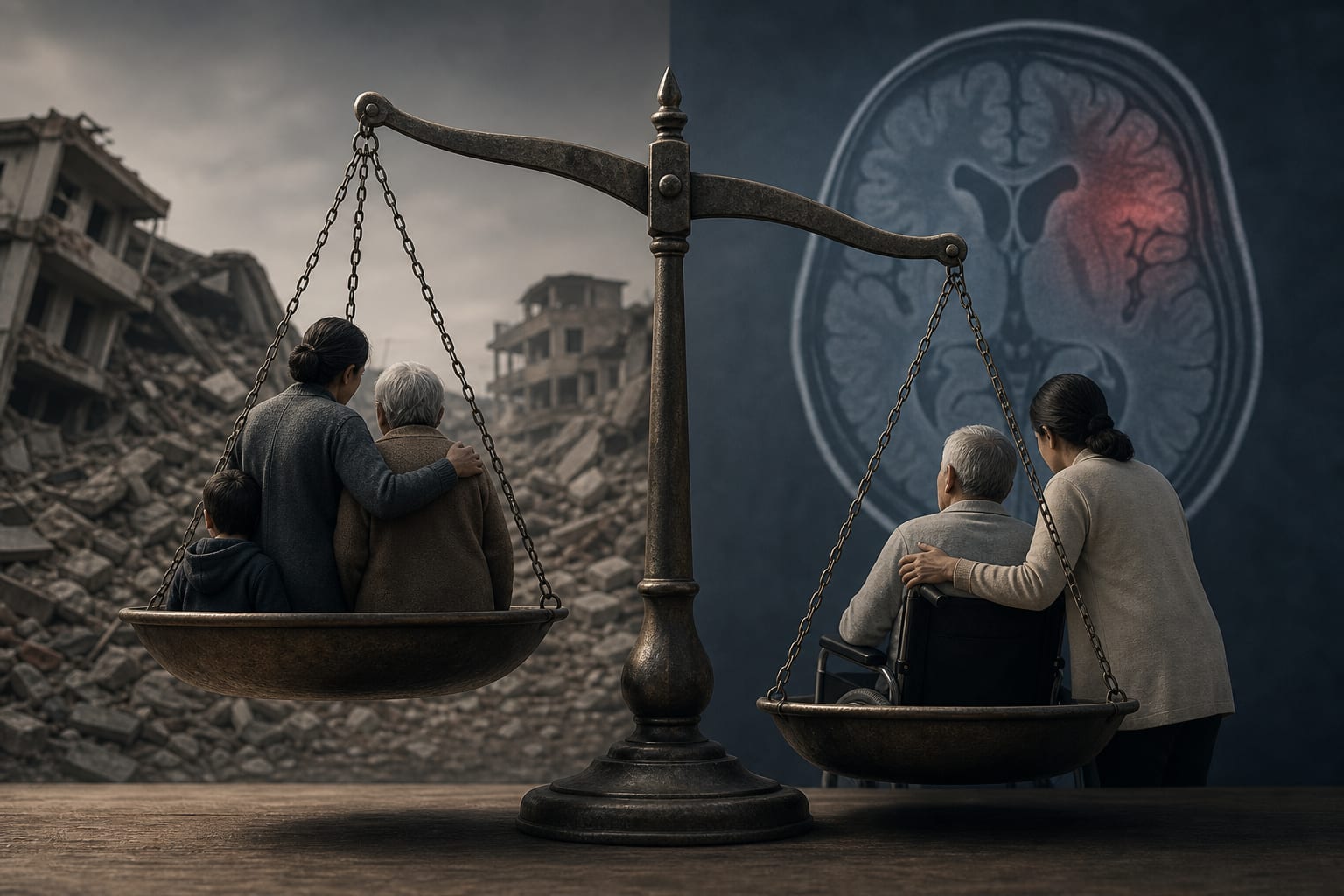
To compare the psychological burden of informal caregivers of patients with earthquake-related dependency and those caring for patients with stroke-related dependency following the 6 February 2023 Türkiye–Syria earthquakes.
Approach:
Key Findings:
Caregiver burden was significantly higher among male caregivers (p=0.026).
Caregivers of patients with earthquake-related dependency reported receiving external support more frequently than caregivers of stroke patients (p=0.004).
Overall caregiving was perceived as a moderate burden in both groups.
No significant differences in depressive symptoms, anxiety symptoms, and hopelessness levels between the groups (p=0.172, p=0.172, p=0.834).
PTSD symptoms and caregiver burden among stroke caregivers showed moderate positive correlations with depression, anxiety, and hopelessness (all p<0.05).
In earthquake-related dependency caregivers, caregiver burden was associated only with hopelessness (p=0.045).
Interpretation:
Informal caregivers of patients with earthquake-related and stroke-related dependency experienced comparable levels of psychological distress, despite differences in caregiving context and disaster-related adversity.
Limitations:
The study is limited to a single-center, cross-sectional design.
The sample size may not be representative of all informal caregivers in the affected regions.
Conclusion:
The higher frequency of external support among caregivers of patients with earthquake-related dependency may be associated with comparable psychological outcomes.