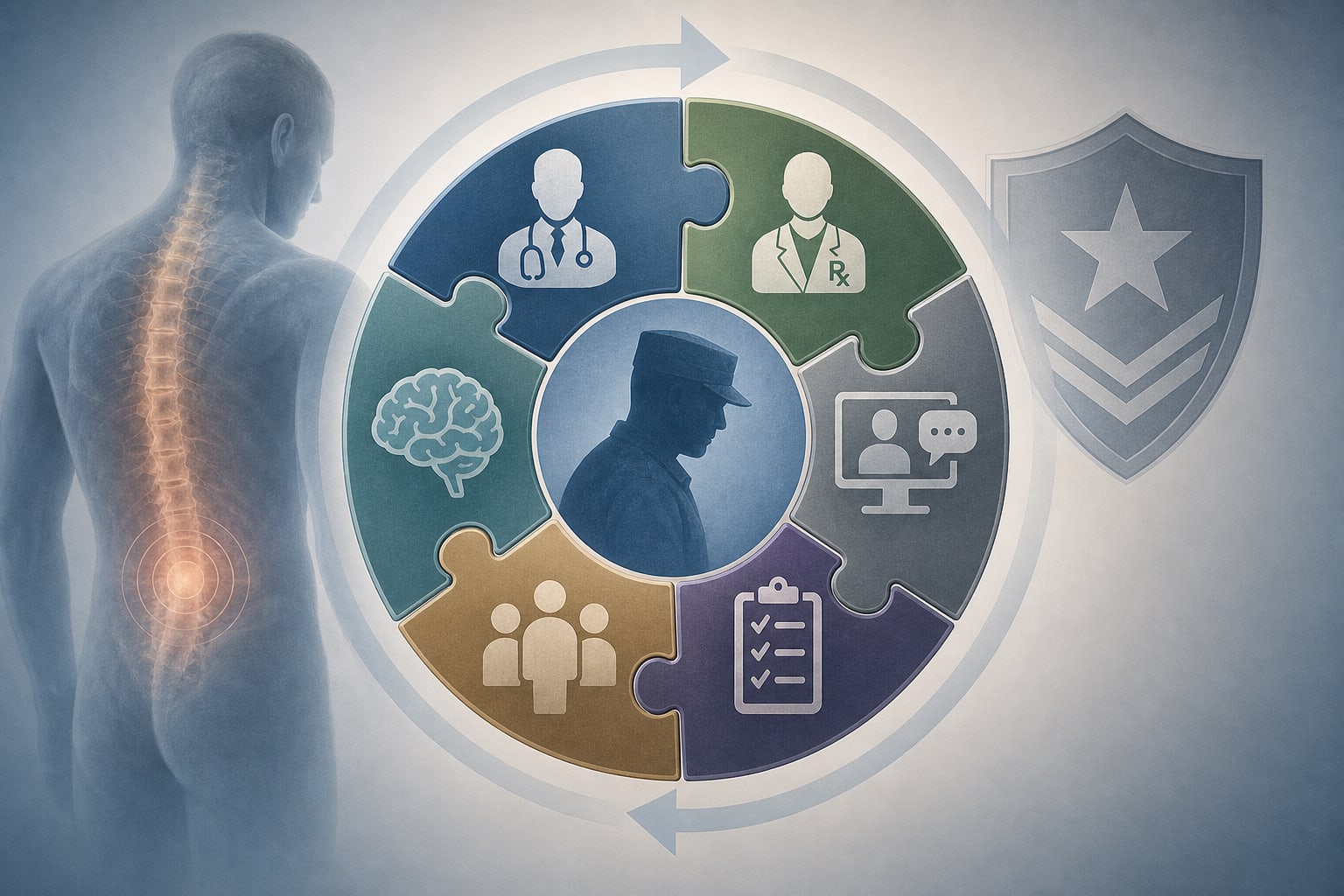
To describe the early implementation and outcomes of a PharmD e-consult program providing perioperative pain-management recommendations for Veterans at elevated risk of new or intensified opioid use.
Approach:
Study Design: Retrospective chart review of Veterans who received a perioperative PharmD e-consult from October 2023 through September 2024.
Consultation Process: Clinical pharmacists reviewed patients’ medical histories, including chronic pain, current medications, substance use disorders, and psychiatric comorbidities, and provided pain-management recommendations.
Outcome Measures: Descriptive statistics summarized patient characteristics, adherence to recommendations, and postoperative outcomes through 90 days.
Key Findings:
51 Veterans received perioperative pain-management recommendations.
Leading indications for consultation included preoperative chronic opioid use (39.2%) and a history of substance use disorder (34.0%).
Of the 39 Veterans who underwent surgery, 56.4% required hospitalization.
Among hospitalized patients, adherence to inpatient pain-management recommendations was partial for 95.5% and complete for 4.5%.
At discharge, teams partially followed recommendations for 82.1% of patients and followed them completely for 17.9%.
Interpretation:
The findings describe implementation of a patient-specific perioperative pain-management consultation program and adherence to its recommendations. This retrospective review does not establish that the program reduces postoperative opioid use or dependence.
Limitations:
Adherence to multimodal recommendations varied; postoperative administration constraints may have contributed.
The study included a moderate number of Veterans receiving medication for opioid use disorder, which may limit generalizability.
The retrospective, descriptive design and sample size limit conclusions about the program’s effectiveness.
Conclusion:
The authors concluded that a perioperative PharmD e-consult program can provide individualized pain-management recommendations for Veterans at elevated risk of opioid-related harms. They noted that adherence to recommendations was limited, particularly for inpatient care, and that further research is needed to determine whether the program improves postoperative opioid use and other clinical outcomes.
Patients restarting therapy within 1 day showed no statistically significant adjusted differences in sinonasal healing, bleeding, or patient-reported outcomes.