EUS-guided hepaticogastrostomy versus EUS-guided hepaticogastrostomy with antegrade stent placement in patients with unresectable malignant distal biliary obstruction: a meta-analysis of individual patient data - Summary - MDSpire

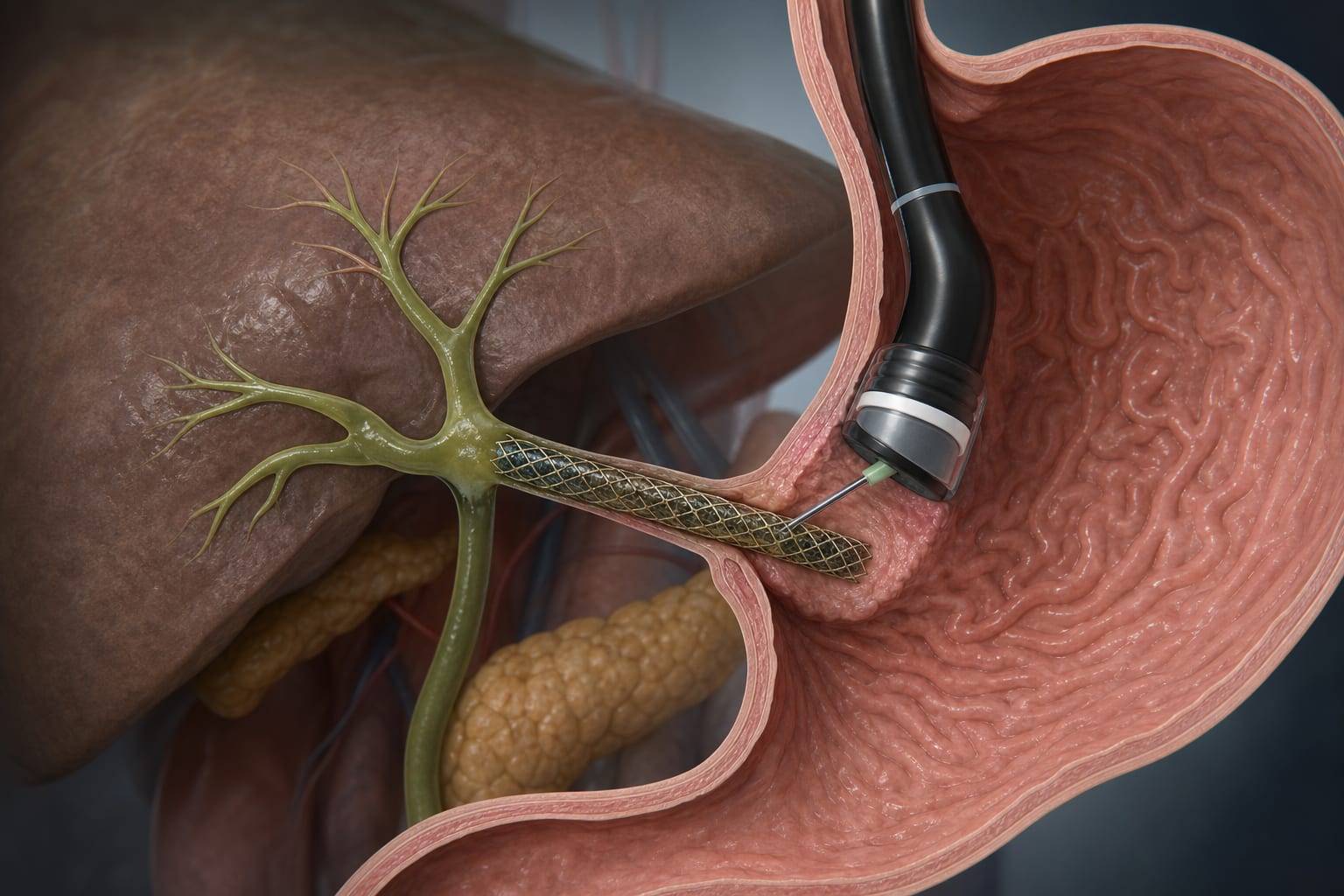
EUS-guided hepaticogastrostomy versus EUS-guided hepaticogastrostomy with antegrade stent placement in patients with unresectable malignant distal biliary obstruction: a meta-analysis of individual patient data

  • By

  • Mahmoud Shaaban Abdelgalil

  • Ahmad Abdelrazek

  • Mahmoud Samir Mohamed

  • Amro Hassan

  • Manar Alaa Mabrouk

  • Mohamed Nasser

  • Eyad Khalil Alhmeid

  • Abdullah Nizar

  • Abid Wazir

  • Noha Ali

  • Adam Hraybi

  • Ryad iqbal

  • Sadia Paracha

  • Shray Amin

  • July 11, 2026

  • 0 min

Share

Objective:

To systematically compare the efficacy and safety of EUS-HGS alone versus EUS-HGAS in patients with unresectable malignant distal biliary obstruction.

Approach:
  • Literature Search & Study Selection: Comprehensive literature search across Scopus, PubMed, and Web of Science databases up to April 2025, including RCTs and observational studies that met predefined criteria.
  • Screening and Data Extraction: Independent screening of studies using Rayan software and data extraction performed by two authors using a predefined Excel sheet.
  • Quality Assessment: Quality of included observational studies assessed using the Newcastle-Ottawa Scale.
  • Statistical Analysis: Meta-analysis conducted using Review Manager software, with pooled risk ratios, hazard ratios, and mean differences calculated for various outcomes.
Key Findings:
  • EUS-HGAS may provide a longer time to recurrent biliary obstruction compared to EUS-HGS alone.
  • The study included both randomized controlled trials and observational studies.
  • Adverse events were classified based on timing, with early and late events analyzed.
Interpretation:

Limitations:
  • Exclusion of non-English studies may limit the comprehensiveness of the analysis.
  • Potential heterogeneity among included studies could affect the robustness of the results.
Conclusion:

Original Source(s)

Related Content