Opinion: a call for safe therapeutic and gastric interventions for adolescents and young adults with obesity and transplant-indicated leukemia - Summary - MDSpire
Advertisement
Opinion: a call for safe therapeutic and gastric interventions for adolescents and young adults with obesity and transplant-indicated leukemia
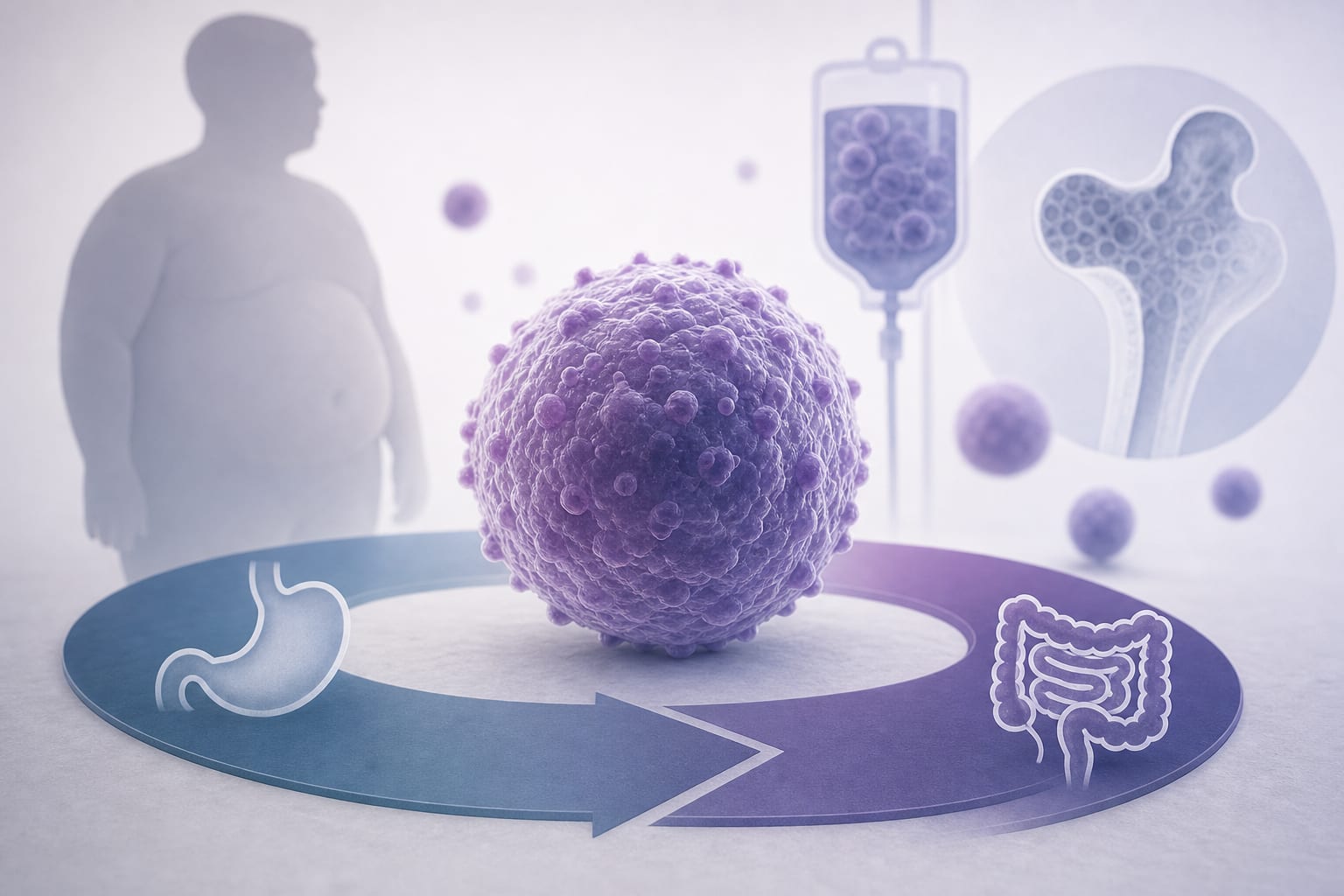
To address the impact of obesity on treatment outcomes in adolescents and young adults (AYAs) with leukemia requiring hematopoietic stem cell transplantation (HSCT) and to advocate for tailored interventions, including specific management strategies.
Key Findings:
Obesity in AYAs with leukemia is associated with increased treatment complications and poorer survival rates, as evidenced by multiple studies.
Higher BMI correlates with increased non-relapse mortality (NRM) and lower overall survival (OS) in AYA patients undergoing HSCT, as shown in recent literature.
Normalization of chemotherapy dosing based on ideal body weight can reduce adverse effects in obese patients, supporting findings from Doney et al.
Interpretation:
Obesity significantly impacts treatment outcomes in AYAs with leukemia, necessitating a comprehensive approach to manage obesity in this population before and during HSCT.
Limitations:
Limited data specifically focusing on pediatric and AYA populations undergoing HSCT, which complicates the understanding of obesity's impact.
Variability in treatment protocols and patient conditions complicates direct comparisons with adult studies, making it difficult to draw definitive conclusions.
Conclusion:
A tailored approach addressing obesity in AYAs with leukemia is essential for improving HSCT outcomes, and further research is needed to refine these interventions, particularly in pharmacological and surgical management.
Peter Maslak, MD, is an expert Hematologic Oncologist, joining Roswell Park as Vice Chair of Clinical Affairs, Director of Flow Cytometry in the Immune Monitoring Shared Resource and the Technical Director of the Flow Cytometry Lab.