Predictive value of multimodal neurological monitoring in the postoperative neurological dysfunction after cardiovascular surgery with cardiopulmonary bypass - Summary - MDSpire
Advertisement
Predictive value of multimodal neurological monitoring in the postoperative neurological dysfunction after cardiovascular surgery with cardiopulmonary bypass
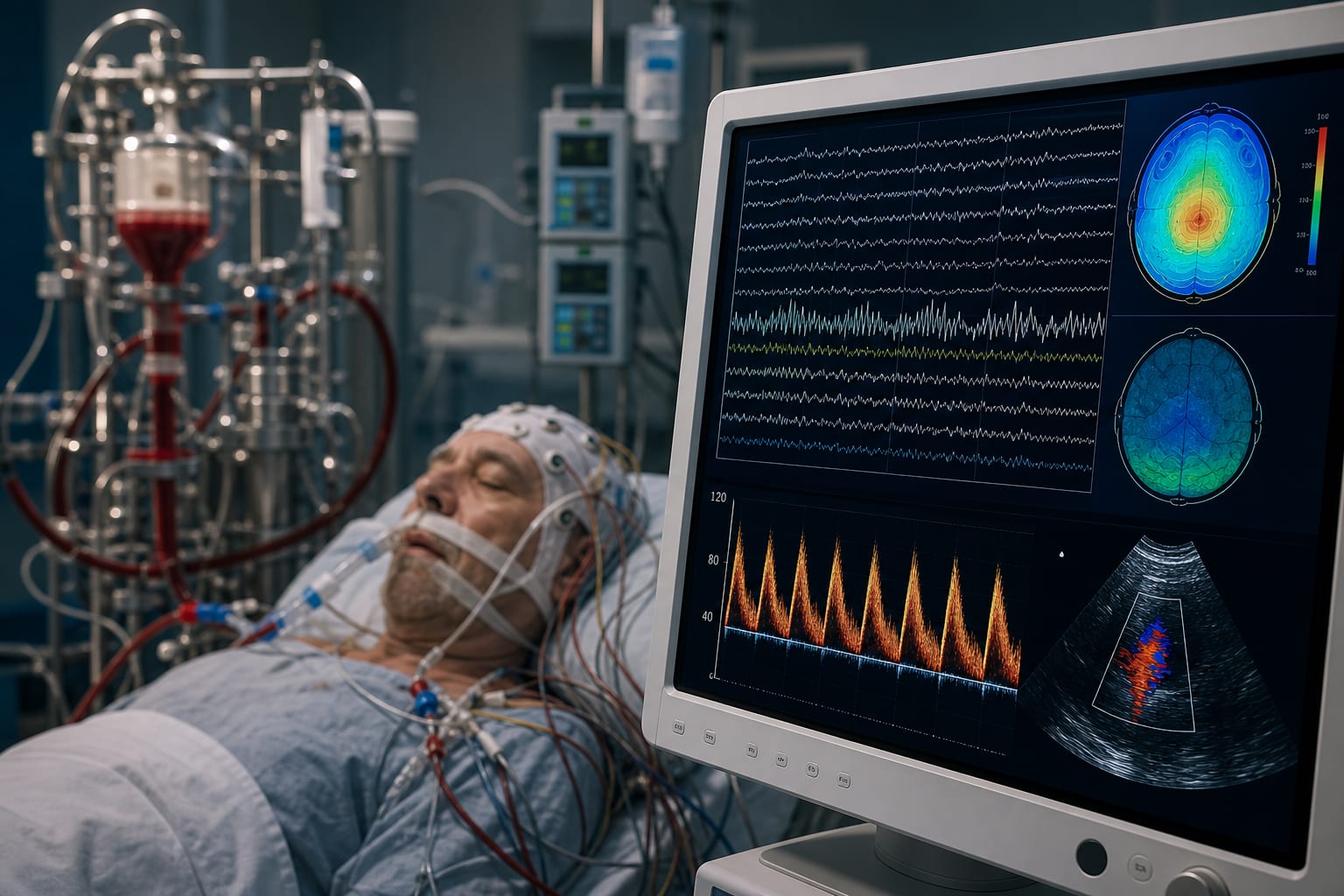
To evaluate the effectiveness of multimodal neurologic monitoring (MNM) in predicting neurologic dysfunction during the postoperative period for patients undergoing cardiovascular surgery with cardiopulmonary bypass, specifically targeting those with GCS < 8.
Key Findings:
The neurologic dysfunction group had longer durations of extracorporeal circulation and extubation compared to the non-neurologic group (p < 0.05).
Abnormal amplitude-integrated electroencephalogram (aEEG), relative alpha variability (RAV) grades, and pulsatility index (PI) were higher in the neurologic dysfunction group (p < 0.05).
The combination of RAV + α% + EDV + PI had an AUC of 0.735 for predicting neurologic dysfunction, with a specificity of 0.843 and sensitivity of 0.507.
Interpretation:
MNM can effectively monitor changes in postoperative brain function, but caution is advised as the RAV + α% + EDV + PI combination should not be used as a standalone diagnostic test.
Limitations:
The study was exploratory and conducted at a single center without a priori statistical power analysis, which may limit generalizability.
Findings may not be applicable to all patients, as the cohort was specifically chosen based on GCS < 8 at 6 hours.
Conclusion:
MNM is valuable for monitoring postoperative brain function, particularly in high-risk patients, but should not be used as a standalone diagnostic test.