Cadaver-based hands-on course in cervical spine surgery: a prospective evaluation of surgical confidence and self-perceived autonomy - Summary - MDSpire
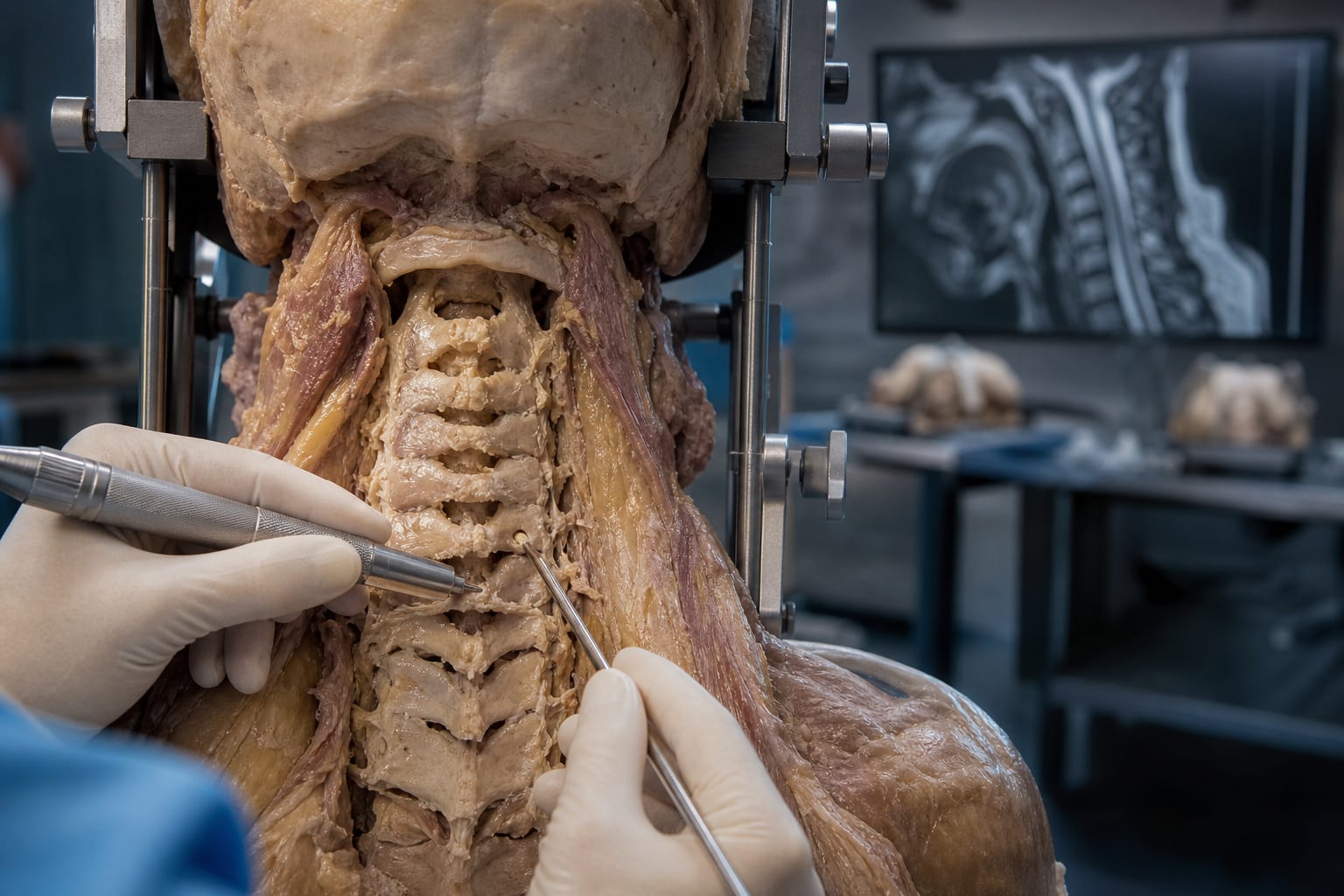
To evaluate the learning outcomes of a three-day hands-on cadaver-based cervical spine surgery course, focusing on participants’ perceived skill development and confidence over time.
Approach:
Key Findings:
The course provided hands-on experience with anterior and posterior cervical spine surgical techniques, leading to statistically significant increases in confidence and perceived skill development immediately after the course and six months later.
Interpretation:
The cadaver-based training course effectively enhanced surgical confidence and autonomy among participants.
Limitations:
The study may be influenced by self-reported data, which can introduce bias, and the lack of a control group limits the ability to draw definitive conclusions about the effectiveness of the training.
Conclusion:
The cadaver-based training course is a valuable educational tool for enhancing surgical skills in cervical spine surgery, highlighting the need for continued research in this area.