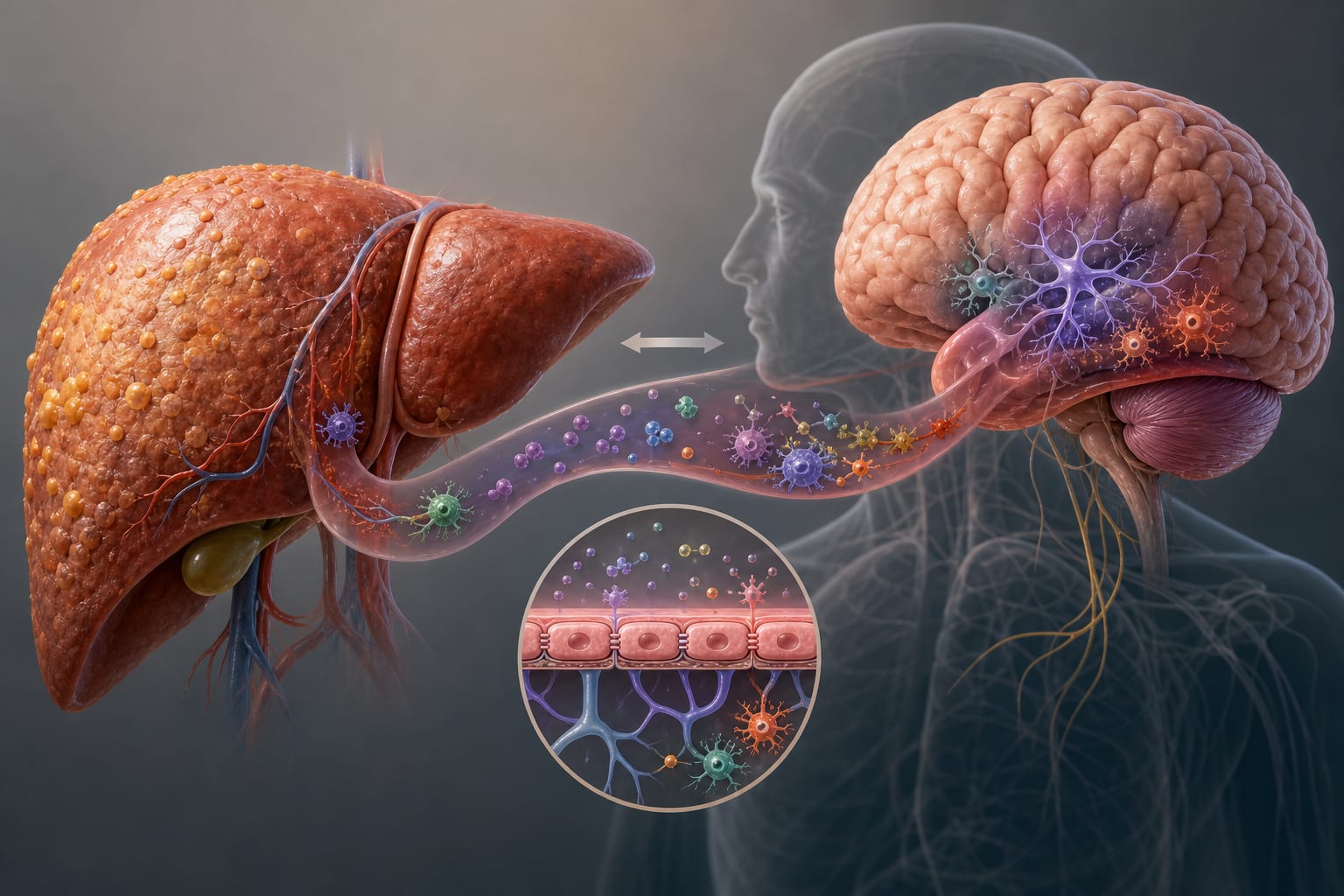
To elucidate the liver-brain axis (LBA) and its implications in metabolic and neuropsychiatric disorders.
Approach:
Communication Mechanisms: Describes the bidirectional communication network between the liver and CNS, integrating neural, humoral, and immune pathways.
Species-Specific Disparities: Examines differences between humans and mice regarding signaling mediators and the blood-brain barrier.
Pathophysiological Perspective: Establishes LBA dysfunction as a driver of obesity, diabetes, cardiovascular diseases, and psychiatric disorders.
Therapeutic Advances: Highlights recent interventions targeting LBA for managing metabolic dysfunction-associated liver diseases and psychiatric conditions.
Key Findings:
The liver actively modulates peripheral neuroimmune responses, challenging the view of it as a passive organ.
LBA dysfunction is linked to obesity, diabetes, and associated neuropsychiatric disorders.
The liver communicates with the CNS through neural, humoral, and immune pathways.
Interpretation:
The LBA plays a critical role in systemic homeostasis and offers novel therapeutic insights for metabolic and neuropsychiatric disorders.
Limitations:
The article primarily focuses on mechanisms and does not provide extensive clinical trial data.
Species-specific differences may limit the generalizability of findings from animal models to humans.
Conclusion:
The LBA represents a significant area for therapeutic exploration in managing metabolic and neuropsychiatric disorders.