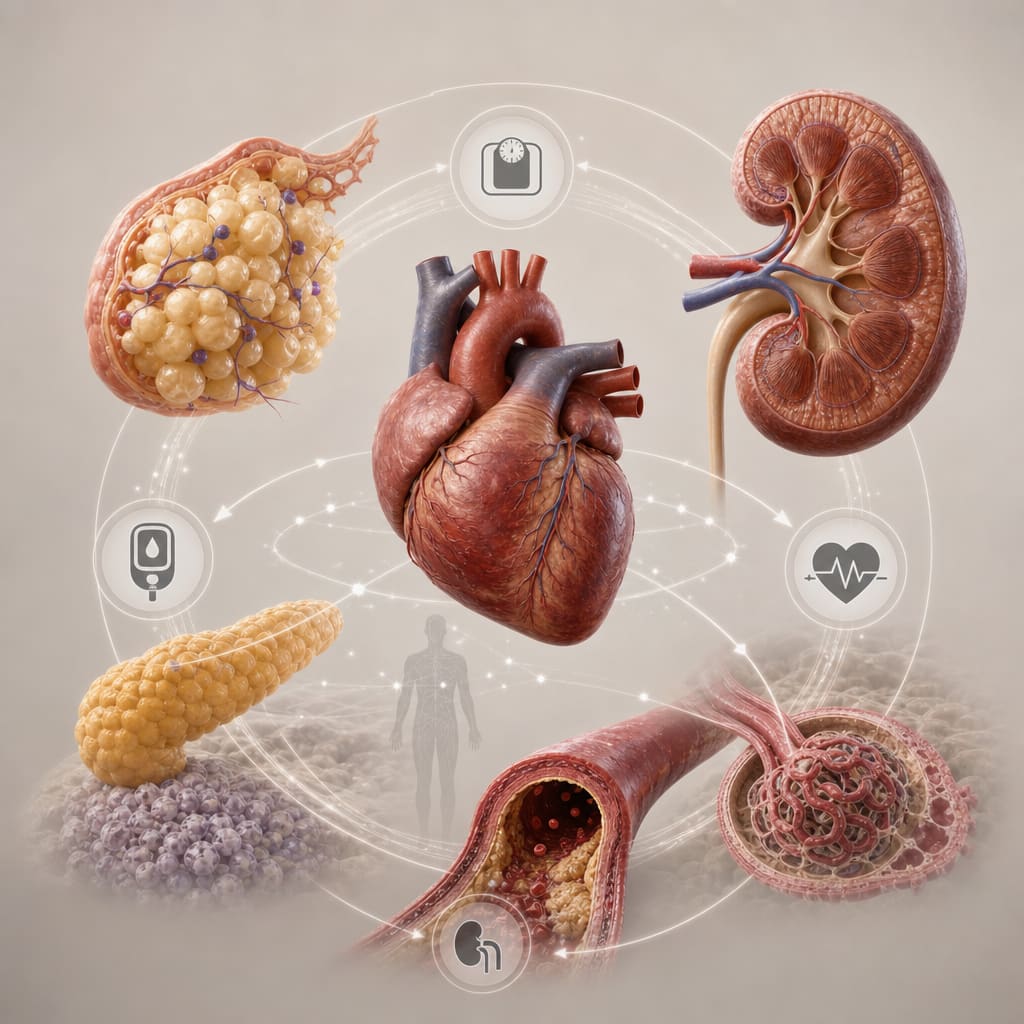
To explore the interconnections between metabolic disorders, kidney disease, and heart disease within the framework of cardiovascular-kidney-metabolic (CKM) syndrome, emphasizing the mechanisms and treatment strategies.
Key Findings:
CKM syndrome leads to increased risk of severe cardiac and renal complications due to interconnected mechanisms.
Composite biomarkers like the TyG index are effective in predicting cardiovascular and renal outcomes, as supported by multiple studies.
Inflammation and inter-organ communication are critical in the progression of CKM syndrome, highlighting the complexity of the condition.
SGLT2 inhibitors show potential benefits in managing CKM components beyond diabetes, necessitating a holistic treatment approach.
Interpretation:
The CKM syndrome framework necessitates a holistic approach to treatment, recognizing the interplay of metabolic, cardiovascular, and renal health.
Limitations:
The complexity of CKM syndrome may complicate treatment strategies.
Further research is needed to validate novel biomarkers across diverse populations.
Conclusion:
Understanding CKM syndrome can lead to improved risk assessment and tailored therapeutic strategies, ultimately enhancing patient outcomes.