Synchronous primary breast invasive carcinoma and breast metastasis from high-grade serous ovarian carcinoma: a case report and literature review - Summary - MDSpire
Advertisement
Synchronous primary breast invasive carcinoma and breast metastasis from high-grade serous ovarian carcinoma: a case report and literature review
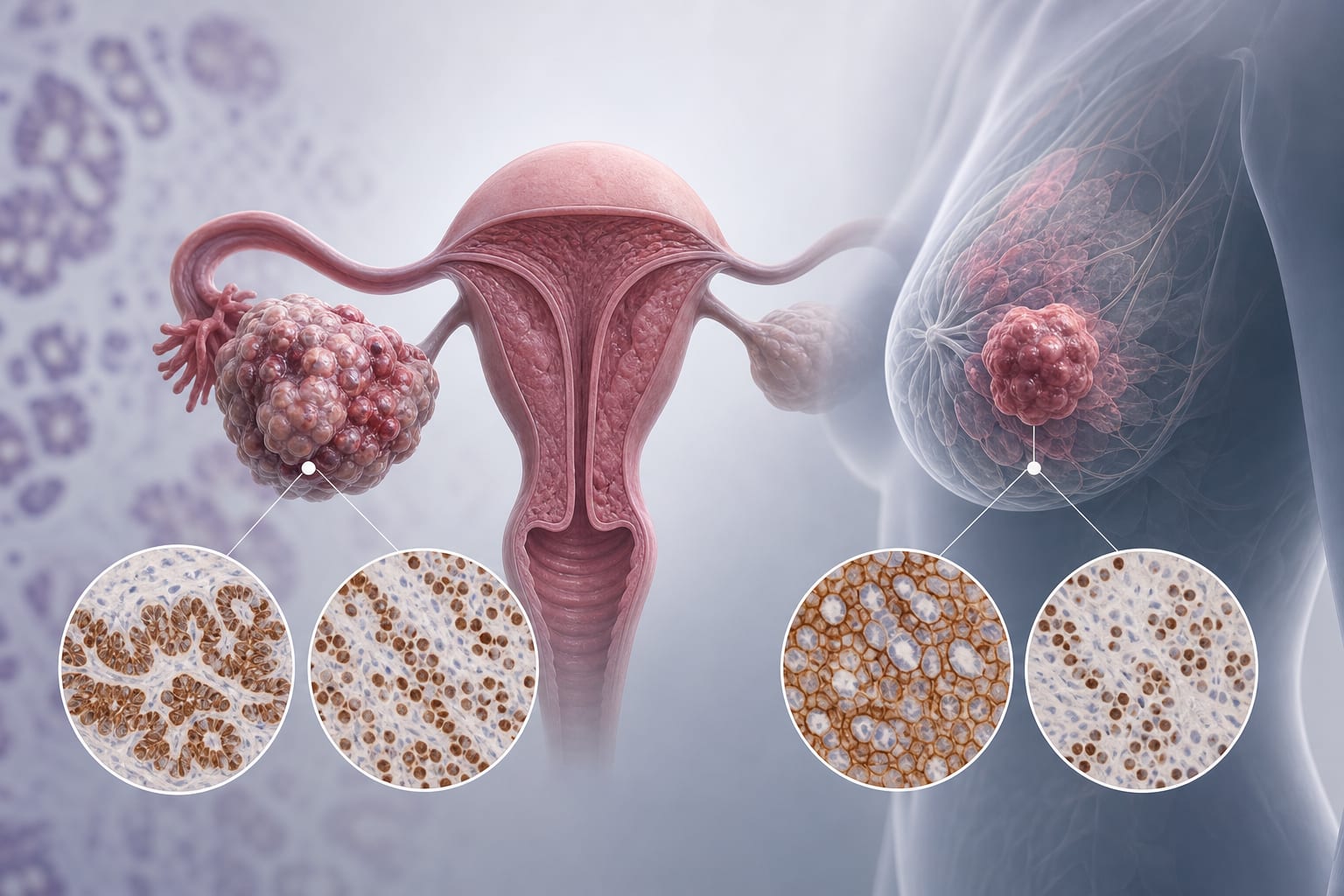
To present a case of synchronous primary breast carcinoma and metastatic high-grade serous ovarian carcinoma, highlighting the diagnostic challenges, treatment approaches, and the significance of genetic factors in management.
Approach:
Key Findings:
Breast metastasis from high-grade serous ovarian carcinoma is rare, with only 0.03%-0.6% of malignant breast neoplasms being metastatic, underscoring the need for careful diagnostic evaluation.
The case illustrates the importance of distinguishing between primary breast carcinoma and metastatic ovarian carcinoma using morphology and immunohistochemistry, with implications for treatment strategies.
The patient had a pathogenic BRCA mutation and HRD-positive status, which significantly influenced treatment decisions and highlights the importance of genetic assessment in similar cases.
Interpretation:
The coexistence of primary breast carcinoma and metastatic ovarian carcinoma presents significant diagnostic challenges, necessitating a multidisciplinary approach that includes genetic assessment.
Limitations:
The rarity of the case limits the generalizability of findings, and potential biases in case selection should be acknowledged.
Long-term outcomes and efficacy of treatment strategies in similar cases remain to be established.
Conclusion:
This case emphasizes the need for careful diagnostic evaluation in patients with breast lesions and known ovarian carcinoma, and the importance of genetic assessment in guiding treatment.
The Lank Center for Genitourinary Oncology at Dana-Farber Cancer Institute presents a succinct summary of all the prostate cancer clinical updates you need to know from AACR 2026.