Liquid biopsy, multi-cancer early detection, and artificial intelligence: new frontiers in cancer screening from a technological and immunological perspective - Summary - MDSpire
Advertisement
Liquid biopsy, multi-cancer early detection, and artificial intelligence: new frontiers in cancer screening from a technological and immunological perspective
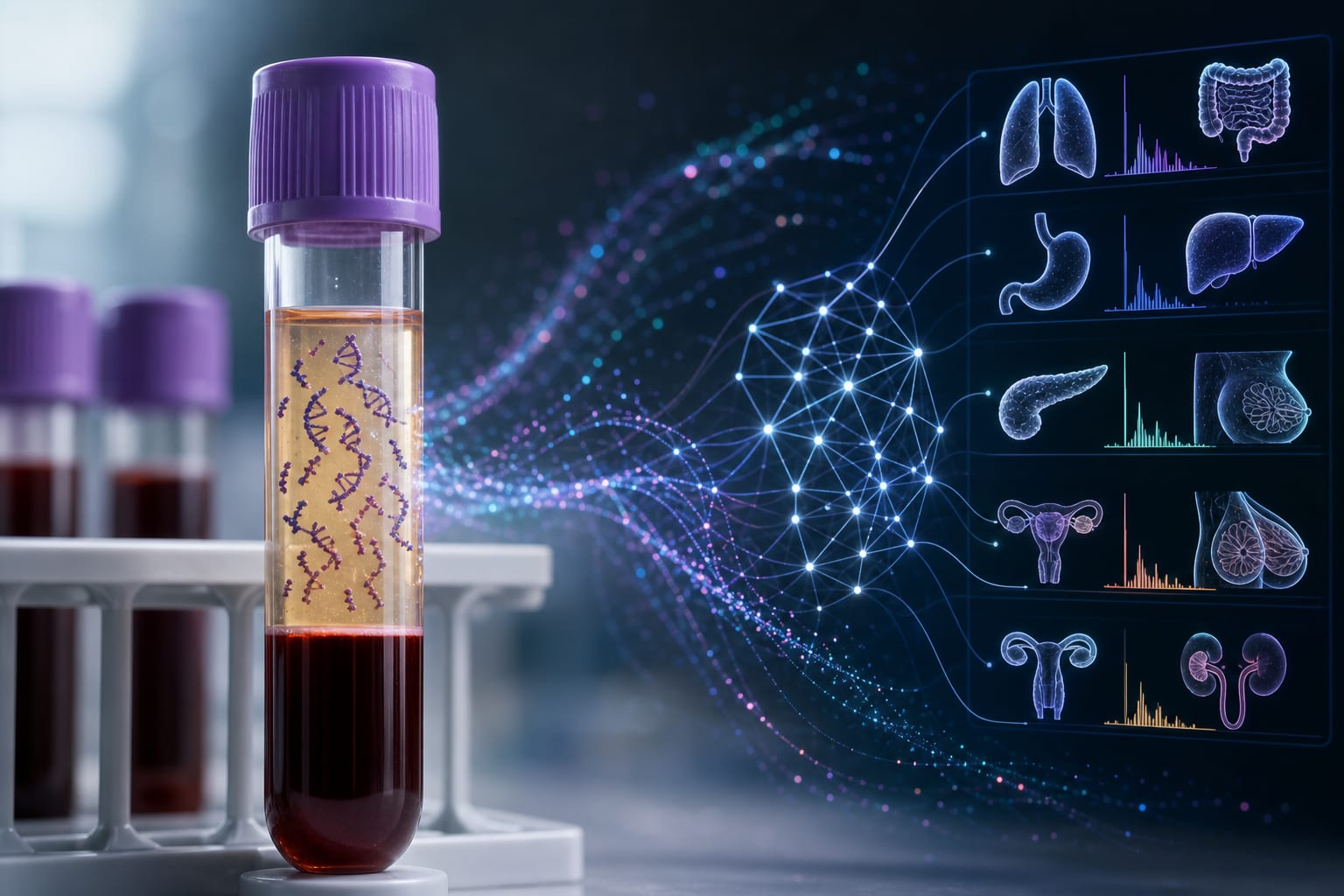
To evaluate advancements in cancer screening technologies, focusing on liquid biopsy, multi-cancer early detection (MCED), and artificial intelligence (AI), while integrating technological and immunological perspectives more explicitly.
Approach:
Key Findings:
Current organ-specific screening methods are limited by invasiveness, cost, and stage-dependent sensitivity.
Liquid biopsy provides a minimally invasive alternative for molecular detection and longitudinal assessment.
MCED tests aim to detect multiple cancer types through a single blood test, but their sensitivity varies by stage and tumor type.
AI methods can enhance cancer screening but require external validation, integration into clinical workflows, and consideration of ethical implications.
Interpretation:
Technical detectability of biomarkers does not equate to clinical readiness, with many emerging technologies remaining investigational and requiring careful consideration of their clinical implications.
Limitations:
Many biomarkers and AI models are still in the investigational phase.
Clinical utility and regulatory oversight for new technologies are yet to be established, and equitable access must be considered.
Conclusion:
Future advancements will depend on standardized workflows, prospective validation, integration with existing screening systems, and addressing ethical considerations.