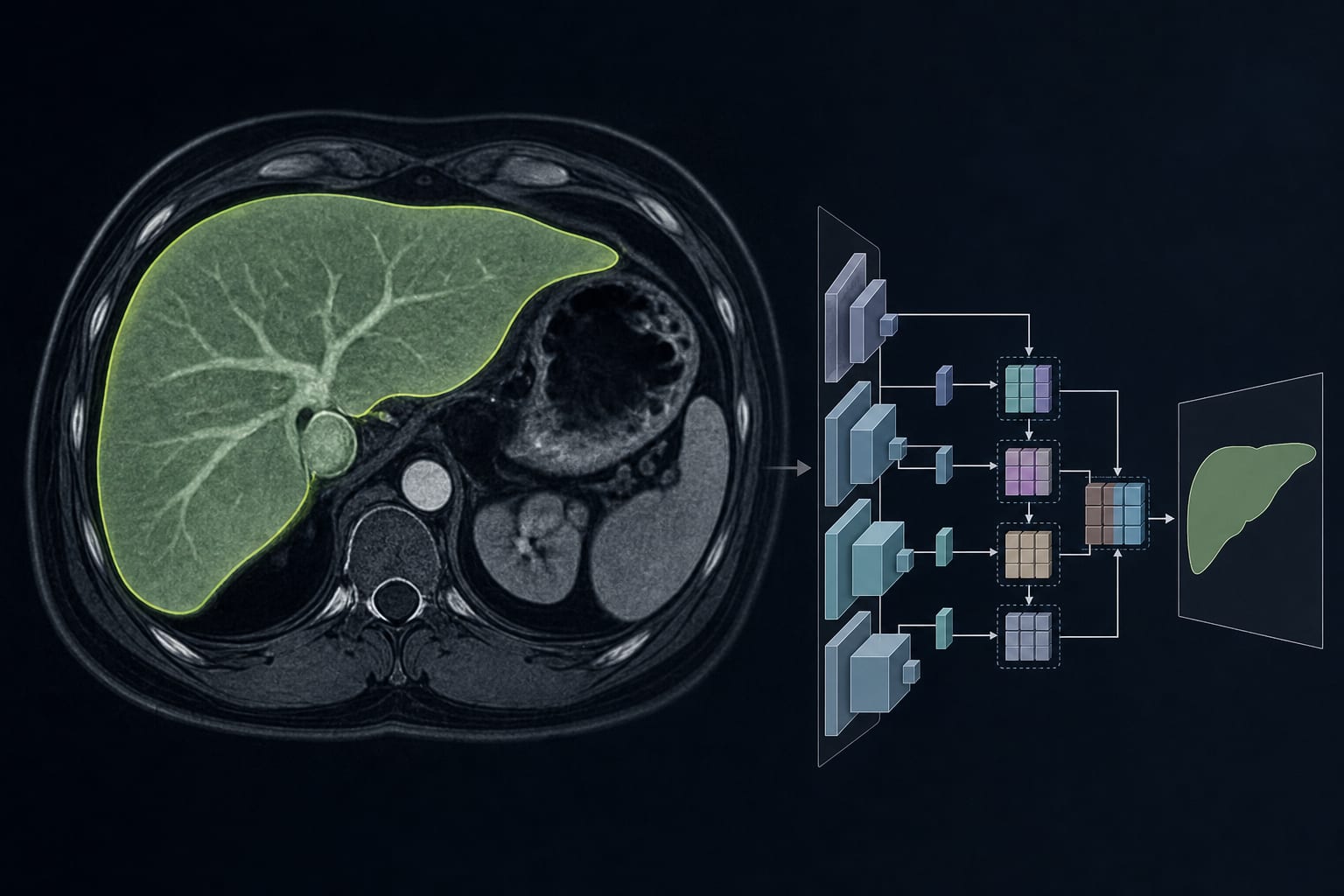
To evaluate the application, performance, and clinical relevance of machine learning (ML) in liver computed tomography (CT) imaging through a systematic review.
Key Findings:
191 studies were included, categorized into five groups based on study aims.
Liver segmentation was the primary aim in 84 studies, with significant contributions from deep learning methods, highlighting advancements in accuracy and efficiency.
Lesion segmentation was a focus in 60 studies, with models performing well on larger lesions but struggling with smaller ones, indicating a need for further development.
Interpretation:
ML shows promising potential in liver CT imaging, particularly in segmentation tasks, but challenges remain in accurately segmenting smaller lesions, suggesting areas for future research.
Limitations:
Only 11 out of 87 studies reported results with confidence intervals or standard errors, limiting the robustness of findings.
Many studies relied on publicly available datasets, which may limit the diversity and applicability of training data.
Conclusion:
ML applications in liver CT imaging are advancing, but further improvements in model validation and reporting transparency are needed for clinical adoption, emphasizing the importance of rigorous evaluation.
Joint clinical consensus outlines evaluation and management considerations for arrhythmias, coronary atherosclerosis, aortic dilatation, myocardial fibrosis, and related findings in older competitive athletes.
A VHA study across 11 vendors finds AI-generated primary care notes score lower than clinician-written notes, with the largest deficits in thoroughness, organization, and usefulness