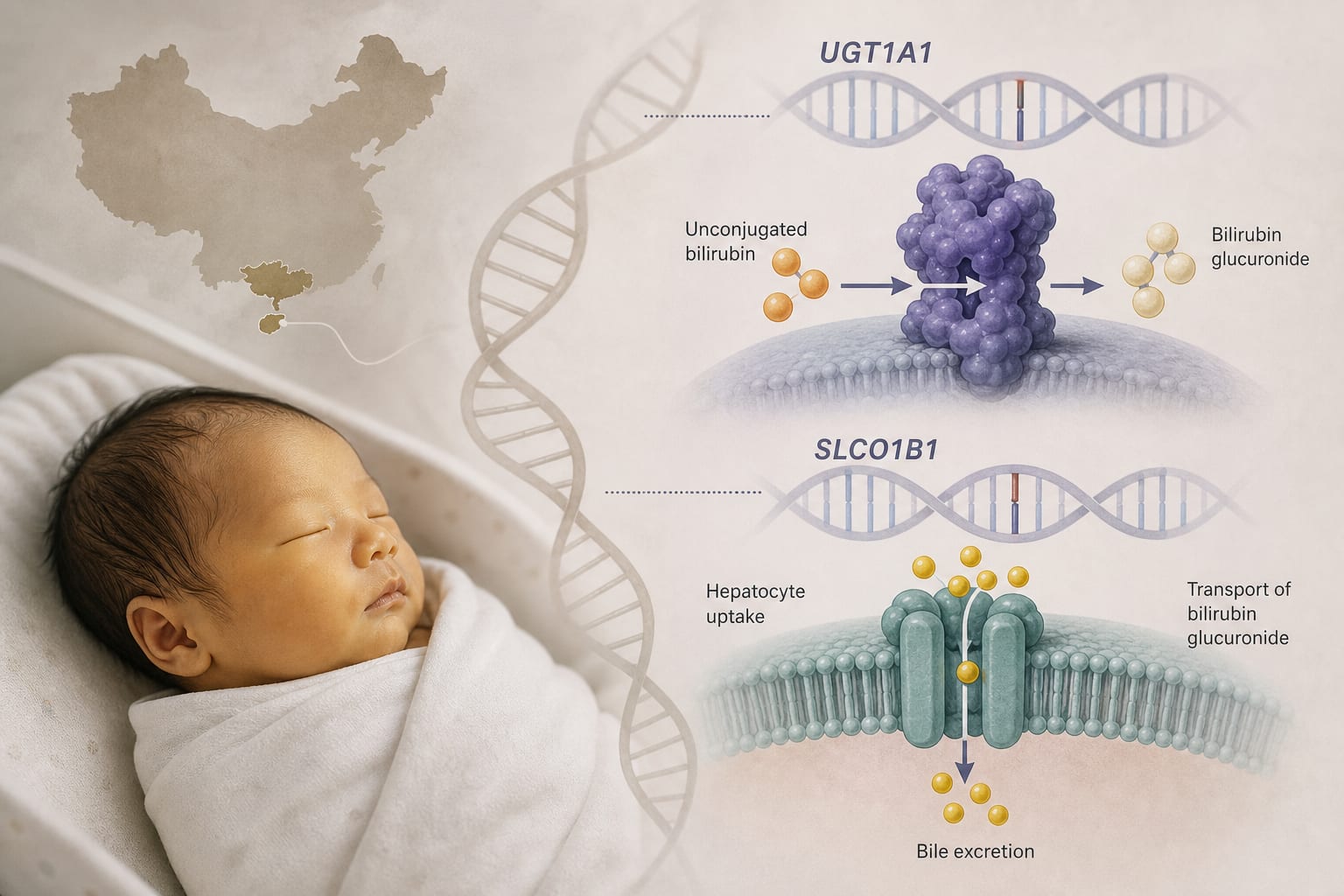
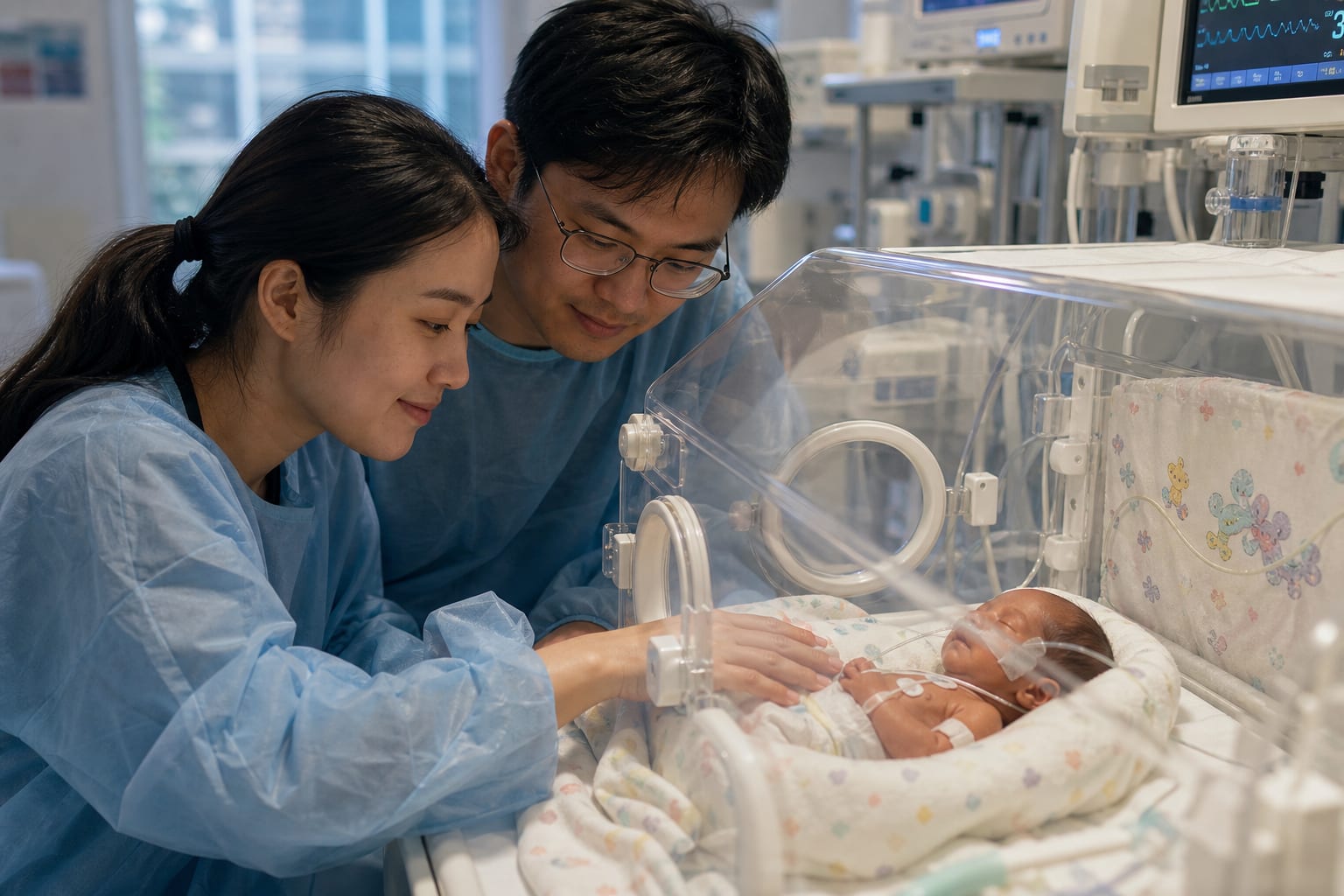
To evaluate the association between polymorphisms in UGT1A1 (specifically rs4148323) and SLCO1B1 (specifically rs4149056 and rs4149015) genes and the risk of neonatal hyperbilirubinemia in the Haikou population.
Approach:
Study Design: A retrospective case-control study conducted between January 2024 and January 2025 involving 210 neonates with hyperbilirubinemia and 195 healthy neonates.
Key Findings:
Higher prevalence of preterm births in the case group (16.9% vs. 9.5%, P = 0.04).
Significantly elevated allele frequencies for UGT1A1 rs4148323 (22.14% vs. 11.79%, P < 0.05) and SLCO1B1 variants (rs4149056: 19.05% vs. 10.26%, P < 0.05; rs4149015: 21.43% vs. 11.79%, P < 0.05) in the case group.
UGT1A1 rs4148323 GA genotype (OR = 2.370, P < 0.05) and SLCO1B1 rs4149056 TC (OR = 1.594, P < 0.05) and rs4149015 AG genotypes (OR = 2.247, P < 0.05) associated with increased risk of hyperbilirubinemia.
Cumulative risk analysis showed a significant dose-response relationship with 3-4 risk alleles (adjusted OR = 3.412, P < 0.001).
Interpretation:
UGT1A1 and SLCO1B1 variants are significant genetic biomarkers for predicting neonatal hyperbilirubinemia risk in the Haikou population.
Limitations:
The study was limited to a specific geographic region and ethnic group, which may affect generalizability.
Subgroup analyses for late-preterm neonates were underpowered.
Conclusion:
The findings support the clinical value of multi-locus genetic profiling for predicting neonatal hyperbilirubinemia susceptibility.
Systematic review of 8 observational studies found limited evidence on associations between prenatal asthma-medication exposure and neurodevelopmental outcomes, with autism spectrum disorder the only outcome suitable for meta-analysis.