Detailed investigation of B cell populations following vaccination and infection with severe acute respiratory syndrome coronavirus-2 during pregnancy - Summary - MDSpire
Advertisement
Detailed investigation of B cell populations following vaccination and infection with severe acute respiratory syndrome coronavirus-2 during pregnancy
To enhance the comprehension of the immunological consequences of vaccination and/or infection during pregnancy, focusing on alterations in B cell populations in women at term, which is crucial for maternal and fetal health.
Approach:
Key Findings:
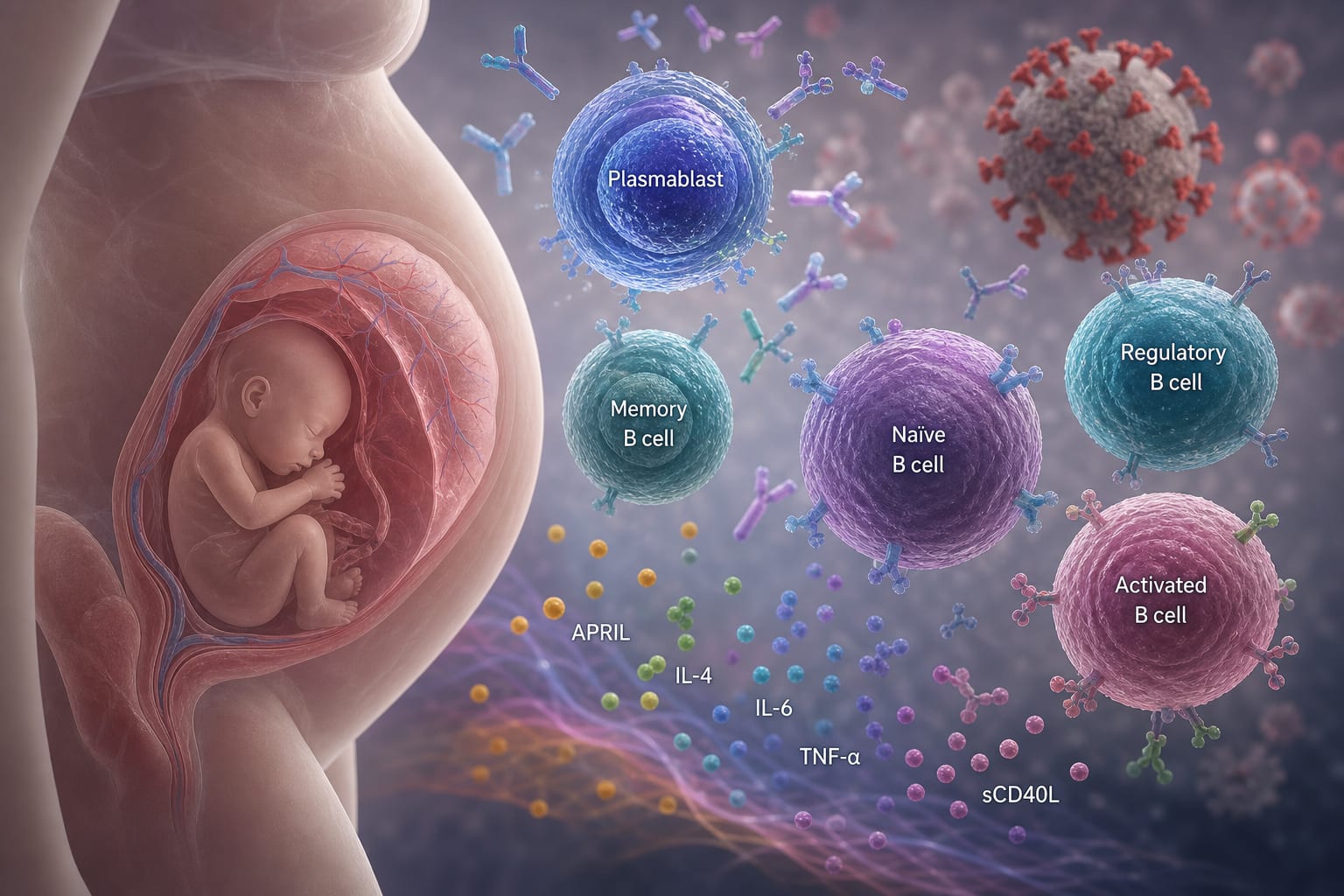
Serum levels of APRIL, IL-4, IL-6, TNF-α, and sCD40L varied based on vaccination and infection status.
Vaccination altered the frequency of plasma blasts, plasma cells, and B memory cells.
Infected patients showed increased IL-10+ B cells and decreased IL-6+ B cells compared to vaccinated women.
Infection induced CD40 expression in B cells, while vaccination enhanced PD-1, FasL, and CD86 expression.
Interpretation:
SARS-CoV-2 infection and vaccination during pregnancy significantly shift the balance between pro- and anti-inflammatory B cell populations and modify costimulatory molecule expression.
Limitations:
The study does not address the long-term consequences of altered B cell populations.
Limited demographic data on the participants may affect generalizability, and potential biases in sample selection or measurement methods were not discussed.
Conclusion:
Further investigation is needed into the long-term consequences of maternal SARS-CoV-2 immunity for both mothers and offspring, emphasizing the importance of these findings for future research and clinical practice.
by Laura Scholz, Nils Hoymann, Suzan Alboradi, Valeriia Grabar, Gina Marie Uehre, George Toth, József Mészáros, Paolo Gennari, Svetlana Tchaikovski, Atanas Ignatov, Mandy Busse
A VHA study across 11 vendors finds AI-generated primary care notes score lower than clinician-written notes, with the largest deficits in thoroughness, organization, and usefulness