Assess changes in out-of-pocket insulin spending among Medicare Part D enrollees from 2020 through 2024 as voluntary and mandatory copay limits were introduced.
Approach:
Data: KFF analyzed 2020–2024 Medicare Part D prescription drug event claims from CMS’s Chronic Conditions Data Warehouse, representing 20% of Medicare beneficiaries.
Population: The analysis focused on Part D insulin users without Low-Income Subsidies (LIS), enrolled in stand-alone drug plans or Medicare Advantage drug plans.
Key Findings:
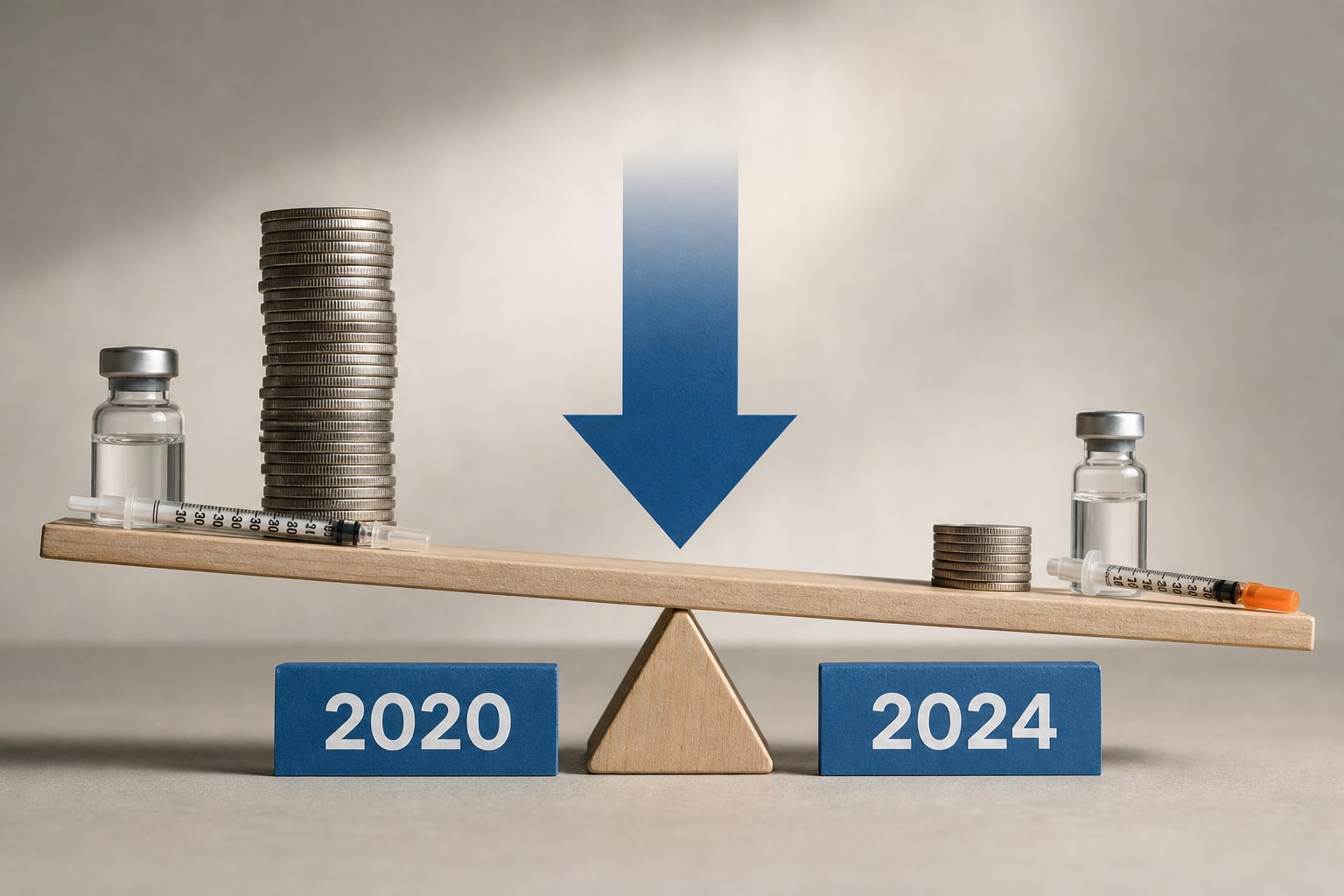
Aggregate out-of-pocket insulin spending among enrollees without LIS fell from $971 million in 2020 to $506 million in 2024.
Average out-of-pocket spending per insulin prescription decreased 54%, from $54 in 2020 to $25 in 2024; annual spending per insulin user fell from $572 to $265.
All 10 most commonly used insulin products available in both years cost more than $35 per 30-day supply in 2020; in 2024, costs for all were below $35, ranging from $23 to $29.
The number of insulin users without LIS rose from 1.7 million to 1.9 million, and prescriptions increased from 18.1 million to 20.4 million; prescriptions per user remained at 11 annually.
Interpretation:
The analysis reports that out-of-pocket insulin spending declined during the period when the voluntary Part D Senior Savings Model operated (2021–2023) and the Inflation Reduction Act’s mandatory $35 cap took effect in 2023. It describes these measures as associated with the decrease; the analysis does not establish that they alone caused it.
Limitations:
The analysis reports changes over time and does not establish that the copay limits alone caused the declines.
The primary analysis excludes beneficiaries receiving LIS, who pay nominal prescription copays.
Conclusion:
Among Medicare Part D insulin users without LIS, out-of-pocket spending per prescription and aggregate spending were substantially lower in 2024 than in 2020.