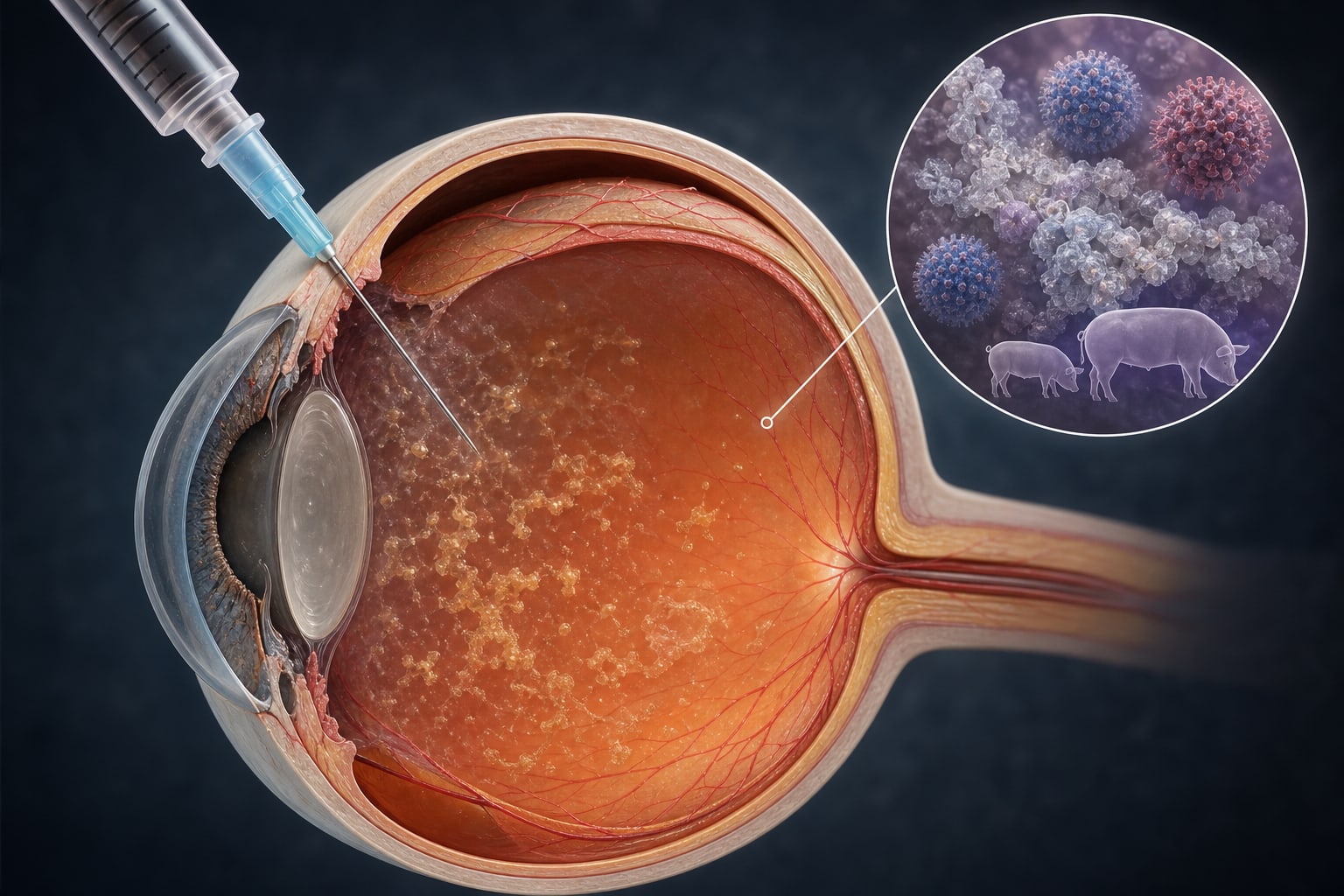
New Target for Uveitis Therapy
Could targeting cGAS-STING represent a new treatment avenue for uveitis?
Objective: To explore the role of the cGAS–STING pathway in uveitis and its potential as a therapeutic target.
Key Findings: cGAS–STING pathway is strongly activated in inflamed retinas. Mitochondrial DNA accumulates in the cytoplasm post-LPS exposure, triggering cGAS activation. Cgas knockout mice showed significantly reduced ocular inflammation compared to wild-type mice. Absence of cGAS led to decreased retinal macrophage recruitment and increased regulatory T cells. Interpretation: The cGAS–STING pathway is a central driver of inflammation in uveitis, suggesting it could be a novel therapeutic target.
Limitations: Further validation in human tissues is needed. Uncertainty whether STING-dependent mechanisms are solely responsible for the observed effects. Conclusion: Targeting the cGAS–STING pathway may provide a new strategy for treating refractory uveitis, pending further research.