Case Report: Primary hemophagocytic lymphohistiocytosis with a homozygous PRF1 variant: a case suggesting early immunoporosis and an expanded phenotypic spectrum - Summary - MDSpire
Advertisement
Case Report: Primary hemophagocytic lymphohistiocytosis with a homozygous PRF1 variant: a case suggesting early immunoporosis and an expanded phenotypic spectrum
To describe a novel PRF1 mutation in a pediatric patient with familial HLH and hypothesize that immunoporosis may contribute to skeletal muscle findings.
Approach:
Case Description: A 17-year-old male of Middle Eastern descent presented with fever, night sweats, and headaches, diagnosed with familial HLH due to a homozygous PRF1 mutation.
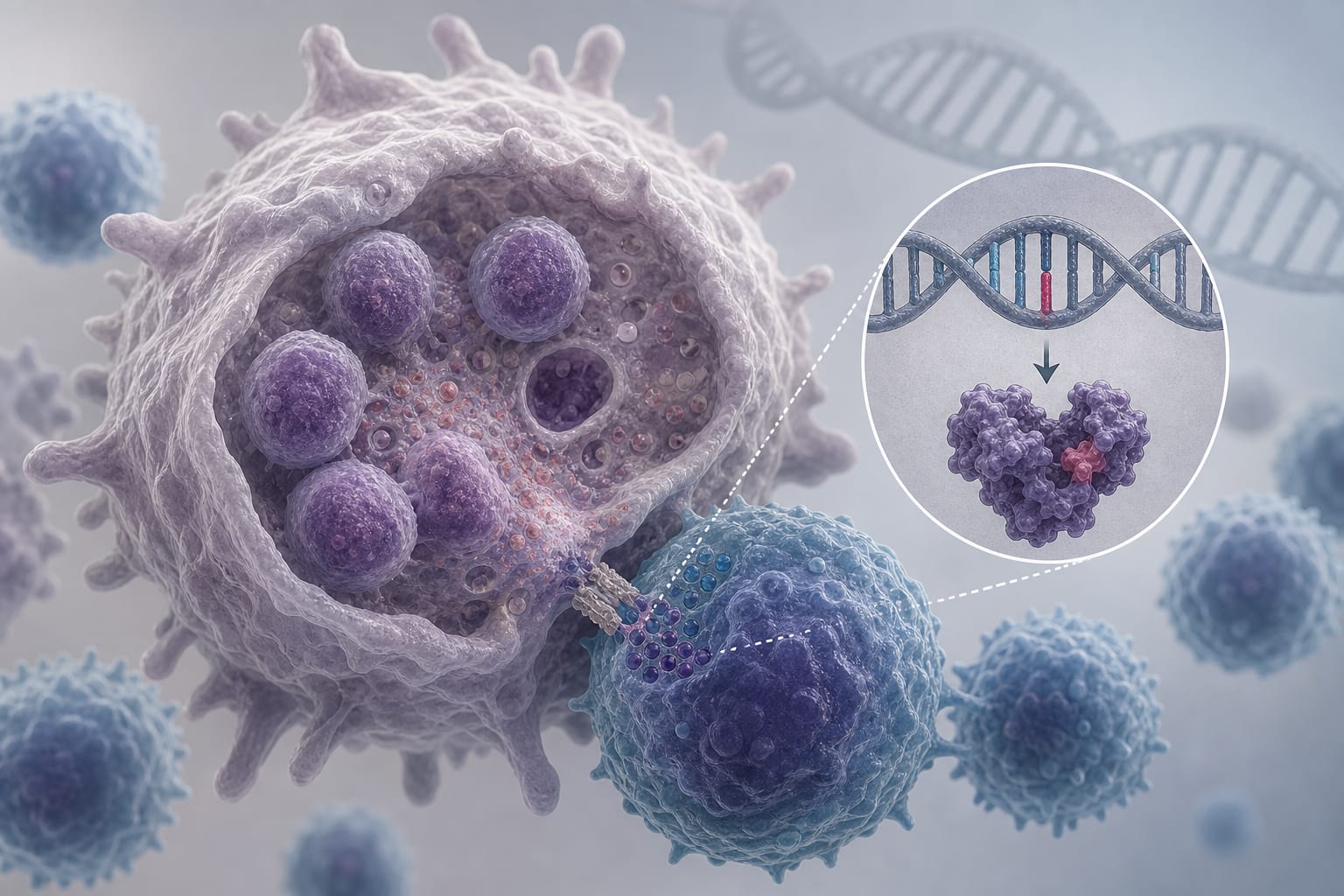
Genetic Analysis: Whole exome sequencing revealed a homozygous mutation in PRF1 (p.Y296C c.887 A>G), classified as a variant of uncertain significance.
Treatment and Outcomes: The patient was treated with dexamethasone and later underwent matched sibling donor HSCT, achieving full-donor chimerism with no HLH flare or GvHD.
Key Findings:
The novel PRF1 mutation p.Y296C c.887 A>G is associated with primary HLH.
The patient exhibited significant muscle weakness and peripheral neuropathy, which may relate to the mutation.
The mutation was identified over 5 years prior to clinical disease onset.
Interpretation:
This case illustrates the role of genetic testing in diagnosing familial HLH.
Limitations:
The classification of the mutation as a variant of uncertain significance complicates its clinical interpretation.
Further monitoring of long-term outcomes post-HSCT is necessary.
Conclusion:
This case represents the first reported homozygous PRF1 mutation associated with primary HLH.