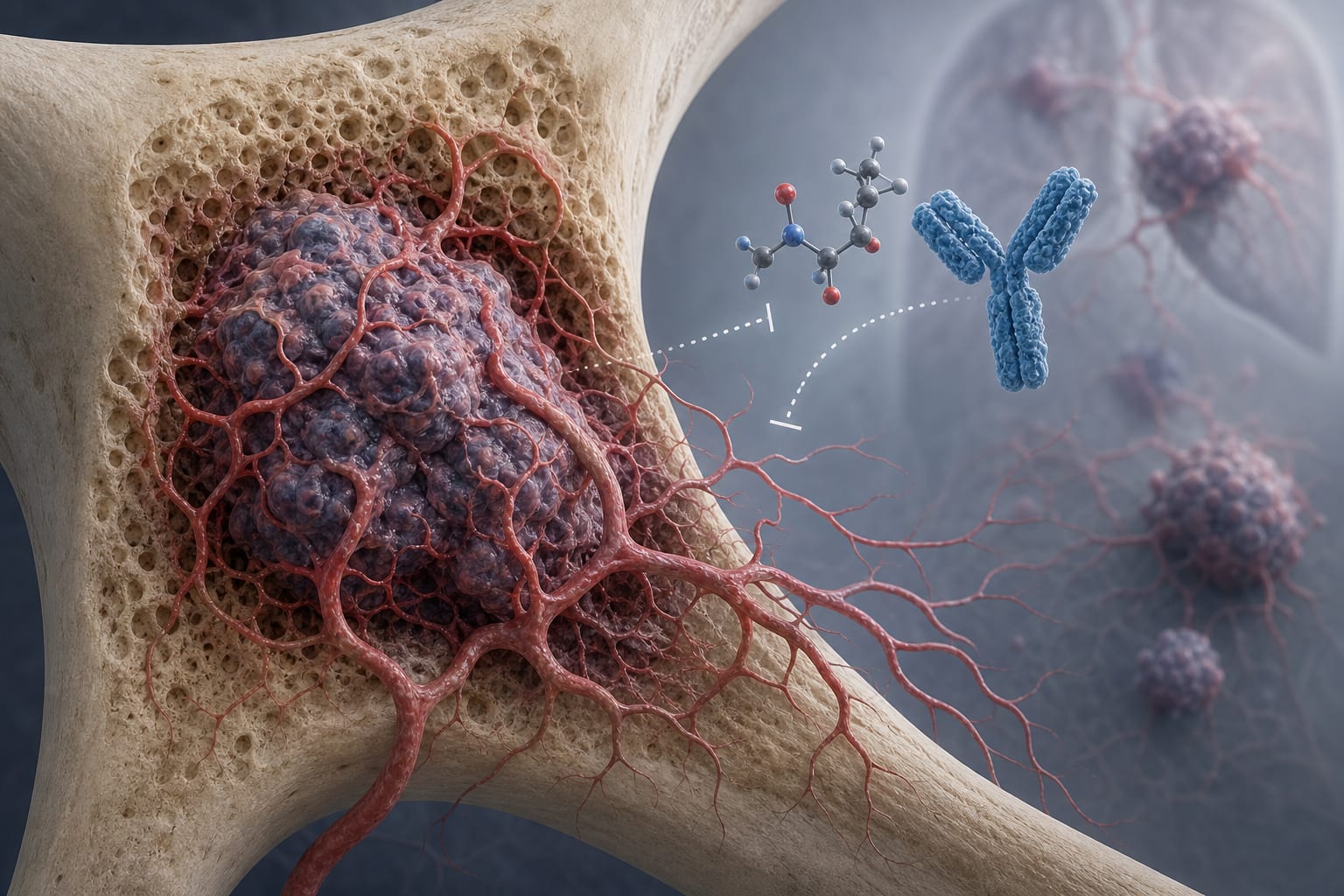
Combined treatment using repurposed synthetic peptide desmopressin and bevacizumab as a potential antiangiogenic strategy in osteosarcoma - Summary - MDSpire
To evaluate the therapeutic potential of desmopressin (dDAVP) as a coadjuvant strategy to enhance the efficacy of Bevacizumab (BEVA) in treating osteosarcoma (OSA).
Approach:
Bioinformatic Analysis: Analyzed AVPR2 expression and its associations with tumor aggressiveness, immune and stromal infiltration markers, and clinical outcomes using TCGA-SARC and TARGET-OS datasets.
In Vitro Assessment: Assessed endothelial proliferation, migration, and morphogenesis in HmVEC-L and HMEC-1 microvascular cells.
In Vivo Evaluation: Evaluated antitumor activity in human (MG-63) and murine (K7M3) OSA models, including xenogeneic and syngeneic models of tumor growth, metastasis, and angiogenesis.
Combined Treatment Analysis: Investigated the effects of combined dDAVP and BEVA therapy in vitro and in vivo, focusing on histopathological endpoints.
Key Findings:
AVPR2 expression was inversely associated with proangiogenic, prosurvival, and prometastatic gene signatures.
Elevated AVPR2 expression correlated with improved survival in both pan-sarcoma and pediatric OSA cohorts.
dDAVP significantly reduced pulmonary metastasis and vascularization in vivo.
dDAVP enhanced the antivascular activity of BEVA under tumor-conditioned conditions.
Combined treatment with dDAVP and BEVA significantly inhibited OSA xenograft progression without overt toxicity.
Interpretation:
The findings support further evaluation of dDAVP as a potential adjuvant therapy in OSA, particularly in combination with BEVA, targeting complementary angiogenesis-related mechanisms.
Limitations:
The role of dDAVP in OSA-associated angiogenesis remains incompletely characterized.
Further translational studies are needed to validate the findings.
Conclusion:
The study suggests that combining dDAVP with BEVA may improve therapeutic efficacy in osteosarcoma.
by Luisina María Solernó, Candela Llavona, Zahira Yasmine Saud, Mariana Carolina Onassis, María Florencia Gottardo, Martín Manuel Ledesma, Daniel Fernando Alonso, Juan Garona
An updated clinical practice guideline from the American Society for Radiation Oncology substantially expands and modernizes recommendations for the use of radiation therapy in pancreatic cancer.