Use of WeChat-based patient-doctor interaction improves patient experience of Helicobacter pylori treatment: a randomized controlled trial - Summary - MDSpire
Advertisement
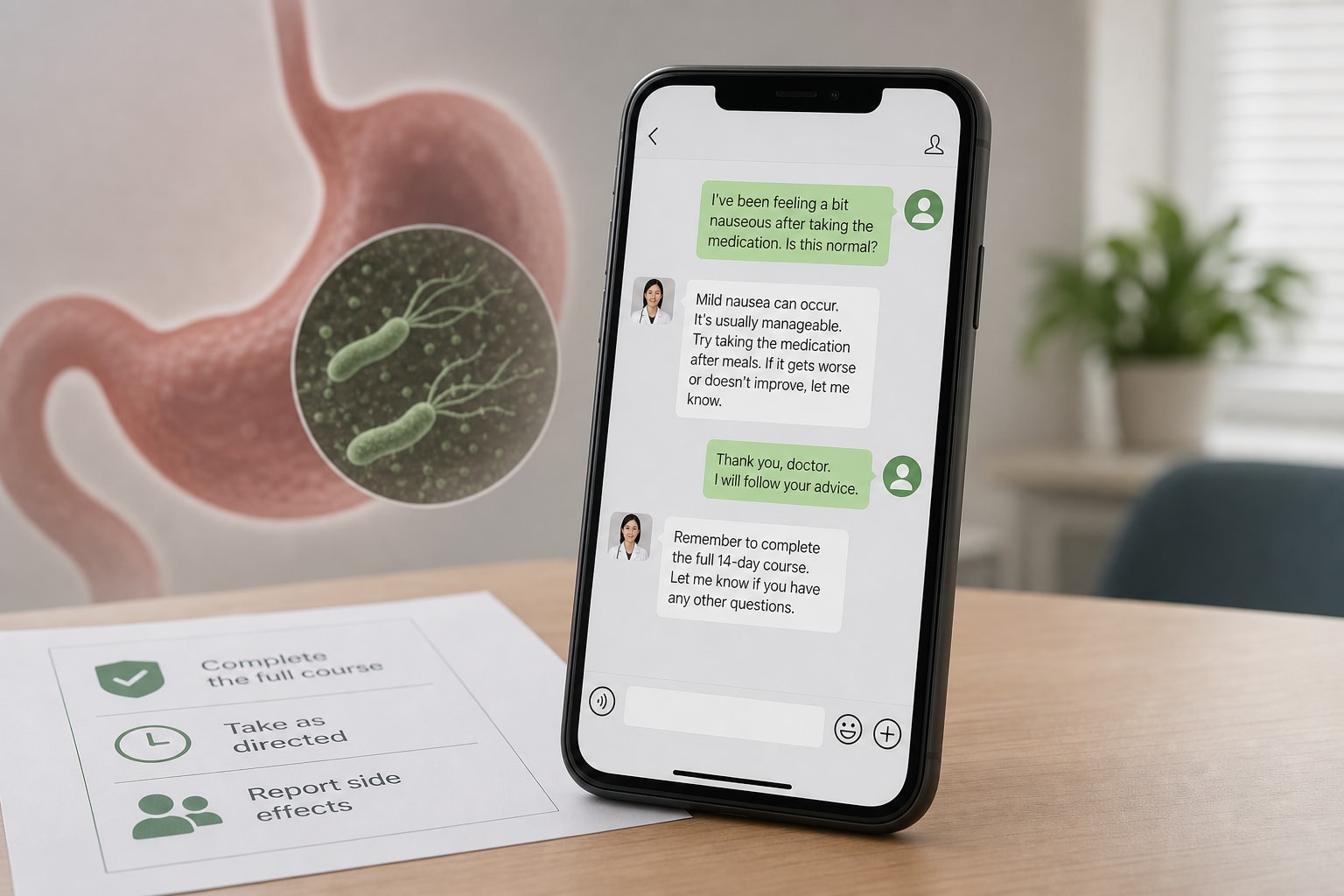
Use of WeChat-based patient-doctor interaction improves patient experience of Helicobacter pylori treatment: a randomized controlled trial
To evaluate whether a WeChat-based patient-doctor interaction (WPDI) system could improve H. pylori treatment outcomes and enhance patient experience during treatment.
Key Findings:
WPDI group achieved eradication rates of 90.4%, 93.4%, and 94.2% in intention-to-treat, modified intention-to-treat, and per-protocol analyses, respectively.
Control group eradication rates were 89.5%, 93.3%, and 94.6% for the same analyses.
90.3% of WPDI patients rated their treatment as satisfactory or very satisfactory compared to 74.9% in the control group (P < 0.001).
WPDI patients reported lower levels of worry (16.0% vs. 26.1%; P = 0.012) and perturbation (11.7% vs. 22.7%; P = 0.003) during treatment.
Interpretation:
The WeChat-based patient-doctor interaction significantly improved patient experience during H. pylori eradication therapy, although it did not significantly enhance treatment outcomes.
Limitations:
The study was conducted at a single center, which may limit generalizability.
The reliance on self-reported measures for patient experience may introduce bias.
Cultural factors may affect the generalizability of the findings.
Conclusion:
The WeChat-based patient-doctor interaction improved patient experience significantly during H. pylori eradication therapy.