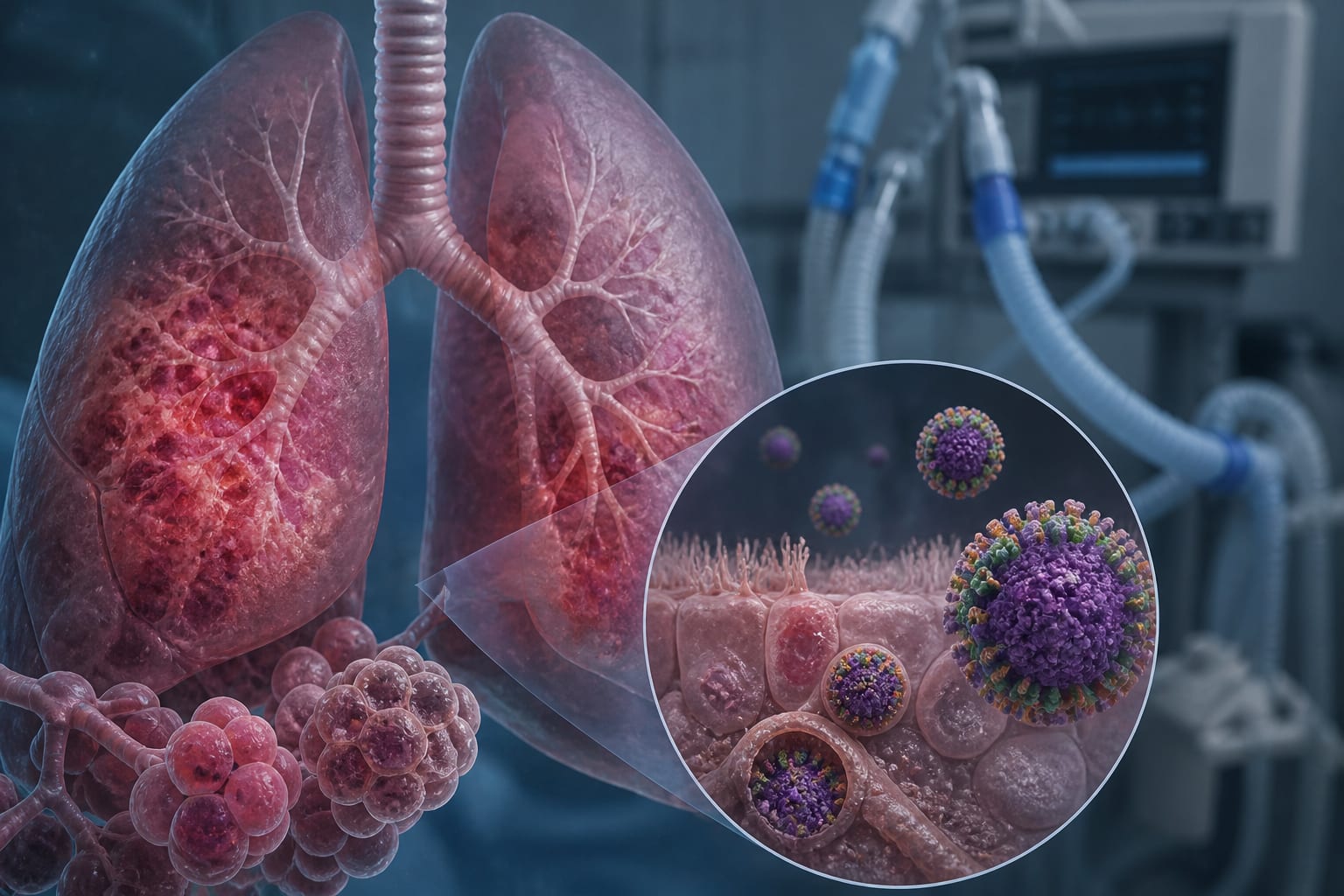
The article examines the objective, findings, and clinical context described in Respiratory Tract Herpesvirus Reactivation in Critically Ill Patients: An Underrecognized Clinical Concern.
Approach:
Study discussed: Harbiye et al. conducted a prospective observational cohort study of HSV and CMV in the lower respiratory tract of patients with persistent ARF.
Issues raised: The commentary calls for analyses by ARF subphenotype and immune or sepsis status; assessment of upper-airway HSV and intubation timing; standardized viral-load reporting; and investigation of interactions with other airway pathogens.
Key Findings:
Pulmonary HSV reactivation was associated with less favorable clinical outcomes and localized alveolar inflammation.
Elevated pulmonary HSV burden characterized a distinct inflammatory phenotype; complementary analyses linked this phenotype to extubation and mortality.
The commentary notes that HSV reactivation may be more frequent in hyperinflammatory states, but its relationship to ARF subphenotypes remains unconfirmed.
Oropharyngeal HSV detection alone has not been definitively linked to unfavorable outcomes; HSV migration to the lower respiratory tract in patients with artificial airways has been associated with longer mechanical ventilation and higher mortality.
Interpretation:
The authors of the commentary describe pulmonary HSV reactivation as a distinct inflammatory phenotype in persistent ARF and call for further work to clarify its clinical significance and causal pathways.
Limitations:
The relationship between HSV reactivation and ARF subphenotypes is unconfirmed.
The study discussion identifies unresolved questions about upper-to-lower respiratory tract HSV spread, timing of intubation, and interactions with other airway pathogens.
HSV PCR results reported in copies/mL depend on the platform and assay, limiting comparability between studies.
Conclusion:
The commentary calls for integrated clinical and molecular phenotyping, standardized HSV measurements in IU/mL, and randomized trials to test antiviral therapy.